


Colloquial for a beating or blows. It is usually used in expressions like 'Haue bekommen' (to get a thrashing) or 'Haue geben' (to give someone a thrashing), and in this meaning it exists only in the singular.
example
Wenn du nicht sofort dein Zimmer aufräumst, gibt's Haue!
If you don't clean up your room right now, you'll get a thrashing!
Usage tips
Word family
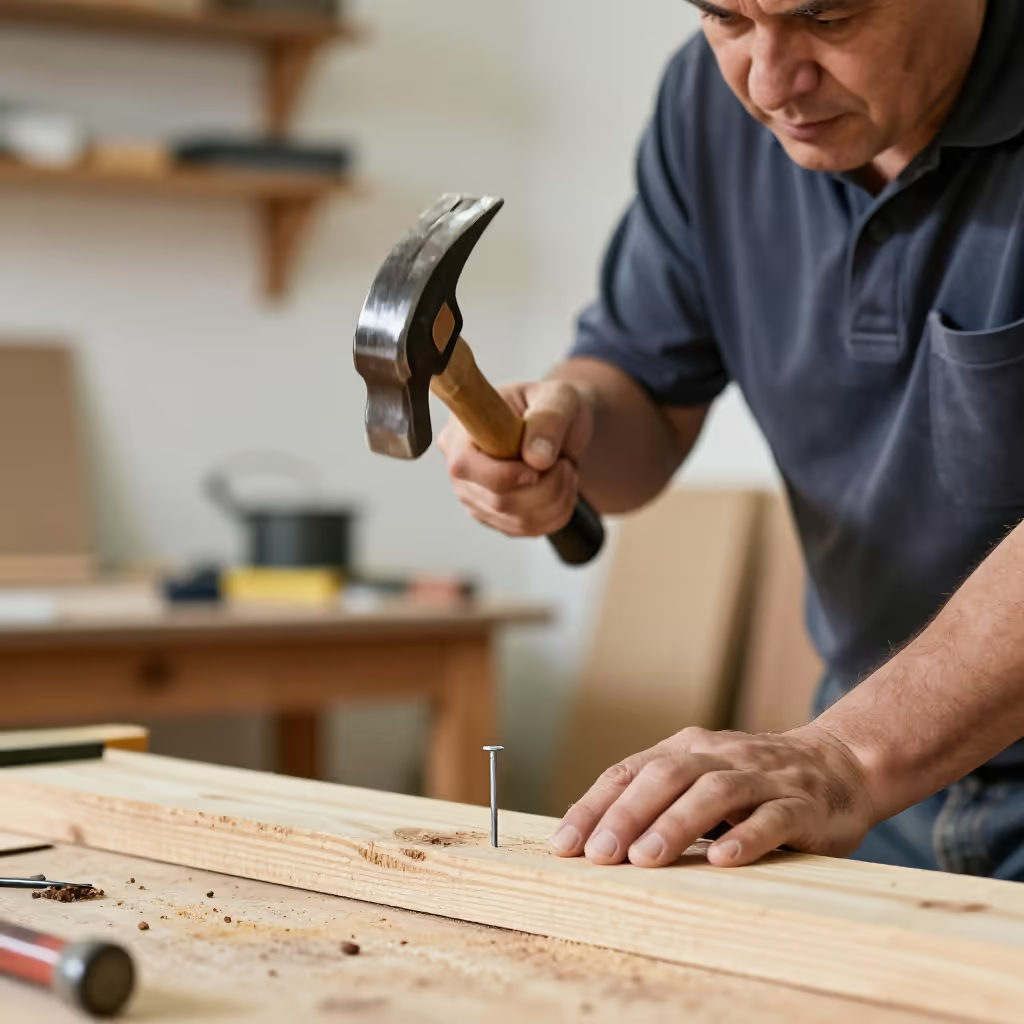
'Die Haue' (a thrashing) is derived from the colloquial verb 'hauen' (to hit), which means 'schlagen' (to hit/beat). This connection helps you understand the noun's meaning directly.
EXAMPLE
Hau nicht so fest auf den Tisch!
Don't hit the table so hard!
Register and style
This word clearly belongs to colloquial language. It is often used in a family context or among friends, usually in a threatening or joking way.
EXAMPLE
Wenn du mein Fahrrad ohne zu fragen nimmst, kriegst du Haue!
If you take my bike without asking, you'll get a thrashing!
Fixed expressions
'Haue' (a thrashing) is almost only used in fixed expressions and has no plural. The most common are 'Haue bekommen/kriegen' (to get a thrashing), 'Haue geben' (to give someone a thrashing), or the impersonal form 'es gibt Haue' (there'll be a thrashing).
EXAMPLE
Früher haben Kinder in der Schule manchmal noch Haue vom Lehrer bekommen.
In the past, children at school sometimes still got a thrashing from the teacher.
Compare with
near_synonym · confusable
Haue vs Schlag
blow / stroke
'der Schlag' and 'die Haue' both have to do with physical violence. 'der Schlag' means a single blow or hit and is a normal, general word. 'die Haue' is colloquial and means more like a thrashing, that is, several blows or a punishment involving blows. Learners may confuse the words because both are connected with hitting. The important point is: a single blow is usually called 'Schlag'; 'Haue' is used mainly in expressions like 'Haue bekommen' (to get a thrashing) or 'Haue geben' (to give someone a thrashing).
Haue
Als Kind hatte er Angst, nach dem Streit Haue zu bekommen.
As a child, he was afraid of getting a thrashing after the argument.
Schlag
Der Schlag auf den Tisch war so laut, dass alle kurz still wurden.
The blow on the table was so loud that everyone went quiet for a moment.