

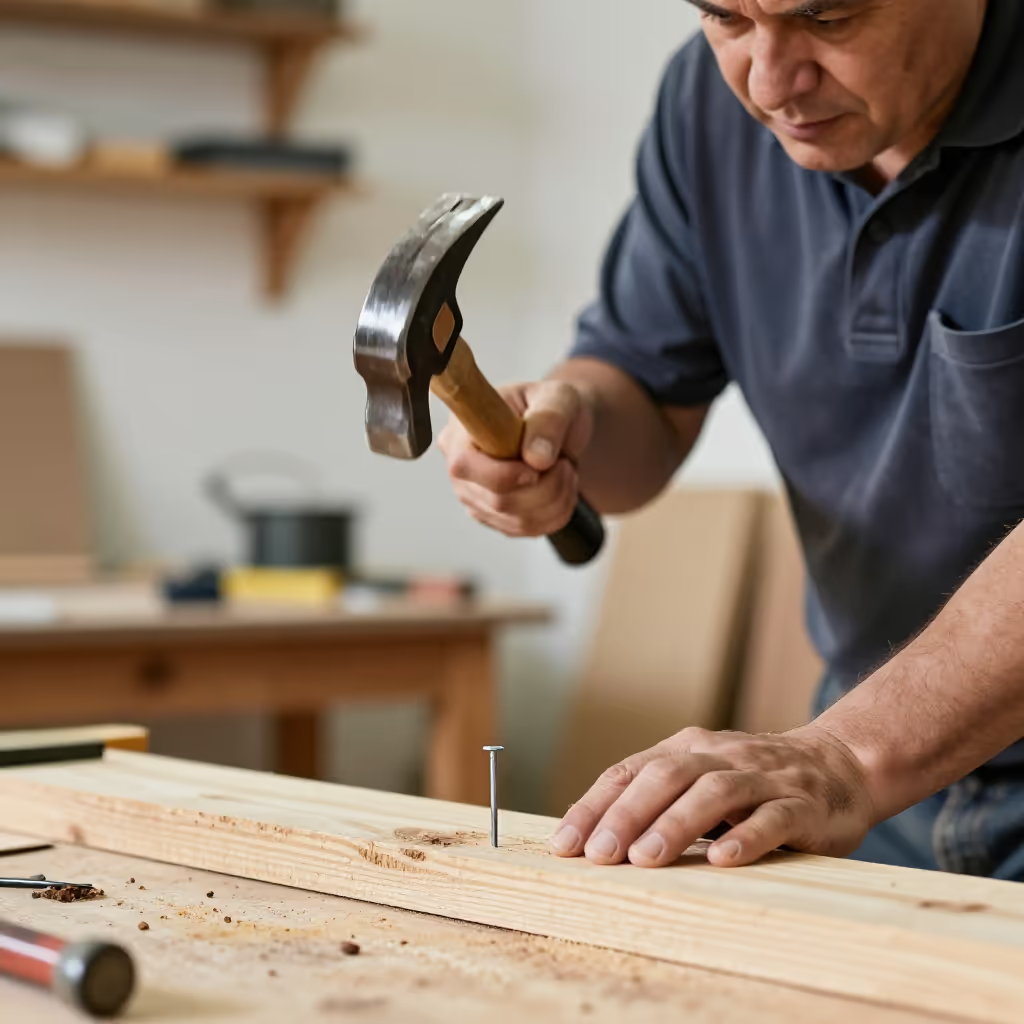
der Schlag
blow / hit
A short, forceful push or strike with the hand or an object.
EXAMPLE
Der Boxer landete einen harten Schlag.
The boxer landed a hard blow.
blow / stroke
Loading your saved state.
blow / hit
A short, forceful push or strike with the hand or an object.
Der Boxer landete einen harten Schlag.
The boxer landed a hard blow.

blow / setback
A sudden negative event that hits someone hard; a blow of fate.
Der Tod seiner Frau war ein schwerer Schlag für ihn.
The death of his wife was a severe blow to him.

stroke
A sudden loss of brain function caused by a disruption in blood flow; a stroke.
Mein Großvater erholt sich langsam von seinem Schlag.
My grandfather is slowly recovering from his stroke.

all at once
Everything at once, at the same time.
Er hat alle seine Schulden auf einen Schlag zurückgezahlt.
He paid back all his debts all at once.
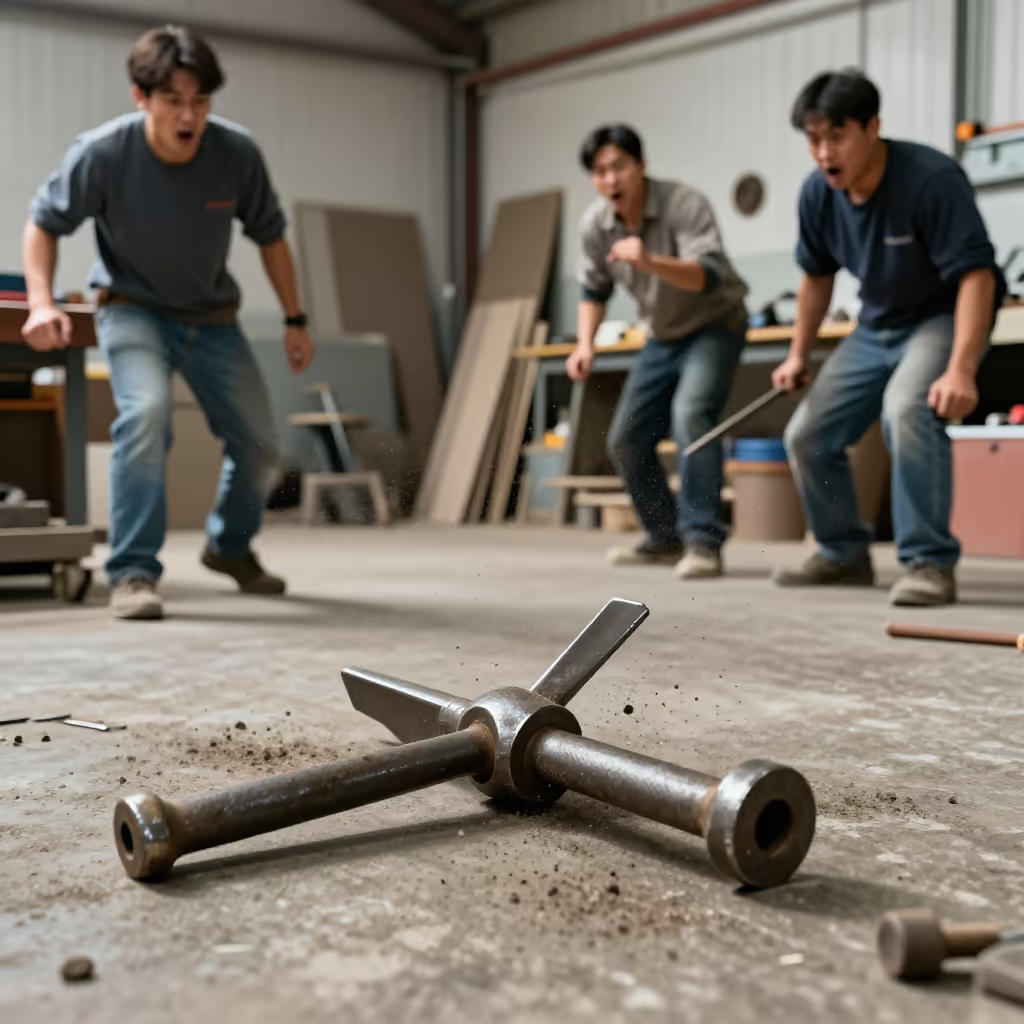
bang / crash
A sudden, loud noise caused by an impact or an explosion.
Mitten in der Nacht hörten wir einen lauten Schlag.
In the middle of the night, we heard a loud bang.

type / kind
A particular type or kind of person.
Sie ist ein ganz anderer Schlag Mensch als ihr Bruder.
She is a completely different type of person than her brother.
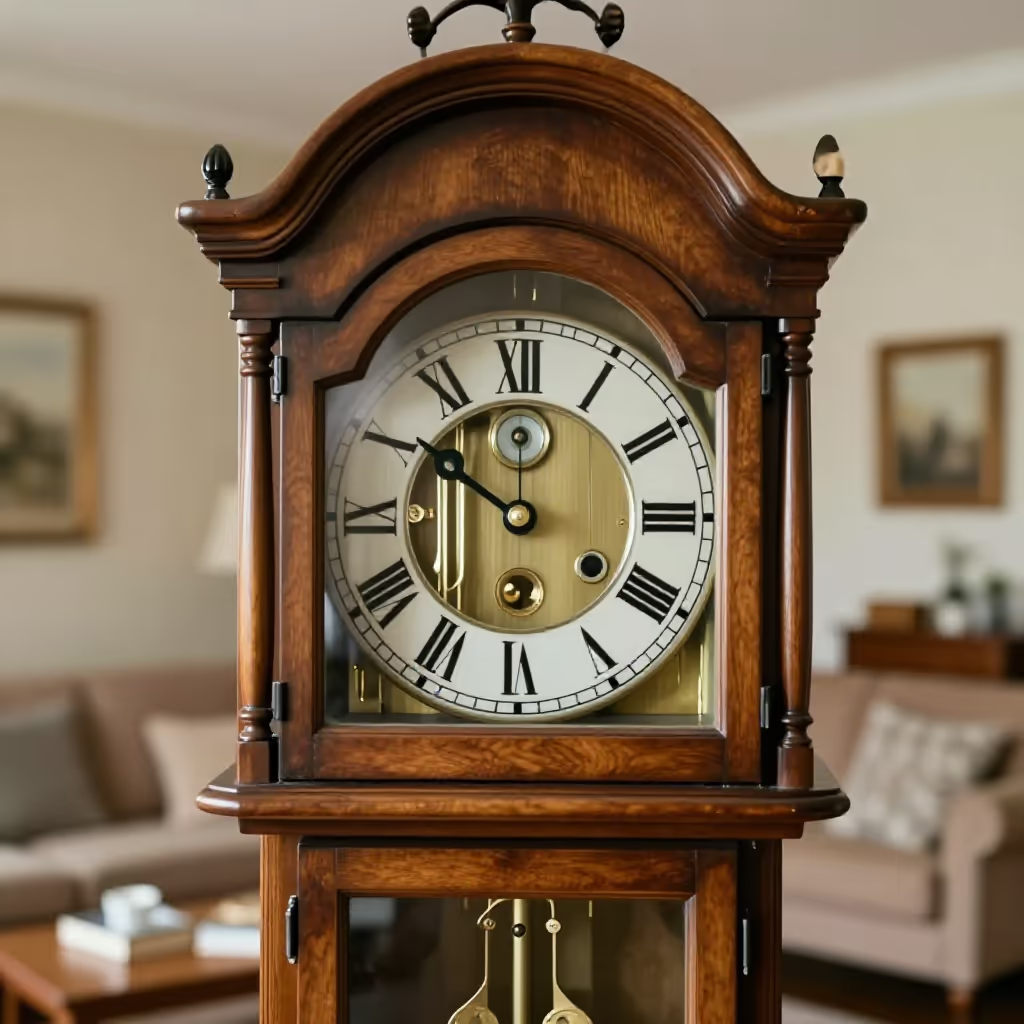
chime / strike
The sound a clock makes on the hour.
Beim zwölften Schlag der Turmuhr begann das Fest.
At the twelfth strike of the tower clock, the celebration began.
'Der Schlag' (the blow/stroke) is the noun related to the verb 'schlagen' (to hit/strike). Many meanings, including the figurative ones, derive from the basic idea of a sudden, forceful push or event.
Der Schlag des Hammers auf den Nagel war laut.
The blow of the hammer on the nail was loud.
In a medical context, 'der Schlag' (stroke) is almost always a short form of 'der Schlaganfall' (stroke). Typical verbs in this context are 'einen Schlag erleiden' (to suffer a stroke) or 'einen Schlag haben' (to have a stroke).
Nach seinem Schlag musste er das Sprechen neu lernen.
After his stroke, he had to learn to speak again.
The expression 'auf einen Schlag' (all at once) is a fixed idiom and means 'alles auf einmal' (everything at once) or 'plötzlich und gleichzeitig' (suddenly and simultaneously). The form cannot be changed.
Sie hat alle ihre Probleme auf einen Schlag gelöst.
She solved all her problems all at once.
When 'Schlag' (blow) describes a negative life event, it is often combined with adjectives like 'schwer' (severe), 'hart' (hard), or 'persönlich' (personal). It is then a 'Schlag des Schicksals' (blow of fate).
Der Verlust des Arbeitsplatzes war ein harter Schlag für die ganze Familie.
Losing the job was a hard blow for the whole family.
When 'Schlag' (type/kind) describes a kind of person, the word 'Mensch' (person) always follows. The structure is 'ein ... Schlag Mensch' (a ... type of person), for example 'ein besonderer Schlag Mensch' (a special type of person) or 'ein ruhiger Schlag Mensch' (a calm type of person).
Er ist ein ganz anderer Schlag Mensch als seine Schwester.
He is a completely different type of person than his sister.
In the literal meaning of a blow, the typical verbs are 'einen Schlag bekommen' (to receive a blow; passive) and 'jemandem einen Schlag geben/versetzen' (to give/deal someone a blow; active).
Er hat im Streit einen Schlag auf den Kopf bekommen.
During the argument, he received a blow to the head.
When 'Schlag' (bang/crash) describes a noise, it is often used with the verb 'hören' (to hear) or adjectives like 'laut' (loud) or 'dumpf' (dull/muffled). Unlike the blow (meaning 1), there is no physical contact with a person here.
Ich habe einen lauten Schlag gehört und bin aufgewacht.
I heard a loud bang and woke up.
guy / type
Typ and Schlag can refer to a particular type of person. Typ can directly be used as a term for an individual person. Schlag, by contrast, refers more to a group of similar people and therefore usually appears in phrases such as „ein Schlag von Menschen“ (a type of people).

Jonas gehört zu jenem ruhigen Schlag von Menschen, die Streit vermeiden.
Jonas belongs to that quiet type of people who avoid arguments.
Jonas ist ein ruhiger Typ, der Streit vermeidet.
Jonas is a quiet type who avoids arguments.