

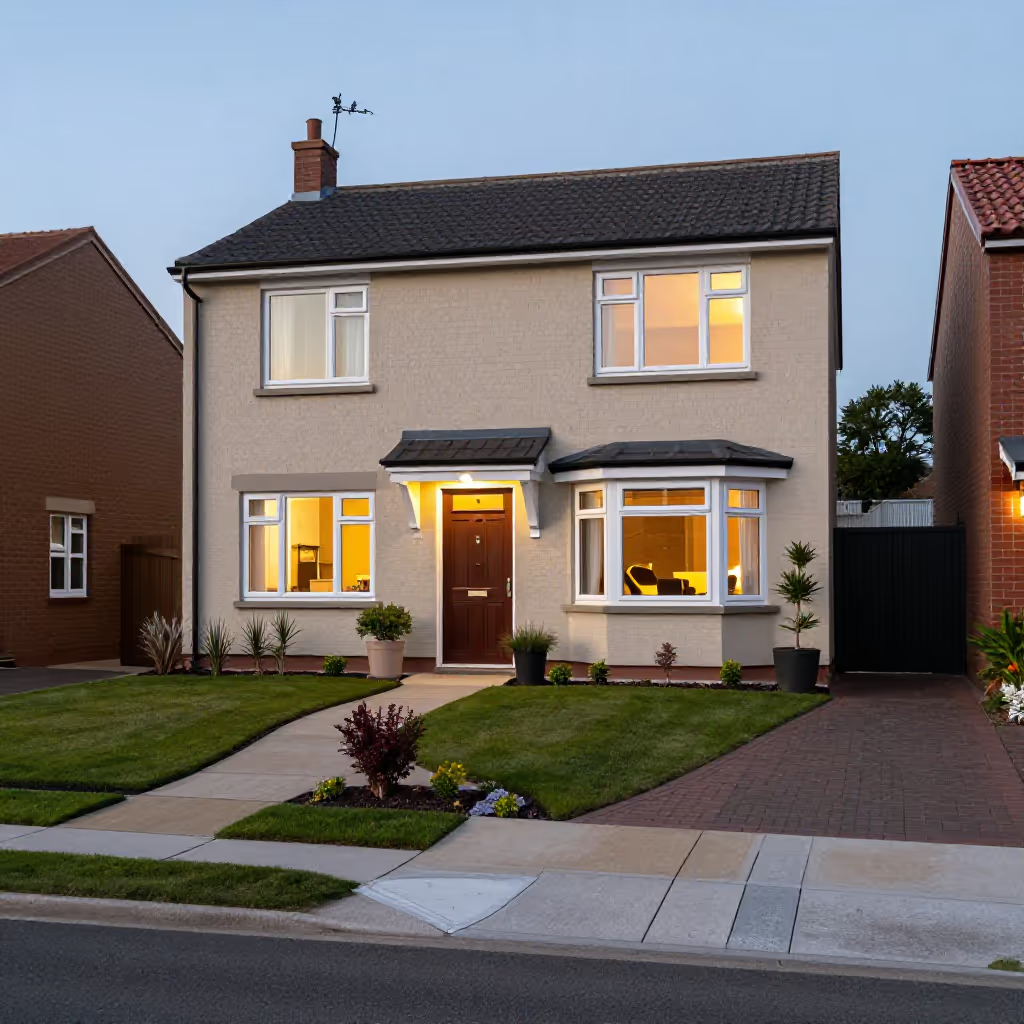
das Haus
house
A building mainly used as a place to live for one or more families.
EXAMPLE
Wir haben letztes Jahr ein kleines Haus am Stadtrand gekauft.
Last year we bought a small house on the outskirts of town.
house
Loading your saved state.
house
A building mainly used as a place to live for one or more families.
Wir haben letztes Jahr ein kleines Haus am Stadtrand gekauft.
Last year we bought a small house on the outskirts of town.

at home
Indicates the place where one lives. It describes position, not direction.
Ich bin heute Abend zu Hause und schaue einen Film.
I'm at home this evening and watching a film.

home
Indicates the direction of movement toward one's own place of residence.
Nach der Arbeit fahre ich direkt nach Hause.
After work, I drive straight home.

household
The community of people who live in a house; the household.
Als die Musik zu laut wurde, beschwerte sich das ganze Haus.
When the music got too loud, the whole house complained.

house / firm
A company, firm, or institution, especially in certain sectors such as fashion, publishing, or finance.
Das Modehaus Chanel präsentierte seine neue Kollektion in Paris.
The fashion house Chanel presented its new collection in Paris.
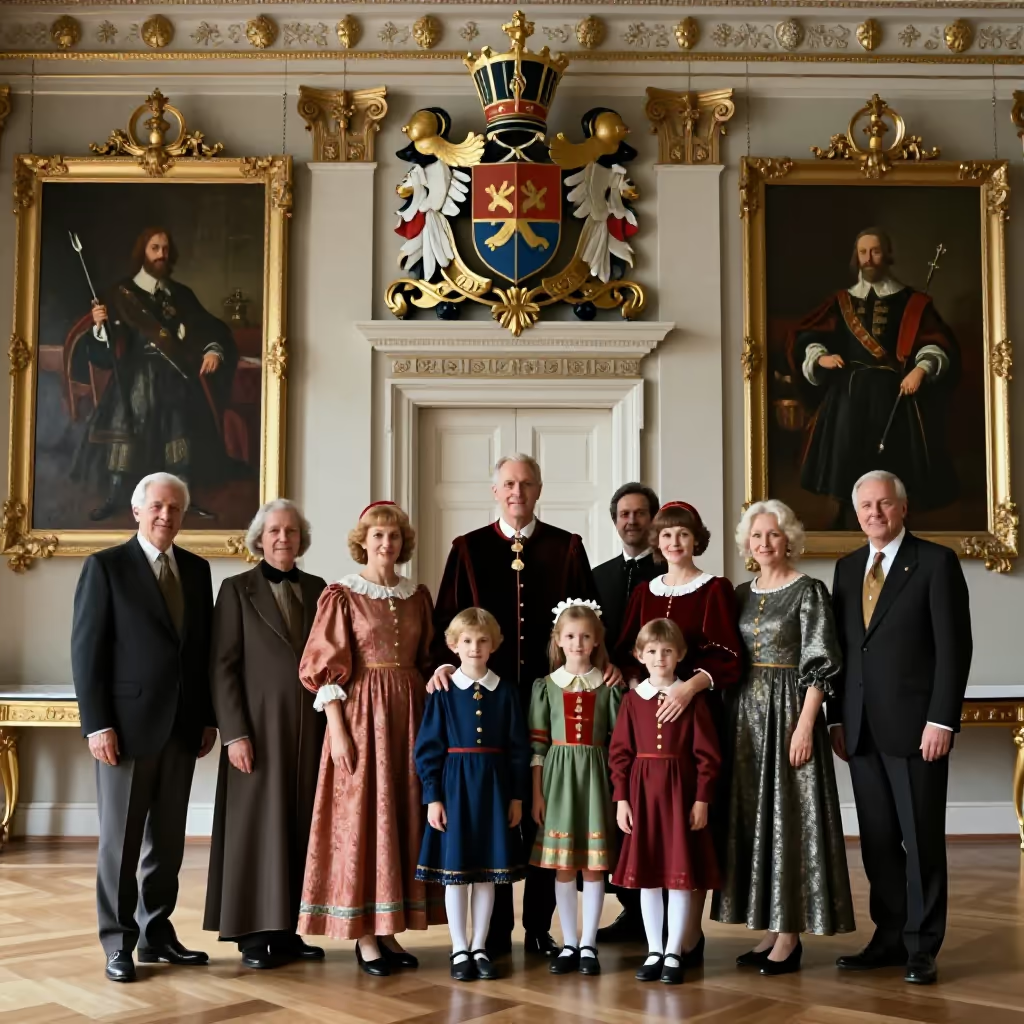
house / dynasty
A dynasty or noble family line.
Das Haus Habsburg herrschte über viele Jahrhunderte in Europa.
The House of Habsburg ruled in Europe for many centuries.
The expressions 'nach Hause' (home, toward home) and 'zu Hause' (at home) are fundamental. 'Nach Hause' expresses movement (to where?), while 'zu Hause' describes a location (where?).
Ich gehe jetzt nach Hause.
I'm going home now.
The word 'Haus' (house) is a very productive component of compound nouns. It often describes the purpose of a building.
Im Rathaus befindet sich die Stadtverwaltung.
The city administration is located in the town hall.
The expression 'von Haus aus' means 'by nature' or 'originally'. It describes an innate quality or an original field of training.
Sie ist von Haus aus Juristin, arbeitet aber jetzt als Künstlerin.
She is originally a lawyer, but now works as an artist.
The fixed expressions 'zu Hause' (at home) and 'nach Hause' (home, toward home) are always used without an article. You don't say 'im zu Hause' or 'ins nach Hause'.
Fühl dich wie zu Hause!
Make yourself at home!
Sometimes 'das Haus' (the house) stands for all the people who live in it. It is then treated like a group of people and can have its own verb in the sentence.
Das ganze Haus hat mitgefiebert, als die Nationalmannschaft spielte.
The whole house was on the edge of its seat when the national team was playing.
When 'Haus' (house) appears in the context of fashion, publishing, or finance, it often means 'Firma' (company) or 'Unternehmen' (enterprise/business). It is often combined directly with the name of the industry.
Das Verlagshaus hat einen neuen Bestseller veröffentlicht.
The publishing house has released a new bestseller.
In historical texts, 'das Haus' (the house) can refer to a noble family line or a dynasty. It is often connected with a family name.
Das Haus von Thurn und Taxis war für die Entwicklung des Postwesens wichtig.
The House of Thurn and Taxis was important for the development of the postal system.
building
Haus and Gebäude can refer to the same object when talking about a residential structure. Haus is the everyday term and often puts living in the building in the foreground; Gebäude describes the structure in a functional and neutral way. Gebäude is more appropriate for factual information about the structure itself.
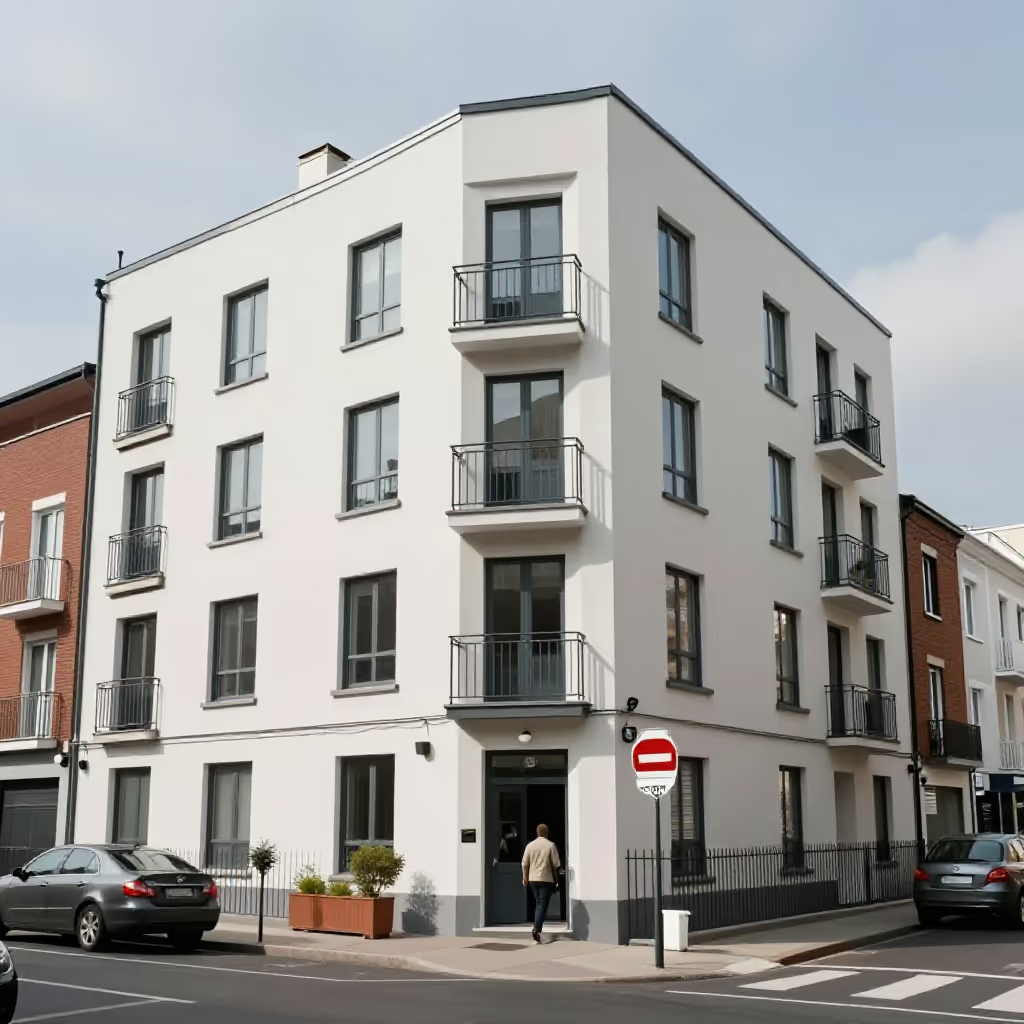
Dieses Haus haben wir gekauft, weil unsere Familie darin wohnen möchte.
We bought this house because our family wants to live in it.
Dieses Gebäude wird vor dem Kauf gründlich auf Schäden geprüft.
This building will be thoroughly inspected for damage before it is purchased.