


arbeiten
to work
To have paid employment in order to earn a living; to be employed.
EXAMPLE
Sie arbeitet als Ärztin in einem großen Krankenhaus.
She works as a doctor in a large hospital.
to work
Loading your saved state.
to work
To have paid employment in order to earn a living; to be employed.
Sie arbeitet als Ärztin in einem großen Krankenhaus.
She works as a doctor in a large hospital.

to work
To carry out a physical or mental activity; to be occupied with something.
Am Wochenende habe ich im Garten gearbeitet.
I worked in the garden at the weekend.

to work on
To deal intensively with a task, project, or problem in order to create or solve it.
Der Autor arbeitet gerade an seinem neuen Roman.
The author is currently working on his new novel.
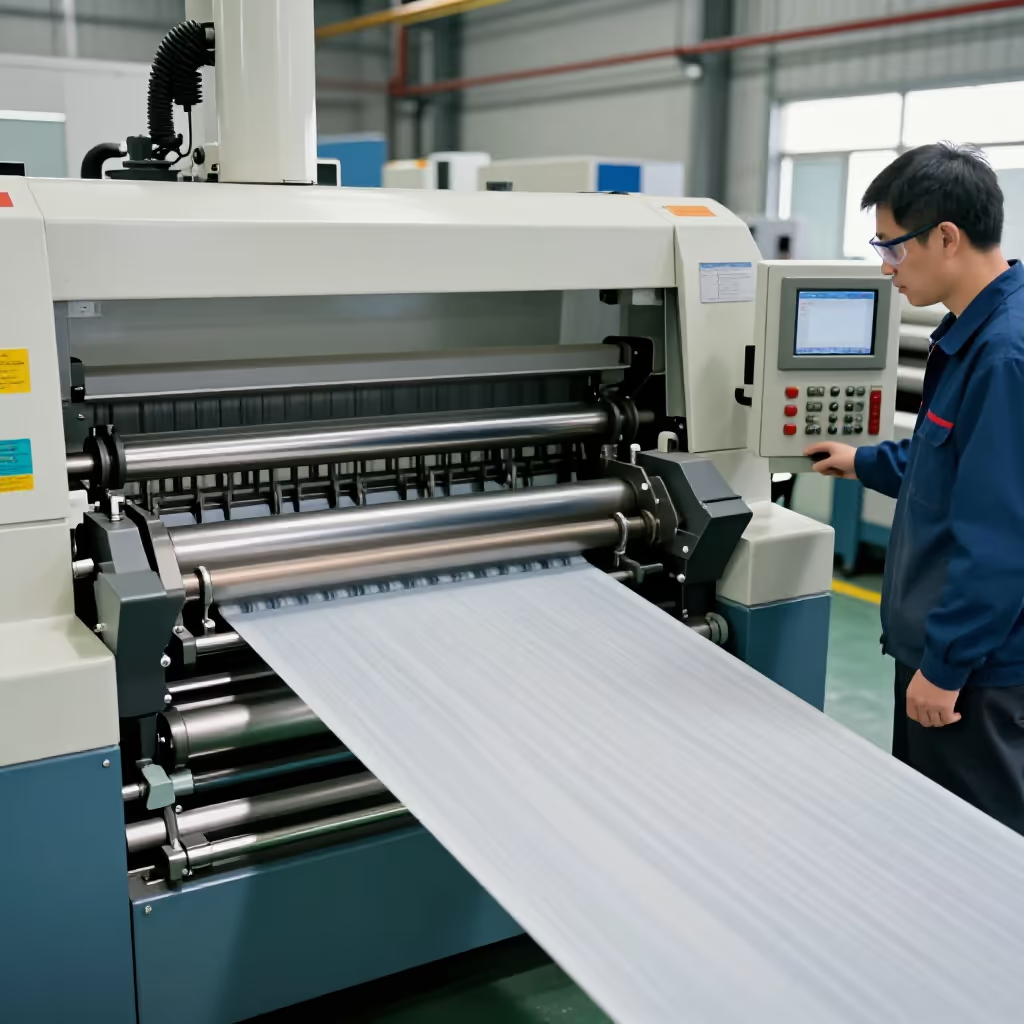
to work
To function or be in operation (referring to machines, devices, or systems).
Der neue Computer arbeitet viel schneller als der alte.
The new computer works much faster than the old one.

to work
To undergo an internal process or take effect, for example dough rising or wine fermenting.
Lass den Hefeteig an einem warmen Ort stehen, damit er gut arbeitet.
Leave the yeast dough in a warm place so it can work well.
The verb 'arbeiten' (to work) belongs to a large word family. Important related words are the noun 'die Arbeit' (work) and the adjective 'arbeitslos' (unemployed).
Er hat viel Arbeit in dieses Projekt investiert.
He invested a lot of work in this project.
To name a profession, you use the structure 'arbeiten als' (to work as) + job title in the nominative. This is a very common and useful construction.
Mein Bruder arbeitet als Programmierer in Berlin.
My brother works as a programmer in Berlin.
To name the employer or company you work for, you use the preposition 'bei' followed by the dative.
Ich arbeite bei einer großen deutschen Firma.
I work for a large German company.
When you are working on a project, task, or problem, you use the fixed preposition 'an' with the dative: 'an etwas arbeiten' (to work on something).
Die Wissenschaftler arbeiten an einem neuen Medikament.
The scientists are working on a new medication.
When the subject of the sentence is a machine, device, or system, 'arbeiten' (to work) means something like 'funktionieren' (to function) or 'in Betrieb sein' (to be in operation).
Meine alte Kaffeemaschine arbeitet nicht mehr richtig.
My old coffee machine doesn't work properly anymore.
In connection with dough, wine, or wood, 'arbeiten' (to work) means that a material is changing through internal, natural processes.
Das Holz des neuen Tisches arbeitet und zieht sich bei Kälte zusammen.
The wood of the new table is working and contracts in the cold.
to do / make
Machen and arbeiten can overlap when completing a task. Machen focuses more on the task as an action being carried out, while arbeiten highlights the ongoing process and the work involved. Use machen when talking about getting something done and arbeiten an when talking about working on it.
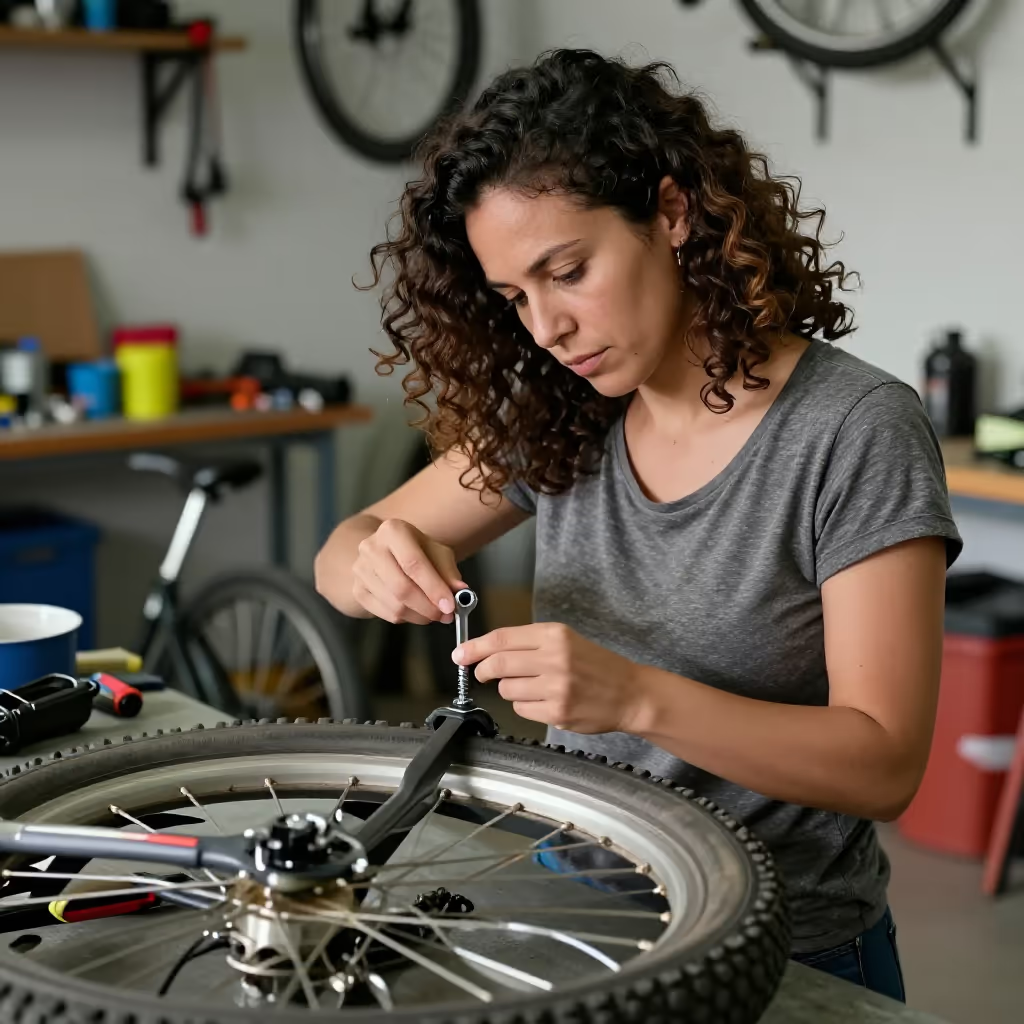
Ich arbeite heute an meinen Hausaufgaben.
I am working on my homework today.
Ich mache heute meine Hausaufgaben.
I am doing my homework today.