


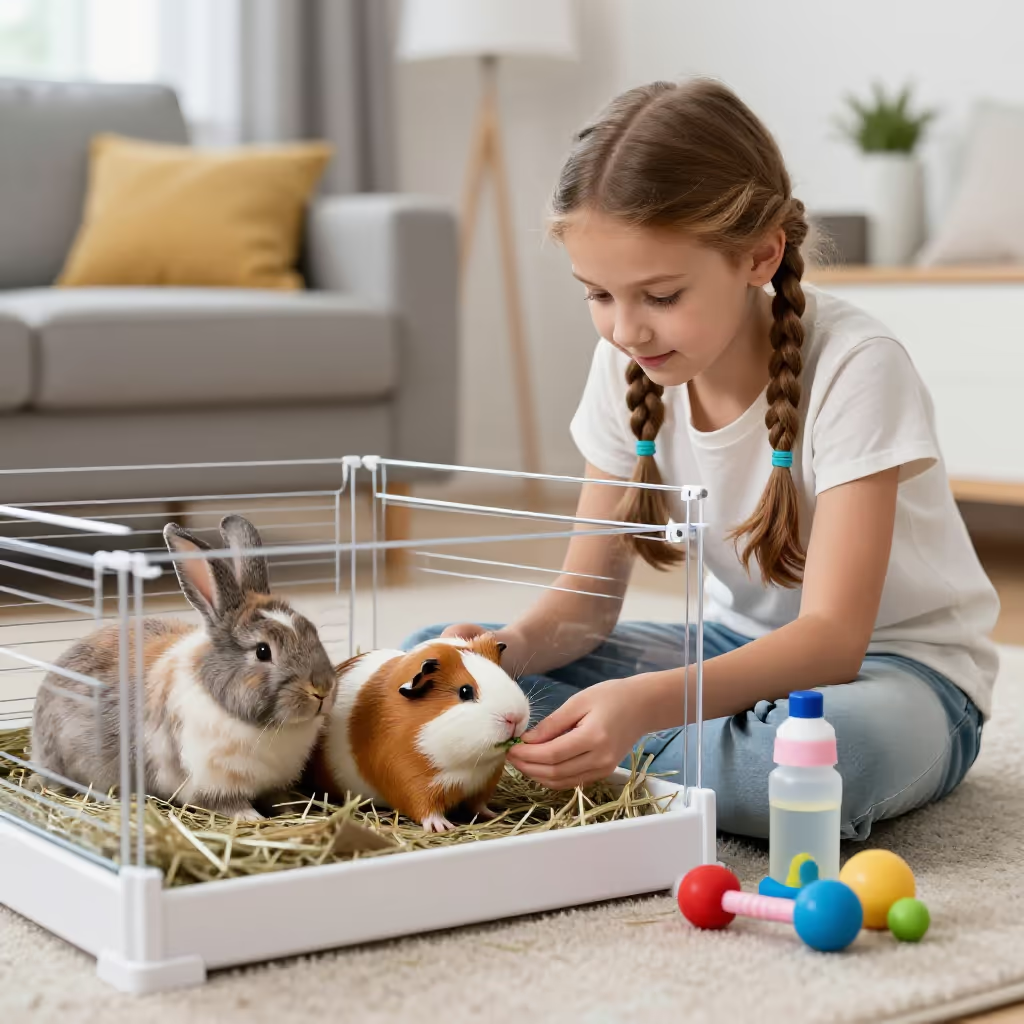
An animal that is kept by people in the house or nearby, usually for enjoyment, companionship, or as a hobby.
example
Viele Kinder wünschen sich ein eigenes Haustier, zum Beispiel einen Hund oder ein Kaninchen.
Many children want a pet of their own, for example a dog or a rabbit.
Usage tips
Compound word
The word 'Haustier' (pet) is a simple compound made up of 'das Haus' (house) and 'das Tier' (animal). So it literally refers to an animal that lives in or around the house.
EXAMPLE
Ein Goldfisch ist ein pflegeleichtes Haustier.
A goldfish is an easy-care pet.
Typical verbs
Common verbs used with pets are 'ein Haustier haben' (to have a pet), 'ein Haustier halten' (to keep a pet), and 'sich ein Haustier anschaffen' (to get a pet).
EXAMPLE
Wir möchten uns nächstes Jahr ein Haustier anschaffen.
We would like to get a pet next year.
Asking about permission
A very typical everyday question is whether pets are allowed in a place. For this, people often use the phrase 'Sind Haustiere erlaubt?' (Are pets allowed?).
EXAMPLE
Entschuldigung, sind in diesem Hotel Haustiere erlaubt?
Excuse me, are pets allowed in this hotel?
Compare with
confusable
Haustier vs Vieh
livestock / brute
'das Vieh' and 'das Haustier' both refer to animals that can be kept by people. However, 'Vieh' mainly means farm animals in agriculture, for example cows, pigs, sheep, or goats. The word sounds like farms and work. A 'Haustier' is usually kept for enjoyment or companionship, for example a cat, a dog, or a rabbit. Learners may confuse the words because both have to do with animals kept by people. A practical rule: on a farm, people often say 'Vieh'; at home, they are more likely to say 'Haustier'.
Haustier
Unsere Nachbarin hat seit gestern ein Kaninchen als Haustier.
Since yesterday, our neighbor has had a rabbit as a pet.
Vieh
Am Morgen bringt der Bauer das Vieh auf die Weide.
In the morning, the farmer takes the livestock out to the pasture.