


heben
to lift
To move something with physical strength from a lower to a higher position; to raise or lift up.
EXAMPLE
Kannst du mir helfen, diesen schweren Tisch zu heben?
Can you help me lift this heavy table?
to lift
Loading your saved state.
to lift
To move something with physical strength from a lower to a higher position; to raise or lift up.
Kannst du mir helfen, diesen schweren Tisch zu heben?
Can you help me lift this heavy table?
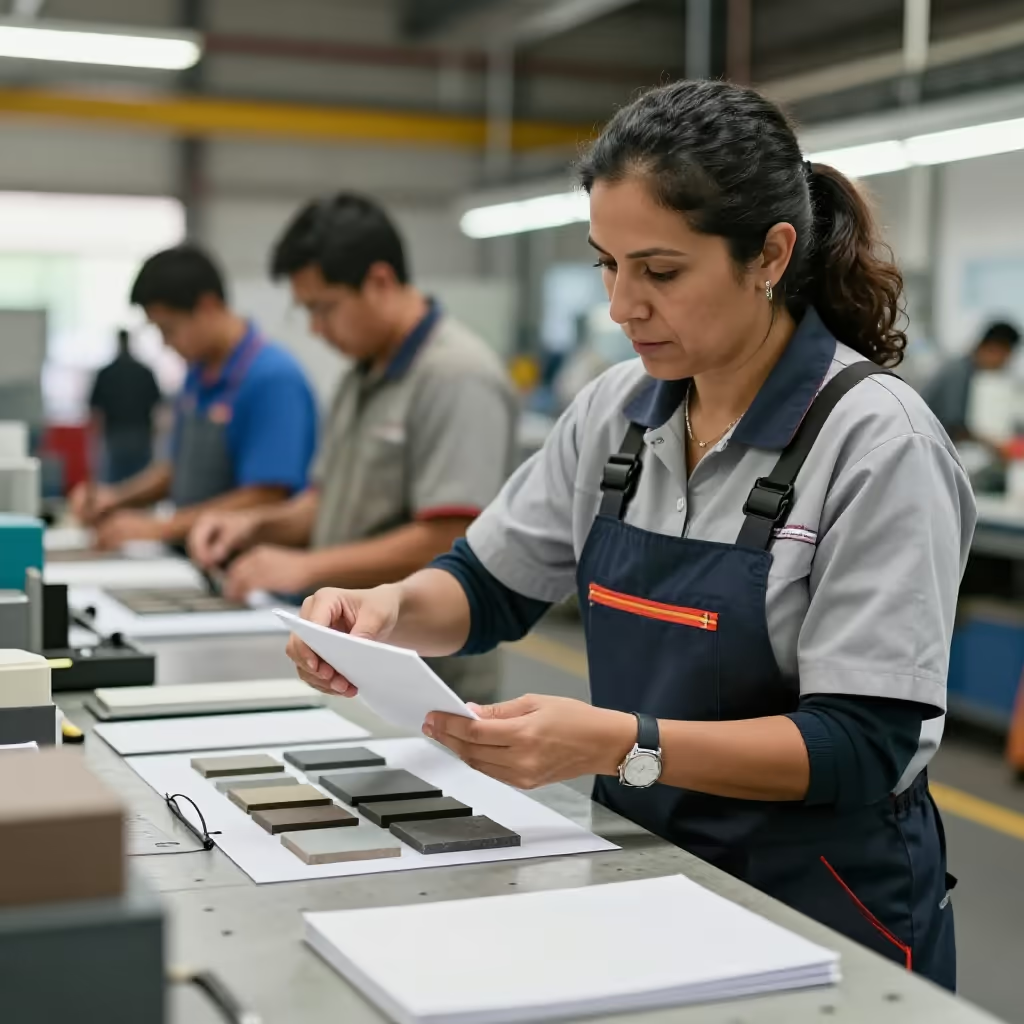
to lift
To bring something abstract to a higher level; to improve or raise it.
Ein ehrliches Kompliment kann die Stimmung sofort heben.
An honest compliment can lift the mood immediately.
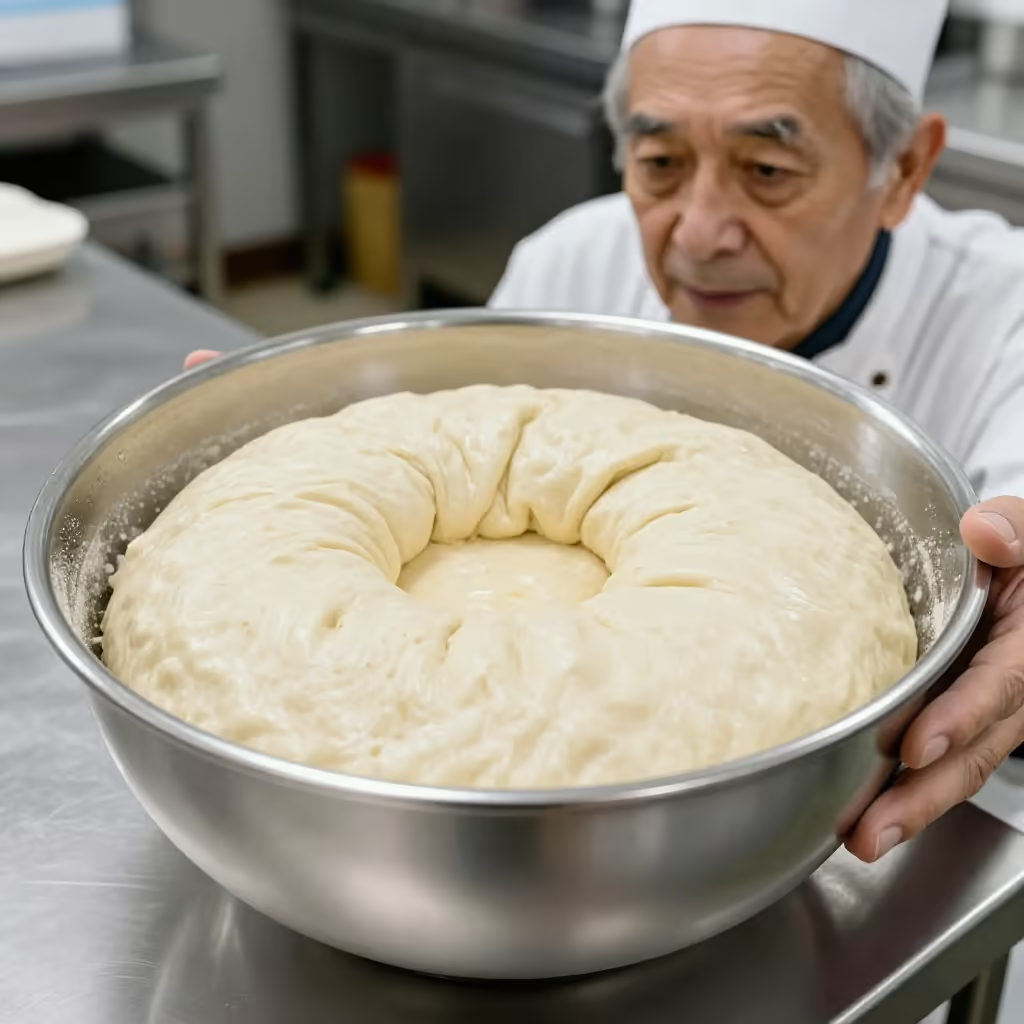
to rise
To increase in volume and rise, especially dough through the effect of yeast or baking powder.
Der Pizzateig muss sich an einem warmen Ort etwa eine Stunde lang heben.
The pizza dough has to rise in a warm place for about an hour.

to rise and fall
To move rhythmically up and down.
Man konnte sehen, wie sich der Brustkorb des schlafenden Kindes hob und senkte.
You could see how the sleeping child's chest rose and fell.

to raise a glass
To raise a glass in order to toast someone or something; to make a toast.
Lasst uns das Glas auf den Erfolg des Projekts heben!
Let's raise a glass to the success of the project!
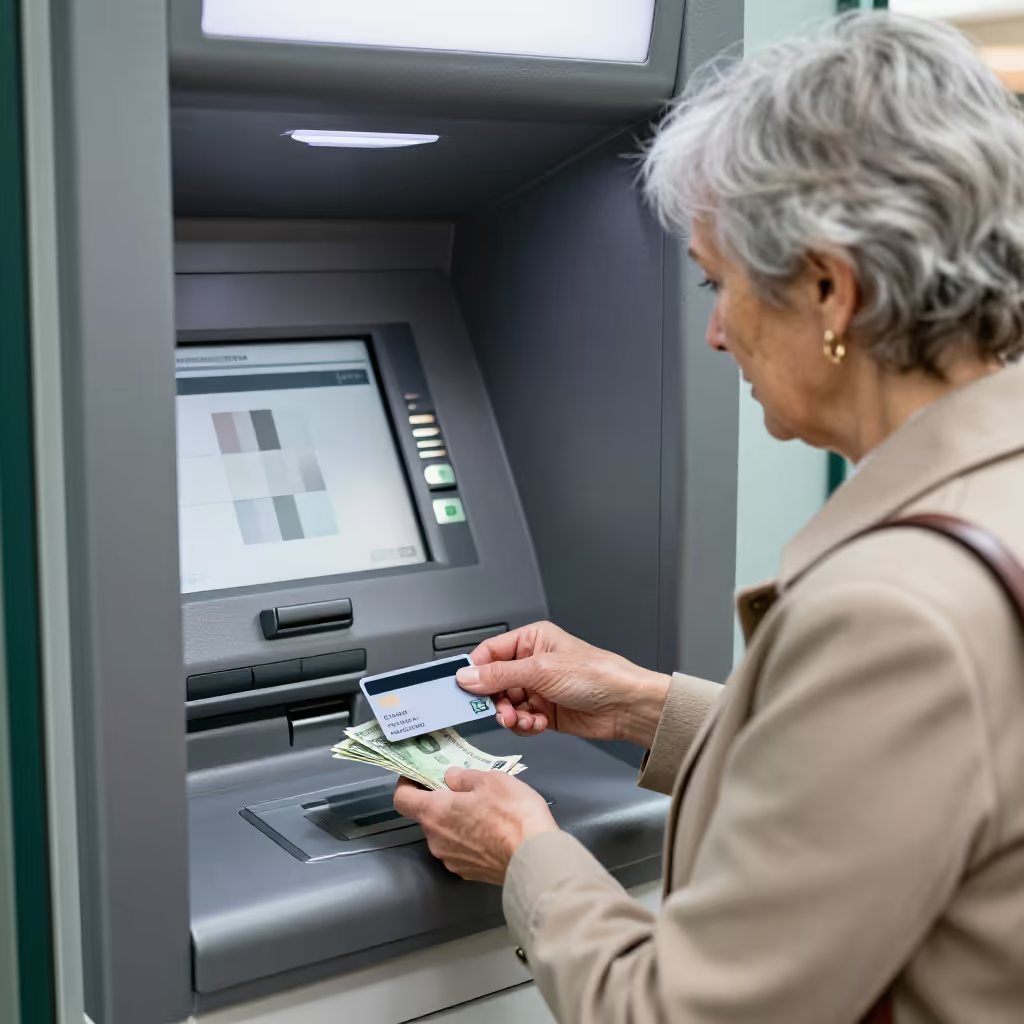
to withdraw
To withdraw money from a bank account. This usage is common mainly in Austria and southern Germany.
Ich muss vor dem Wochenende noch Geld vom Automaten heben.
I still need to withdraw money from the ATM before the weekend.
'Heben' (to lift) is a strong verb. Its principal parts are 'heben', 'hob', 'gehoben'. The perfect tense is formed with the auxiliary verb 'haben' (to have).
Er hat die schwere Kiste allein in den zweiten Stock gehoben.
He lifted the heavy box to the second floor by himself.
The reflexive form 'sich heben' describes an upward movement that happens by itself. It is used, for example, for dough that rises or for the chest when breathing.
Der Teig muss an einem warmen Ort stehen, damit er sich hebt.
The dough has to stand in a warm place so that it rises.
'Heben' (to lift) is the base word for many important separable verbs such as 'abheben' (to take off, withdraw money), 'aufheben' (to pick up, keep), or 'anheben' (to raise slightly). Recognizing 'heben' helps you understand these verbs.
Das Flugzeug wird in wenigen Minuten abheben.
The plane will take off in a few minutes.
In a figurative sense, 'heben' (to lift) is used to improve or raise something abstract. Typical combinations are 'die Stimmung heben' (to lift the mood), 'das Niveau heben' (to raise the level), or 'die Moral heben' (to boost morale).
Gute Musik kann an einem schlechten Tag die Stimmung heben.
Good music can lift the mood on a bad day.
The phrase 'das Glas heben' (to raise a glass) is a common way to make a toast. It is often followed by 'auf + accusative' to say what one is toasting.
Lasst uns die Gläser auf das Brautpaar heben!
Let's raise our glasses to the bride and groom!
In Austria and southern Germany, 'heben' is often used in the sense of 'Geld vom Konto abheben' (to withdraw money from an account). In other regions of Germany, 'abheben' is more common.
Ich gehe kurz zur Bank, um etwas Geld zu heben.
I'm going to the bank quickly to withdraw some money.
to increase
Erhöhen and heben can both bring something to a higher position. Erhöhen emphasizes making an object or surface higher, while heben highlights the actual movement using physical force. Use erhöhen for the new position and heben for the lifting itself.

Der Helfer hob den Tisch kurz an, damit wir den Teppich darunter legen konnten.
The assistant briefly lifted the table so that we could put the rug underneath it.
Die Handwerker erhöhten den Tisch, damit er besser zum Fenster passte.
The workers raised the table so that it fit the window better.