

aufgehen
to open
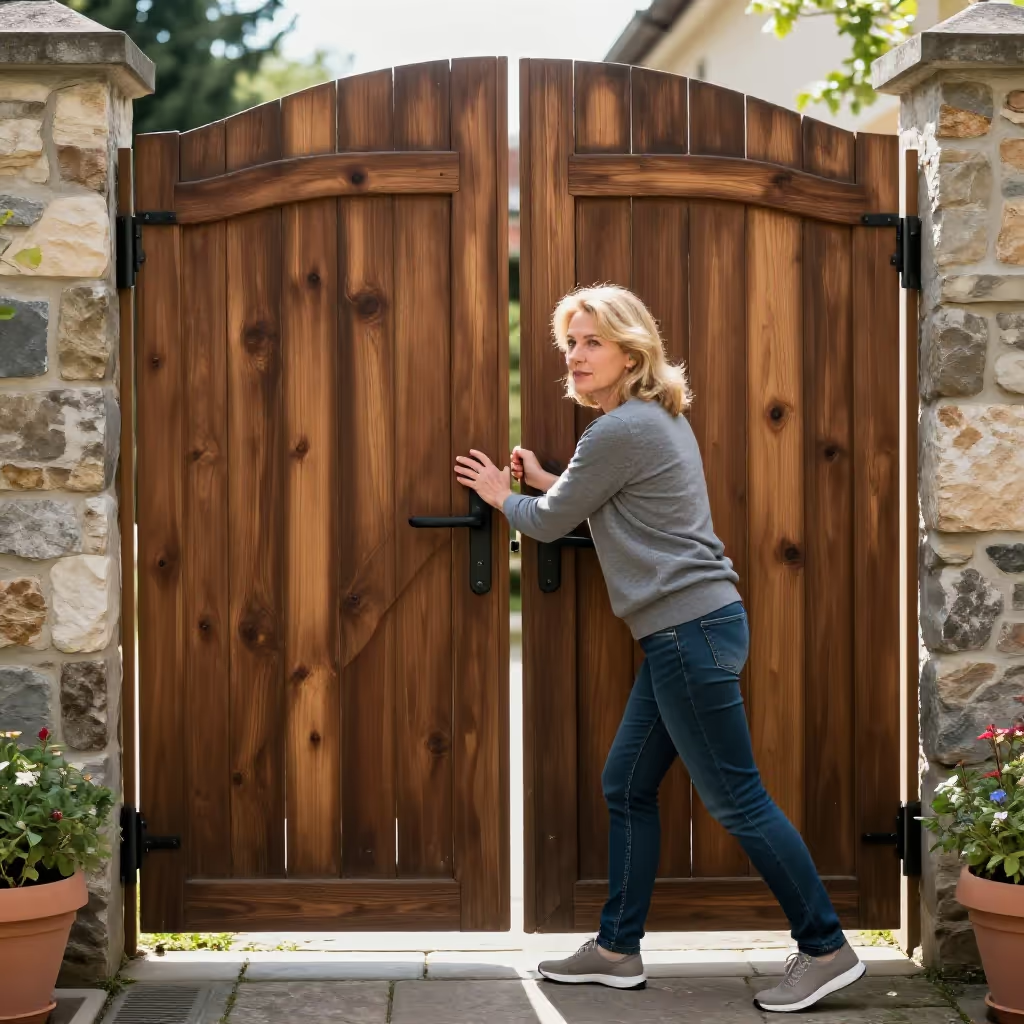
To open; to no longer be closed.
EXAMPLE
Plötzlich ging die Tür von alleine auf.
Suddenly the door opened by itself.
to open / rise / work out
Loading your saved state.
to open
To open; to no longer be closed.
Plötzlich ging die Tür von alleine auf.
Suddenly the door opened by itself.

to rise
To appear on the horizon and gain height, referring to celestial bodies such as the sun or moon.
Wir standen früh auf, um zu sehen, wie die Sonne über den Bergen aufgeht.
We got up early to see the sun rise over the mountains.
to rise
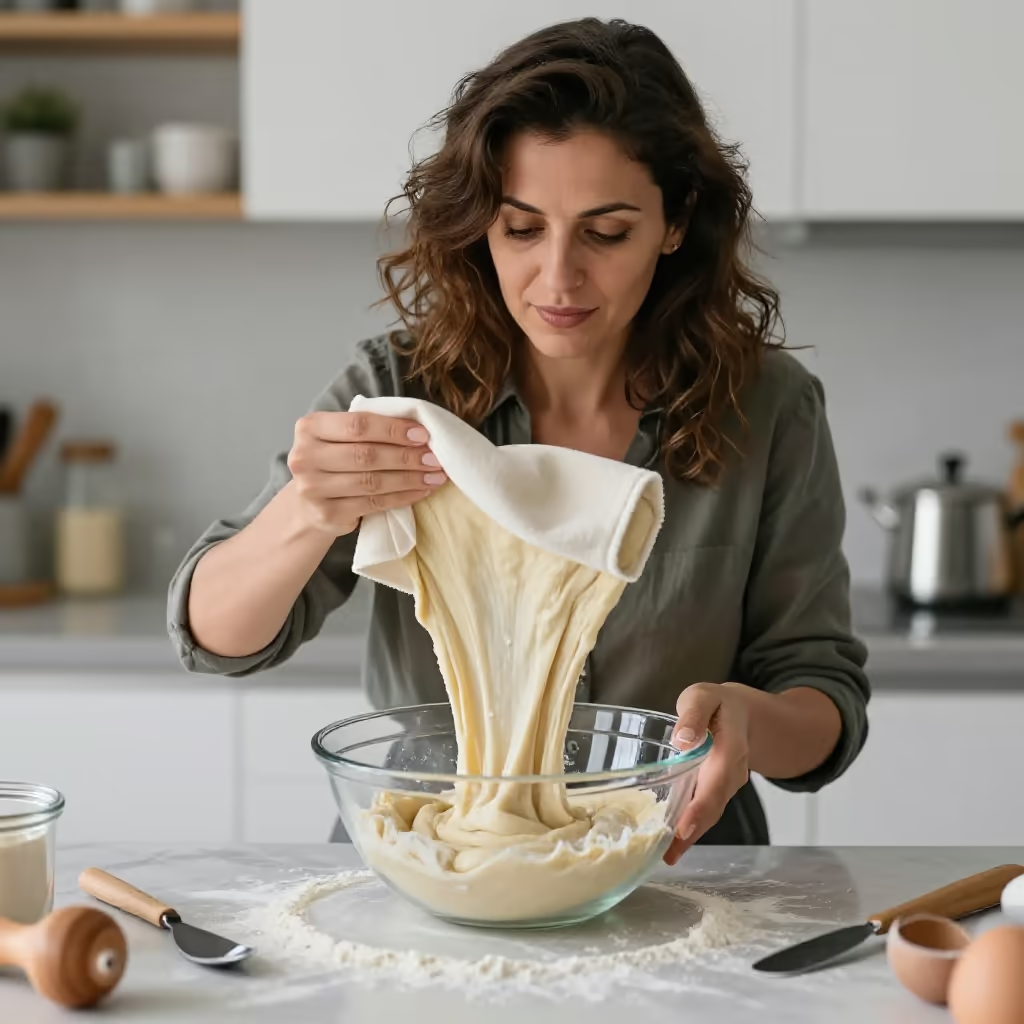
To increase in volume, especially dough through the effect of yeast or baked goods in the oven.
Lass den Pizzateig an einem warmen Ort stehen, damit er schön aufgeht.
Leave the pizza dough in a warm place so that it rises nicely.
to work out
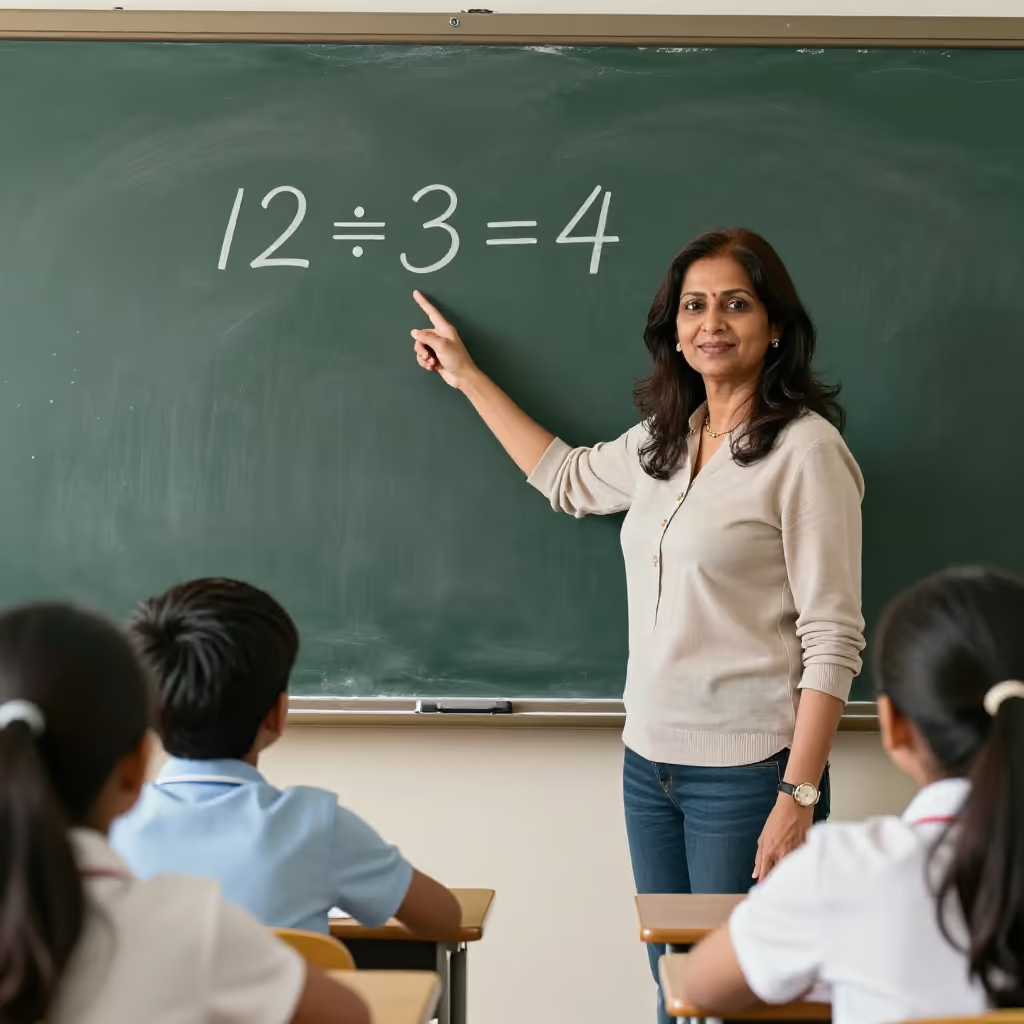
In mathematics, to produce a result without a remainder.
Die Rechnung geht nicht auf, es bleibt ein Rest von zwei.
The calculation doesn't work out; there is a remainder of two.
to be absorbed in
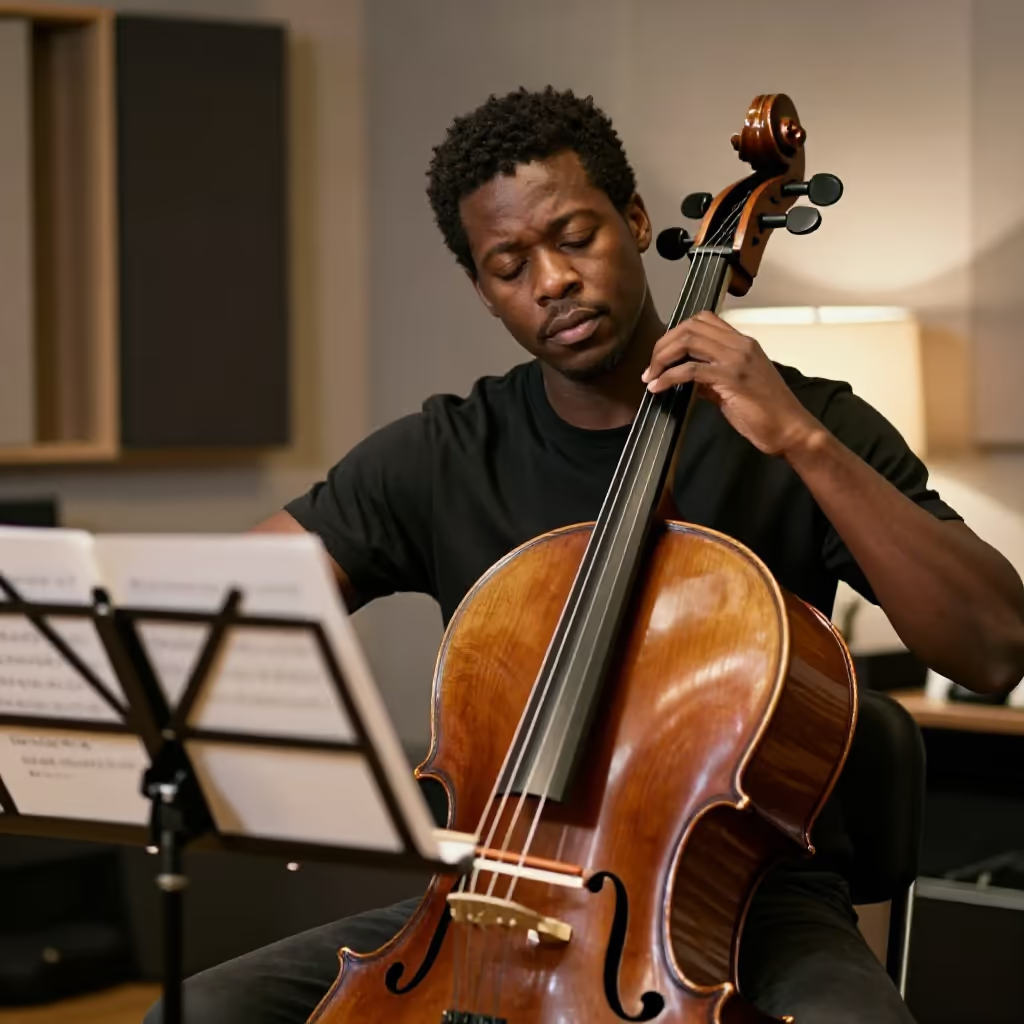
To devote oneself to something with full dedication and passion, so that it becomes one's purpose in life.
Seit der Geburt ihres Kindes geht sie in ihrer Mutterrolle voll auf.
Since the birth of her child, she has been completely absorbed in her role as a mother.

to come undone
To come loose or open by itself, for example with a knot, seam, or zipper.
Die Naht an meiner Hosentasche ist aufgegangen.
The seam on my trouser pocket has come undone.
'Aufgehen' (to open / rise / work out) is a separable verb. The prefix 'auf-' comes at the end in a main clause. In subordinate clauses and in the infinitive with 'zu', the verb stays together.
Jeden Morgen geht die Sonne um sechs Uhr auf.
Every morning the sun rises at six o'clock.
The prefix 'auf-' often indicates an opening or an upward movement. You can see this in meanings such as a door that opens, the sun that rises, or dough that rises.
Der Hefeteig muss an einem warmen Ort eine Stunde lang aufgehen.
The yeast dough needs to rise in a warm place for an hour.
The expression 'in etwas aufgehen' means to devote oneself fully and completely to something. The thing one devotes oneself to is in the dative after the preposition 'in'.
Er ist ein leidenschaftlicher Gärtner und geht total in seiner Gartenarbeit auf.
He is a passionate gardener and is totally absorbed in his gardening.
The mathematical meaning is often used figuratively. When a plan or idea 'nicht aufgeht' (doesn't work out), it means that it does not work or is not successful.
Sein Plan, ohne Ticket ins Konzert zu kommen, ist nicht aufgegangen.
His plan to get into the concert without a ticket did not work out.
When 'aufgehen' (to rise) describes a movement in the sky, the subjects are almost always celestial bodies. Typical subjects are 'die Sonne' (the sun), 'der Mond' (the moon), or 'ein Stern' (a star).
In dieser klaren Nacht kann man viele Sterne aufgehen sehen.
On this clear night, you can see many stars rise.
In the kitchen, especially when baking, 'aufgehen' (to rise) means that something increases in volume. Typical subjects are 'der Teig' (the dough), 'der Kuchen' (the cake), or 'das Soufflé' (the soufflé).
Damit der Kuchen schön aufgeht, darfst du die Ofentür nicht zu früh öffnen.
So that the cake rises nicely, you must not open the oven door too early.
When something that was fastened comes loose by itself, you use 'aufgehen' (to come undone). Typical subjects are 'ein Knoten' (a knot), 'eine Schleife' (a bow), 'eine Naht' (a seam), or 'ein Reißverschluss' (a zipper).
Pass auf, dein Schnürsenkel ist aufgegangen!
Watch out, your shoelace has come undone!
to lift
“Sich heben” and “aufgehen” can both describe yeast dough gaining volume. “Aufgehen” is the usual term for the process, while “sich heben” places more emphasis on the visible upward movement. In baking, “aufgehen” is usually the more natural choice.
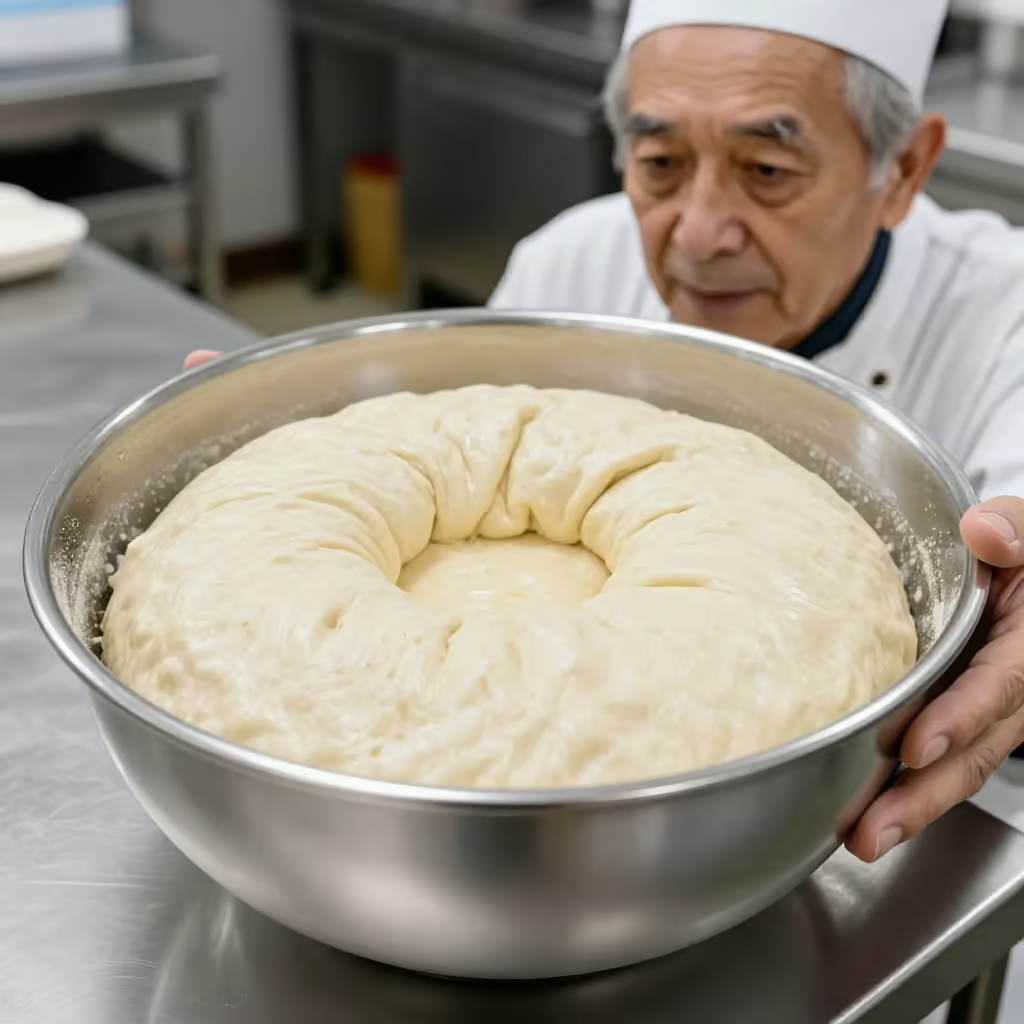
Der Hefeteig geht langsam in der warmen Schüssel auf.
The yeast dough is slowly rising in the warm bowl.
Der Hefeteig hebt sich langsam in der warmen Schüssel.
The yeast dough is slowly rising in the warm bowl.