

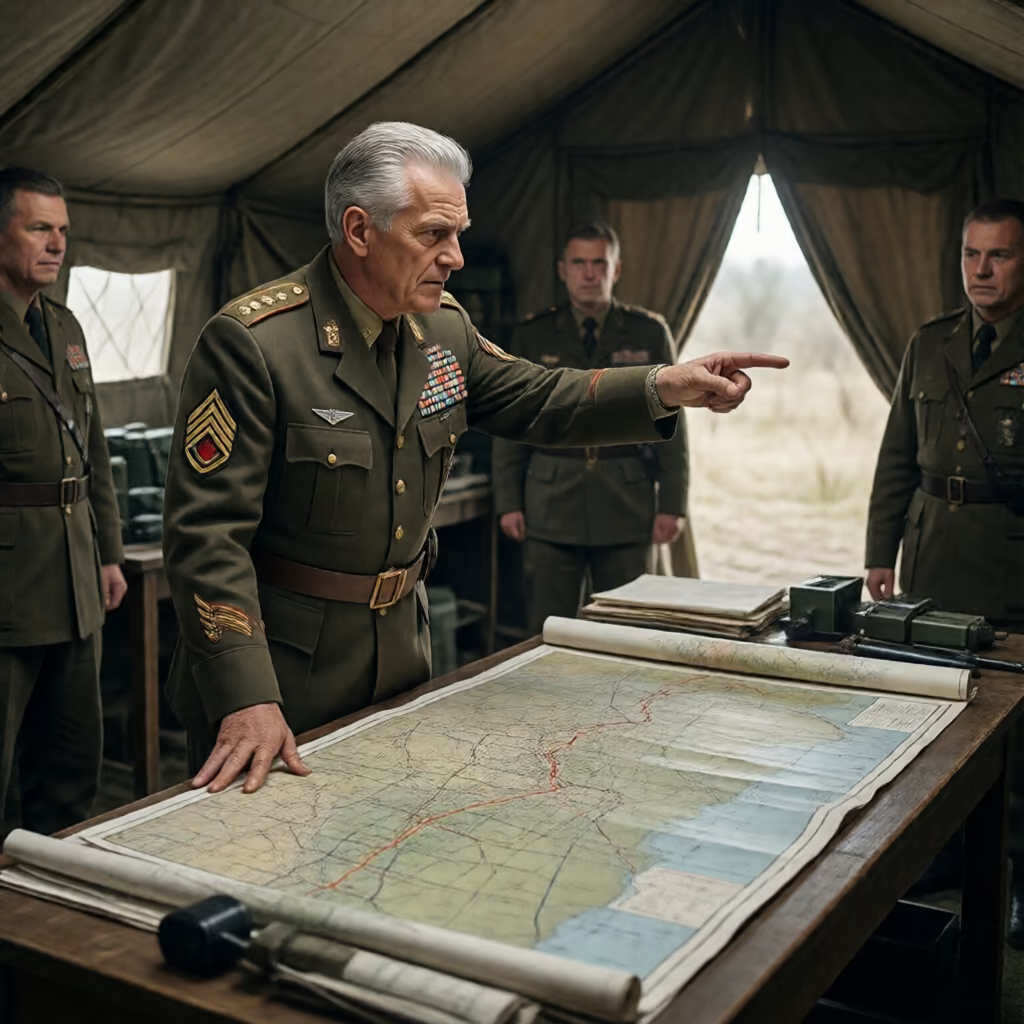
der Heerführer
military commander
A military leader who commands an army or large troop formations; army commander.
Der Heerführer führte seine Truppen in die entscheidende Schlacht.
The military commander led his troops into the decisive battle.
military commander
der Heerführer, die Heerführer
Loading your saved state.

military commander
A military leader who commands an army or large troop formations; army commander.
Der Heerführer führte seine Truppen in die entscheidende Schlacht.
The military commander led his troops into the decisive battle.
| gender | masculine der |
|---|---|
| plural | die Heerführer |
| genitive | des Heerführers |
| singular | plural | |
|---|---|---|
| nominative | der Heerführer | die Heerführer |
| accusative | den Heerführer | die Heerführer |
| dative | dem Heerführer | den Heerführern |
| genitive | des Heerführers | der Heerführer |
The article changes with the case; it is shown in colour.
'Heerführer' is made up of 'Heer' (army) and 'Führer' (leader). The compound therefore refers to a person who leads an army.
Der Heerführer plante den Angriff sorgfältig.
The military commander planned the attack carefully.
'Heerführer' is mainly found today in historical, military, or literary texts. It often refers to wars, battles, and large troop formations.
In der Chronik wird der Heerführer als erfahrener Stratege beschrieben.
The chronicle describes the military commander as an experienced strategist.
'Heerführer' is often used with verbs and expressions such as 'der Heerführer befehligt Truppen' (the military commander commands troops), 'der Heerführer zieht in die Schlacht' (the military commander goes into battle), and 'unter dem Heerführer stehen' (to serve under the military commander).
Unter dem Heerführer zogen die Truppen am Morgen in die Schlacht.
Under the military commander, the troops went into battle in the morning.