
To carry and maintain a feeling, thought, or intention within oneself over a longer period of time. Often used for doubts, wishes, resentment, or suspicion.
example
Sie hegte schon lange den Wunsch, nach Australien auszuwandern.
She had long harbored the wish to emigrate to Australia.
Usage tips
Register: Elevated language
The verb 'hegen' (to harbor / to nurture) belongs to elevated language. It sounds more formal and poetic than everyday verbs.
EXAMPLE
Er hegte schon lange den Plan, ein Buch zu schreiben.
He had long harbored the plan to write a book.
Typical collocations
In the first meaning, 'hegen' (to harbor) is almost always used with abstract nouns. Typical combinations are: 'einen Wunsch hegen' (to harbor a wish), 'einen Verdacht hegen' (to harbor a suspicion), 'Zweifel hegen' (to have doubts), 'Hoffnung hegen' (to harbor hope), or 'Groll hegen' (to bear resentment).
EXAMPLE
Die Polizei hegte den Verdacht, dass der Zeuge nicht die Wahrheit sagte.
The police harbored the suspicion that the witness was not telling the truth.
Fixed expression
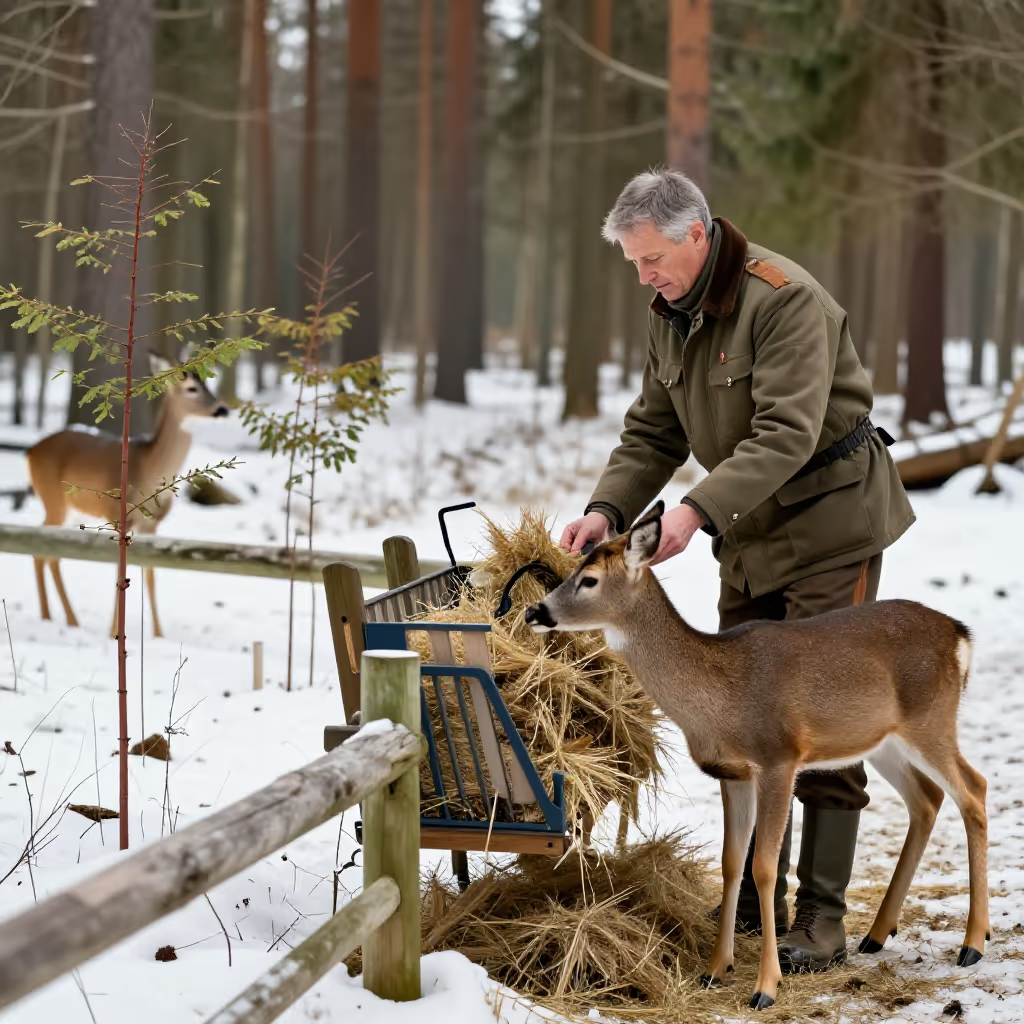
In the meaning of 'pflegen' (to care for), 'hegen' (to nurture) is often used in the fixed expression 'hegen und pflegen' (to cherish and care for). This combination emphasizes especially loving and intensive care.
EXAMPLE
Sie hegt und pflegt ihre Rosen mit großer Hingabe.
She nurtures and cares for her roses with great devotion.
Compare with
near_synonym · confusable
hegen vs haben
to have
'haben' and 'hegen' can both be used with feelings, thoughts, or attitudes. You can have doubts, wishes, or an aversion, and you can also 'hegen' such feelings or thoughts. The difference lies in style and intensity. 'haben' is neutral and very common. 'hegen' sounds more elevated and means that a feeling or thought remains in someone over a longer period of time and is maintained. Learners may confuse the words because both can be used with inner states. In everyday language, 'haben' is usually more natural; 'hegen' fits better in more serious or written contexts.
hegen
Leon hegt den Wunsch, eines Tages allein nach Japan zu reisen.
Leon harbors the wish to travel to Japan alone one day.
haben
Ich habe Zweifel, ob der Plan bis Freitag klappt.
I have doubts about whether the plan will work by Friday.