

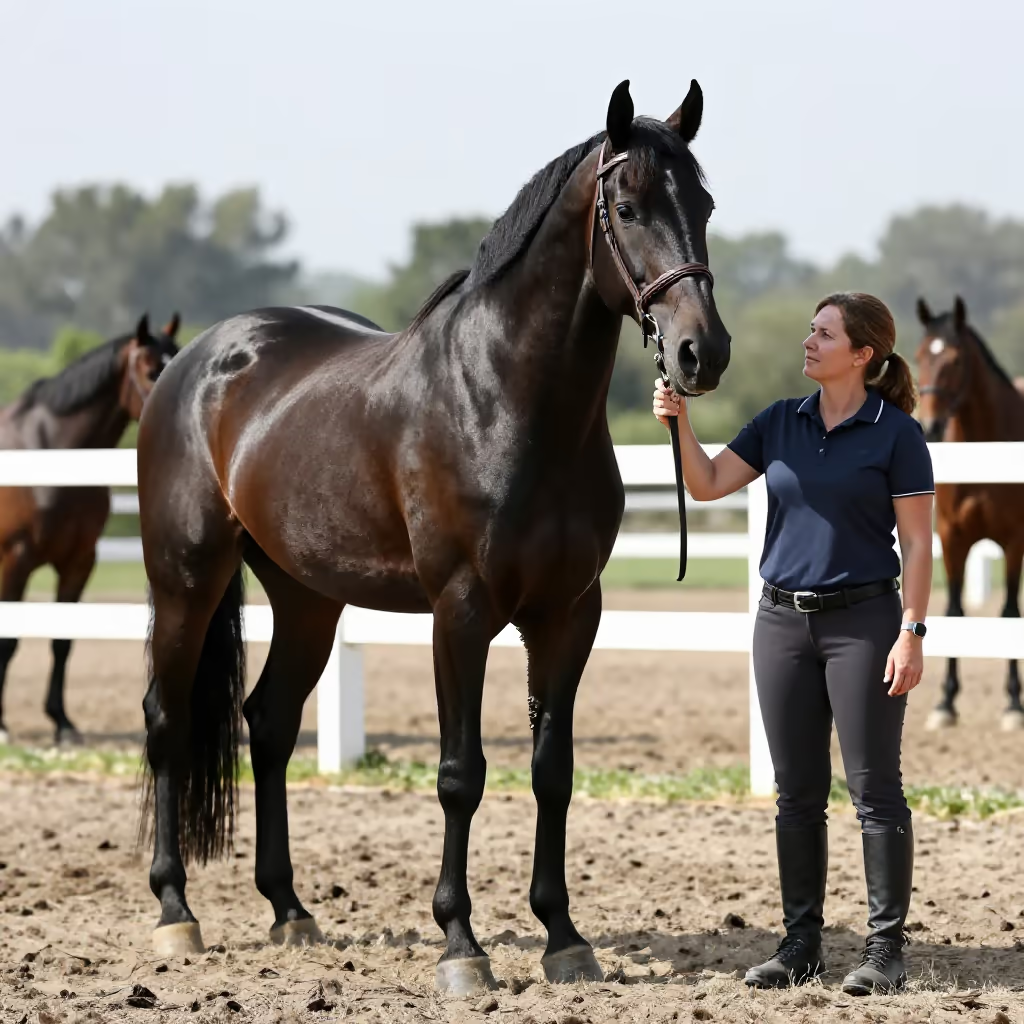
der Hengst
stallion
A male, uncastrated horse that can be used for breeding.
EXAMPLE
Der schwarze Hengst gewann das Rennen mit großem Vorsprung.
The black stallion won the race by a wide margin.
stallion
Loading your saved state.
stallion
A male, uncastrated horse that can be used for breeding.
Der schwarze Hengst gewann das Rennen mit großem Vorsprung.
The black stallion won the race by a wide margin.

stud
Colloquially and figuratively, a virile, sexually potent, or dominant man.
Auf der Party spielte er mal wieder den großen Hengst und flirtete mit allen Frauen.
At the party he once again played the big stud and flirted with all the women.
In its literal meaning, 'Hengst' (stallion) is often combined with adjectives that describe its appearance, breed, or temperament. Examples are 'ein edler Hengst' (a noble stallion), 'ein wilder Hengst' (a wild stallion), or 'ein reinrassiger Hengst' (a purebred stallion).
Auf der Koppel graste ein prächtiger brauner Hengst.
A magnificent brown stallion was grazing in the paddock.
The figurative meaning for a man can be recognized from the context. It is often used in fixed expressions such as 'den Hengst spielen' (to play the stud) or 'den Hengst raushängen lassen' (to act like a big stud), which describe boastful or dominant behavior.
Er muss immer und überall den großen Hengst raushängen lassen.
He always has to act like the big stud everywhere.
Using 'Hengst' (stud) for a man is very colloquial and informal. Depending on the tone, it can sound admiring, but also derogatory or mocking.
Schau dir den Typen an, so ein Hengst!
Look at that guy, what a stud!
macho
Hengst figuratively and colloquially describes a man as especially virile or sexually potent. Macho, by contrast, usually refers disparagingly to a man who shows off his masculinity excessively and behaves dominantly. Hengst is suitable for sexual potency, while Macho is suitable for masculinity put on display.

Er stellt sich vor seinen Freunden gern als unwiderstehlicher Hengst dar.
He likes to portray himself to his friends as an irresistible stud.
Er spielt sich vor seinen Freunden gern als überlegener Macho auf.
He likes to show off to his friends as a superior macho.