

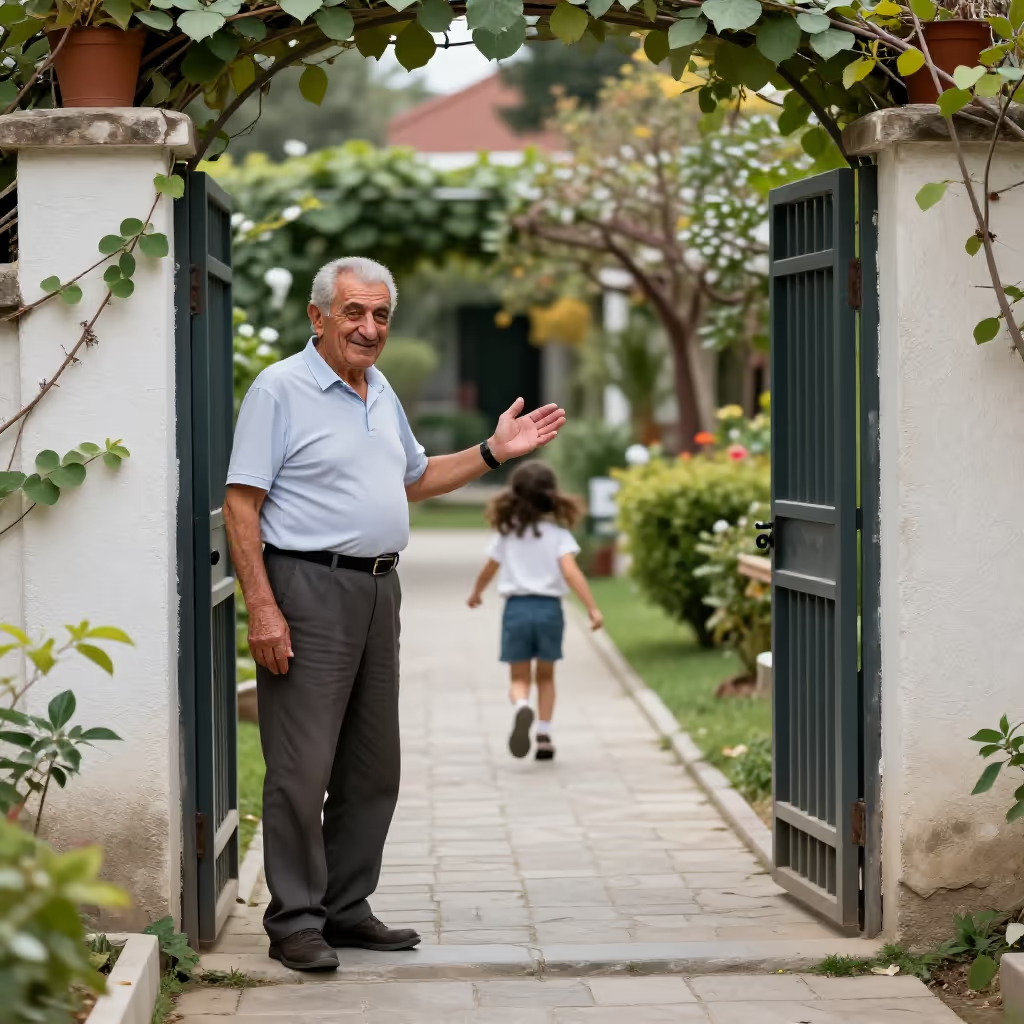
An adverb of direction that expresses movement toward the speaker or toward a specific point. It is often used to ask someone to come closer.
example
Kommt alle schnell herbei, die Vorstellung beginnt gleich!
Come here quickly, everyone—the show is about to begin!

Usage tips
Word structure: direction
The syllable 'her-' in 'herbei' always expresses movement toward the speaker. It is part of the system of 'her' (to here) and 'hin' (to there).
EXAMPLE
„Komm mal schnell herbei!“, rief meine Mutter aus der Küche.
'Come here quickly!' my mother called from the kitchen.
Use as a prefix
Most often, 'herbei' is used as a separable prefix of verbs. Examples are 'herbeikommen' (to come here), 'herbeirufen' (to call over), or 'herbeiführen' (to cause, to bring about).
EXAMPLE
Der Arzt wurde sofort ans Krankenbett herbeigerufen.
The doctor was called to the sickbed immediately.
Sentence structure when separated
When 'herbei' is used as a separable prefix in a main clause, it comes at the end of the sentence. The conjugated verb is in position 2.
EXAMPLE
Viele Nachbarn eilten nach dem lauten Knall herbei.
Many neighbors hurried over after the loud bang.
Register and style
When 'herbei' is used on its own as an adverb, for example in 'Kommt herbei!' (Come here!), it often sounds somewhat formal, literary, or old-fashioned. In modern separable verbs, however, it is stylistically neutral.
EXAMPLE
Eilt alle herbei, das Schauspiel beginnt!
Hurry here, everyone—the spectacle is beginning!
Compare with
antonym · confusable
herbei vs hin
there / toward
'hin' and 'herbei' both describe movement in a direction. 'hin' means: away from the speaker toward another place. 'herbei' means: toward me or toward a specific point. 'herbei' often sounds more elevated or is used in fixed commands, for example when someone is supposed to come closer. Learners may confuse the words because both indicate direction. The important point is: 'hin' moves away from the speaker, while 'herbei' brings someone or something closer.
herbei
Die Lehrerin ruft die Kinder herbei, weil der Ausflug beginnt.
The teacher calls the children over because the trip is starting.