


hierher
over here
Expresses movement toward the speaker or to the place where the speaker is located.
EXAMPLE
Komm bitte mal hierher, ich muss dir etwas zeigen.
Please come over here for a moment; I need to show you something.
over here
Loading your saved state.
over here
Expresses movement toward the speaker or to the place where the speaker is located.
Komm bitte mal hierher, ich muss dir etwas zeigen.
Please come over here for a moment; I need to show you something.
from here
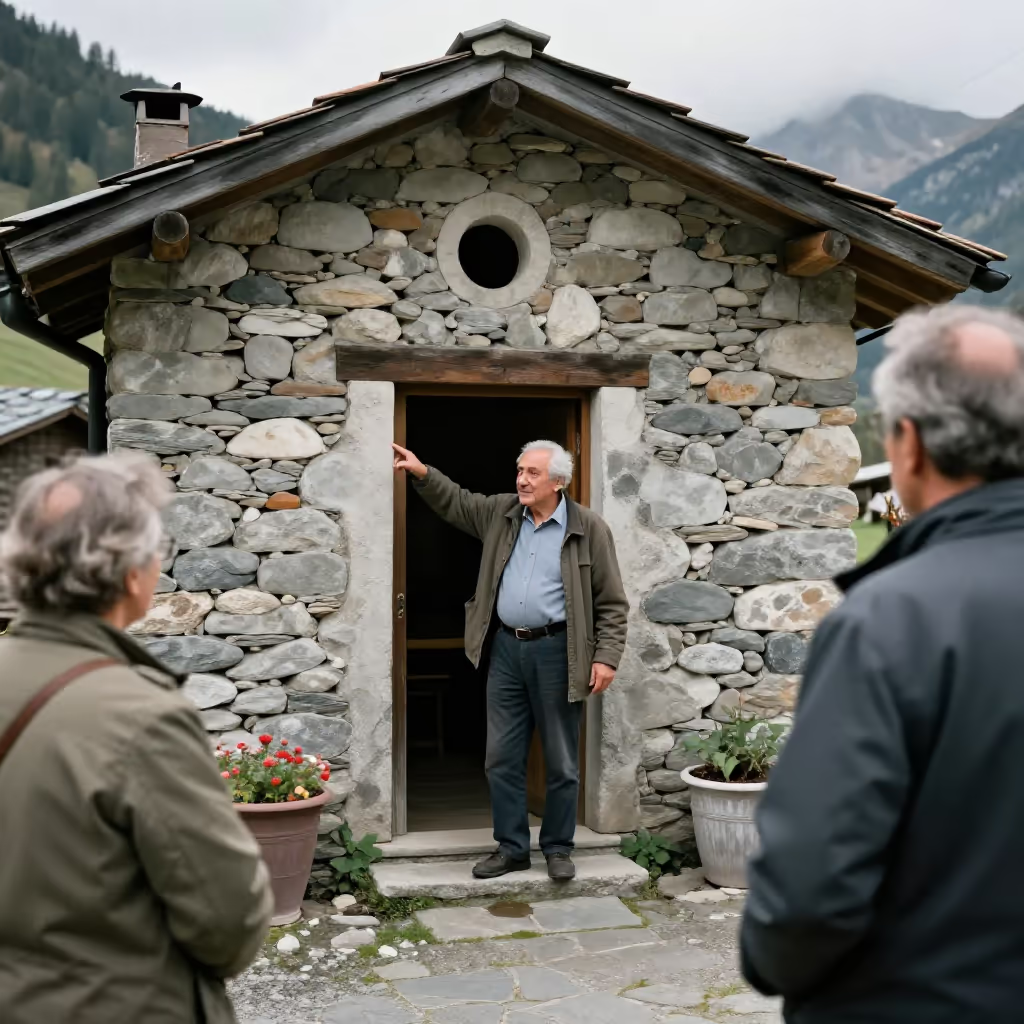
Indicates the origin or source from this place.
Der Brauch stammt ursprünglich hierher aus dieser Region.
The custom originally comes from here, from this region.
The word is made up of 'hier' (place) and 'her' (movement toward the speaker). So it always describes movement to the place where you currently are.
Stell die Kiste bitte hierher neben den Schrank.
Please put the box here next to the cabinet.
The meaning of 'hierher' (over here / from here) depends on the verb. Verbs of movement like 'kommen' (to come) or 'bringen' (to bring) indicate a direction. Verbs of origin like 'stammen' (to originate) indicate origin from this place.
Meine Familie kommt ursprünglich hierher.
My family originally comes from here.
'Hierher' (over here) answers the question 'Wohin?' (to where?). It is always used when movement toward a specific point is being expressed, not a static position.
Wohin soll ich die Blumen stellen? – Einfach hierher auf den Tisch.
Where should I put the flowers? — Just here on the table.
closer
Both words can describe movement toward the speaker or toward a particular point. „Hierher“ identifies the speaker’s location as the destination, while „heran“ places more emphasis on approaching a reference point. „Hierher“ is appropriate for a clear request to come to my location; „heran“ is often more precise when someone or something moves right up to a point.
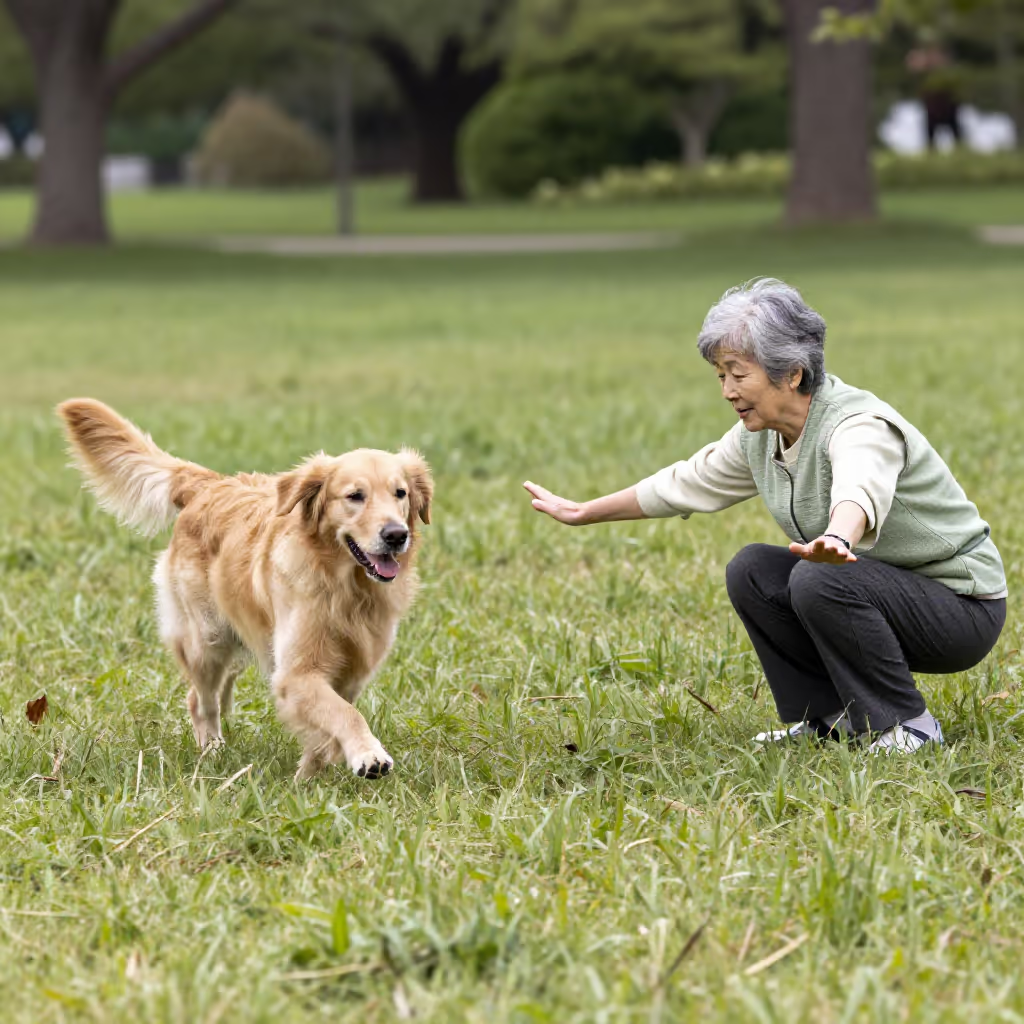
Komm bitte hierher zu mir und setz dich neben mich.
Please come over here to me and sit next to me.
Die Kinder gingen vorsichtig an den Zaun heran.
The children cautiously approached the fence.