

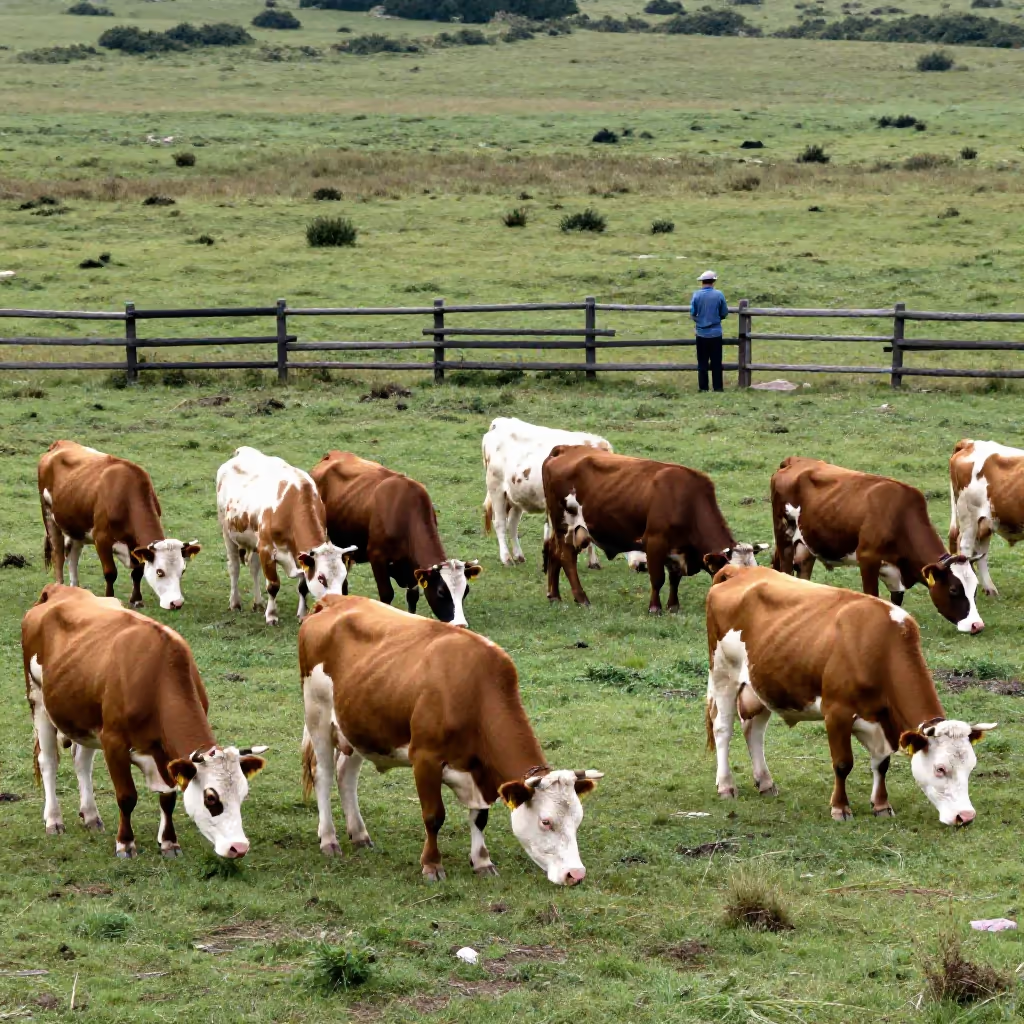
die Herde
herd
A group of animals of the same species, especially mammals such as cattle, sheep, or elephants, that live and feed together.
EXAMPLE
Eine große Herde Gnus zog durch die Savanne.
A large herd of wildebeest moved through the savanna.
herd
Loading your saved state.
herd
A group of animals of the same species, especially mammals such as cattle, sheep, or elephants, that live and feed together.
Eine große Herde Gnus zog durch die Savanne.
A large herd of wildebeest moved through the savanna.

herd
A large crowd of people, often used disparagingly to express that people are uncritically following a trend or opinion.
Er wollte nicht einfach der Herde folgen und bildete sich seine eigene Meinung.
He did not want to simply follow the herd and formed his own opinion.
Important terms are derived from 'Herde' (herd). 'Herdenverhalten' (herd behavior) describes how individuals in a group act the same way, and 'Herdenimmunität' (herd immunity) is a term from medicine.
Das Phänomen des Herdenverhaltens lässt sich bei Tieren und Menschen beobachten.
The phenomenon of herd behavior can be observed in animals and humans.
The word 'Herde' (herd) is used especially for groups of large, herbivorous mammals that live together. Typical examples are a herd of sheep, cattle, elephants, or zebras.
Auf der Safari sahen wir eine Herde Elefanten am Wasserloch.
On the safari, we saw a herd of elephants at the watering hole.
When 'Herde' (herd) is used for a crowd of people, it almost always has a negative, critical meaning. It implies that the people are acting uncritically and like animals.
Sie war stolz darauf, ihre eigene Meinung zu haben und nicht einfach mit der Herde zu laufen.
She was proud of having her own opinion and not simply running with the herd.
horde
Herde and Horde can both refer to a large group of people. Herde emphasizes that people are uncritically following the same opinion or trend. Horde presents the group more as loud, wild, or disorderly. Choose „Herde“ for blindly following and „Horde“ for disruptive or aggressive behavior.

Die Herde folgte unkritisch dem neuen Modetrend.
The herd followed the new fashion trend without thinking critically.
Eine lärmende Horde Jugendlicher stürmte auf den Bahnhof.
A noisy horde of teenagers stormed into the train station.