


die Horde
horde
A large, unorganized, and often noisy or wild group of people. The term is usually used negatively.
EXAMPLE
Eine Horde von Reportern wartete vor dem Gerichtsgebäude.
A horde of reporters was waiting outside the courthouse.
horde
Loading your saved state.
horde
A large, unorganized, and often noisy or wild group of people. The term is usually used negatively.
Eine Horde von Reportern wartete vor dem Gerichtsgebäude.
A horde of reporters was waiting outside the courthouse.
horde
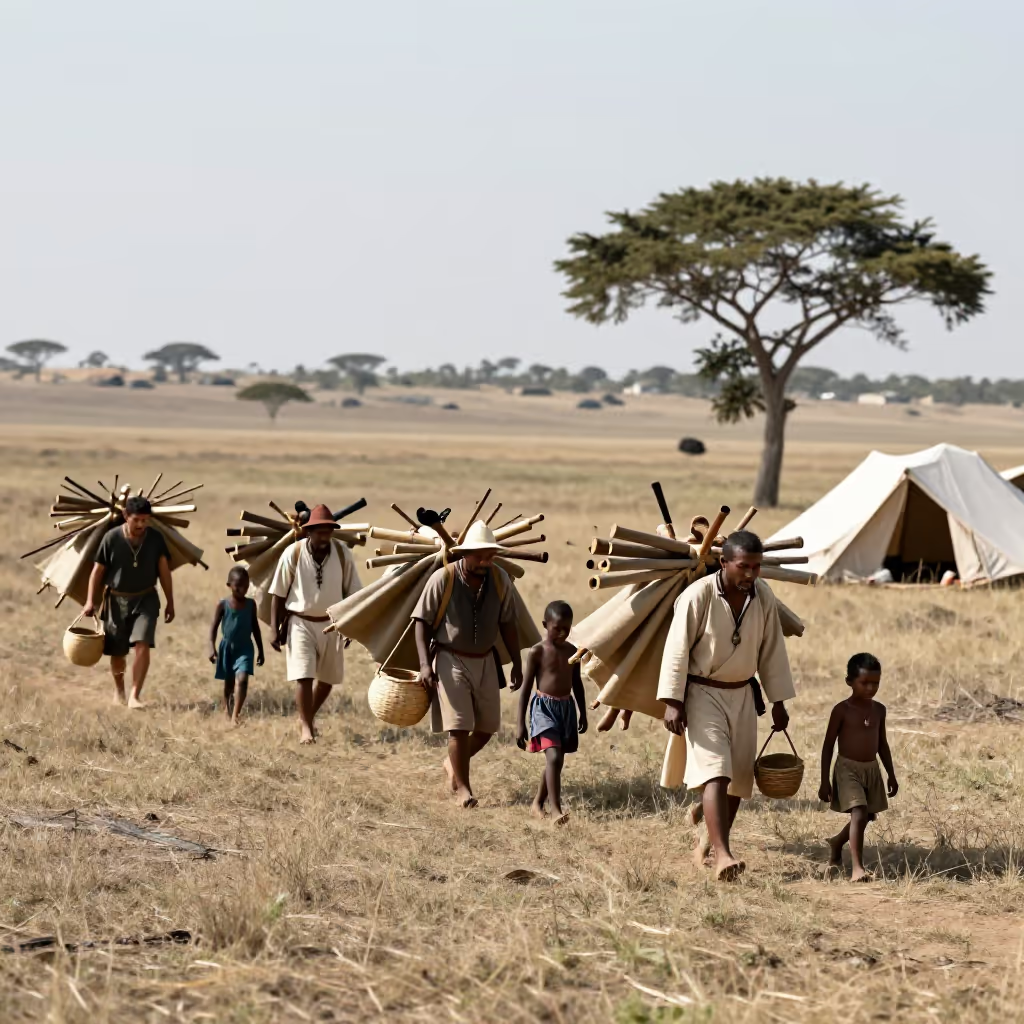
In ethnology and history, a wandering social group of people, especially in hunter-gatherer cultures.
Die mongolischen Horden zogen im Mittelalter durch die Steppen Asiens.
The Mongol hordes moved through the steppes of Asia in the Middle Ages.
horde
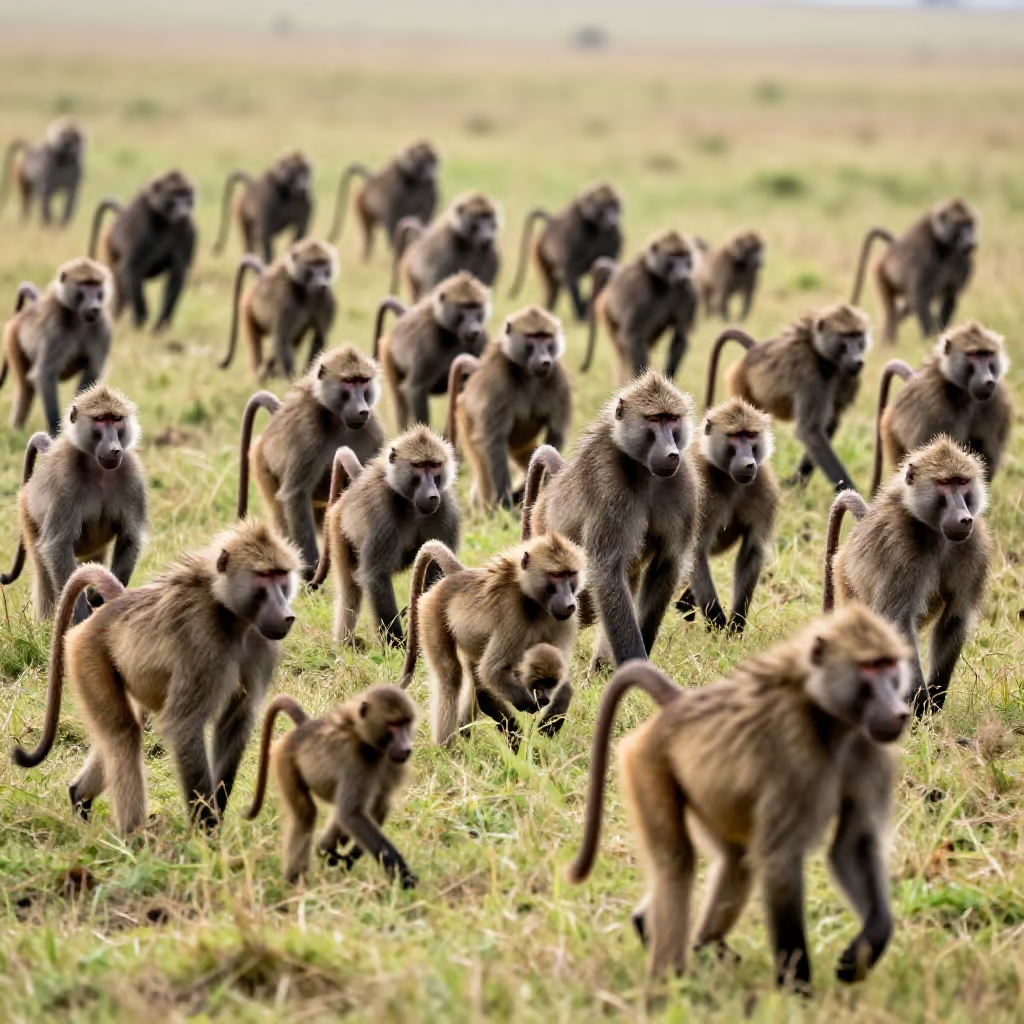
In zoology, a large group of animals, similar to a herd or a pack. This use is rarer.
Eine Horde Affen tobte durch die Baumwipfel des Dschungels.
A horde of monkeys was rampaging through the treetops of the jungle.
You can recognize the meaning of 'Horde' (horde) from the context. If it is about noisy tourists or fans, it refers to the negative sense of a group of people. In connection with history, e.g. 'Mongolen' (Mongols), 'Mittelalter' (Middle Ages), it means the historical group. With animal names, e.g. 'Affen' (monkeys), it refers to a group of animals.
Eine Horde Jugendlicher machte in der U-Bahn Lärm.
A horde of teenagers made noise in the subway.
When 'Horde' (horde) is used for a group of people, the word almost always has a negative, derogatory meaning. It describes a chaotic, loud, or unpleasant group.
Nach dem Konzert stürmte eine Horde Fans auf die Bühne zu.
After the concert, a horde of fans stormed toward the stage.
The construction 'eine Horde von' (a horde of) followed by a plural group of people is especially common. Typical examples are 'eine Horde von Kindern' (a horde of children), 'eine Horde von Touristen' (a horde of tourists), or 'eine Horde von Journalisten' (a horde of journalists).
Im Park spielte eine Horde von Kindern Fußball.
A horde of children was playing soccer in the park.
herd
Herde and Horde can both refer to a large group of people. Herde emphasizes that people are uncritically following the same opinion or trend. Horde presents the group more as loud, wild, or disorderly. Choose „Herde“ for blindly following and „Horde“ for disruptive or aggressive behavior.

Eine lärmende Horde Jugendlicher stürmte auf den Bahnhof.
A noisy horde of teenagers stormed into the train station.
Die Herde folgte unkritisch dem neuen Modetrend.
The herd followed the new fashion trend without thinking critically.