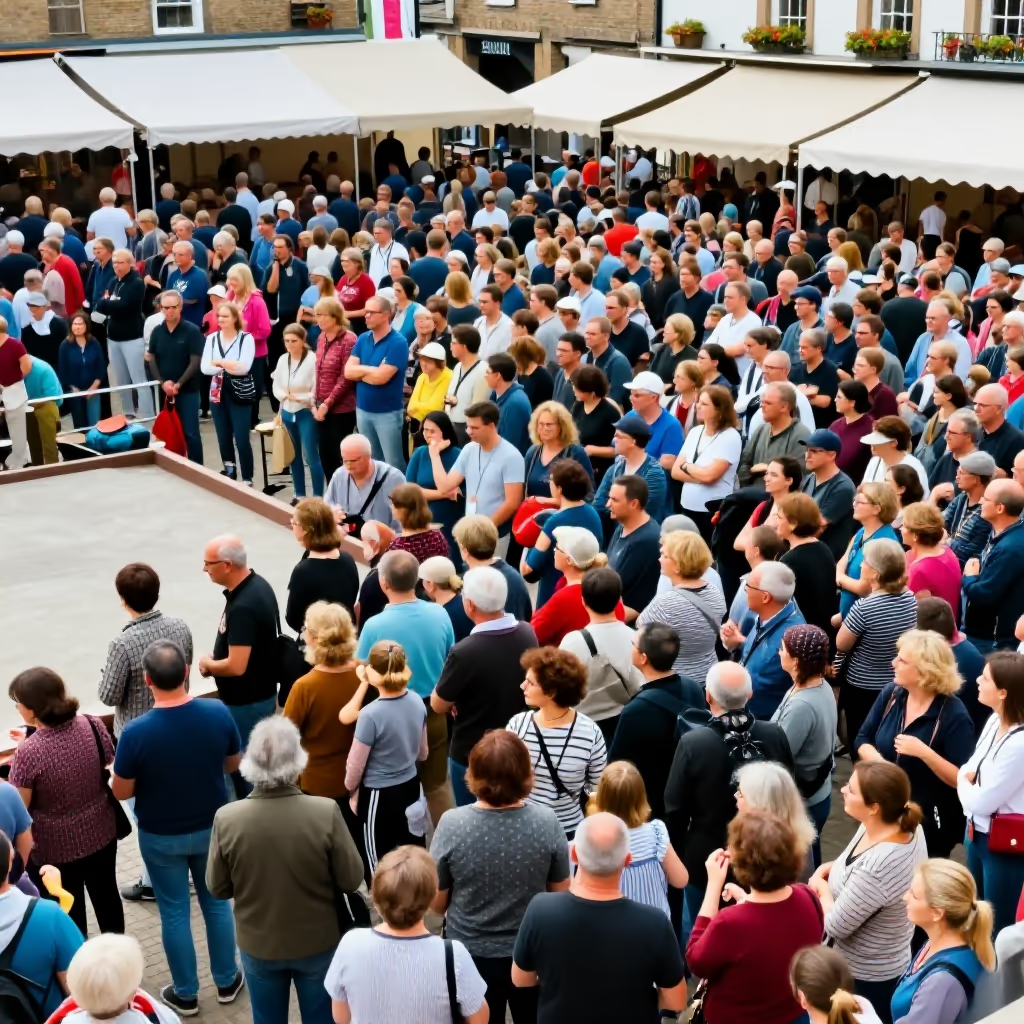
A large, often unorganized group of people gathered in one place. This spelling is outdated; today 'Schar' is standard.
example
Eine ganze Schaar von Neugierigen versammelte sich an der Unfallstelle.
A whole crowd of curious onlookers gathered at the scene of the accident.
Usage tips
Outdated spelling
The spelling 'Schaar' with double a is outdated. In modern texts, only the correct form 'Schar' is used today.
EXAMPLE
Eine große Schar von Journalisten wartete vor dem Gerichtsgebäude.
A large crowd of journalists waited in front of the courthouse.
Sentence structure with 'von'
The word is almost always used in the construction 'eine Schar von' + plural noun to describe the members of the group.
EXAMPLE
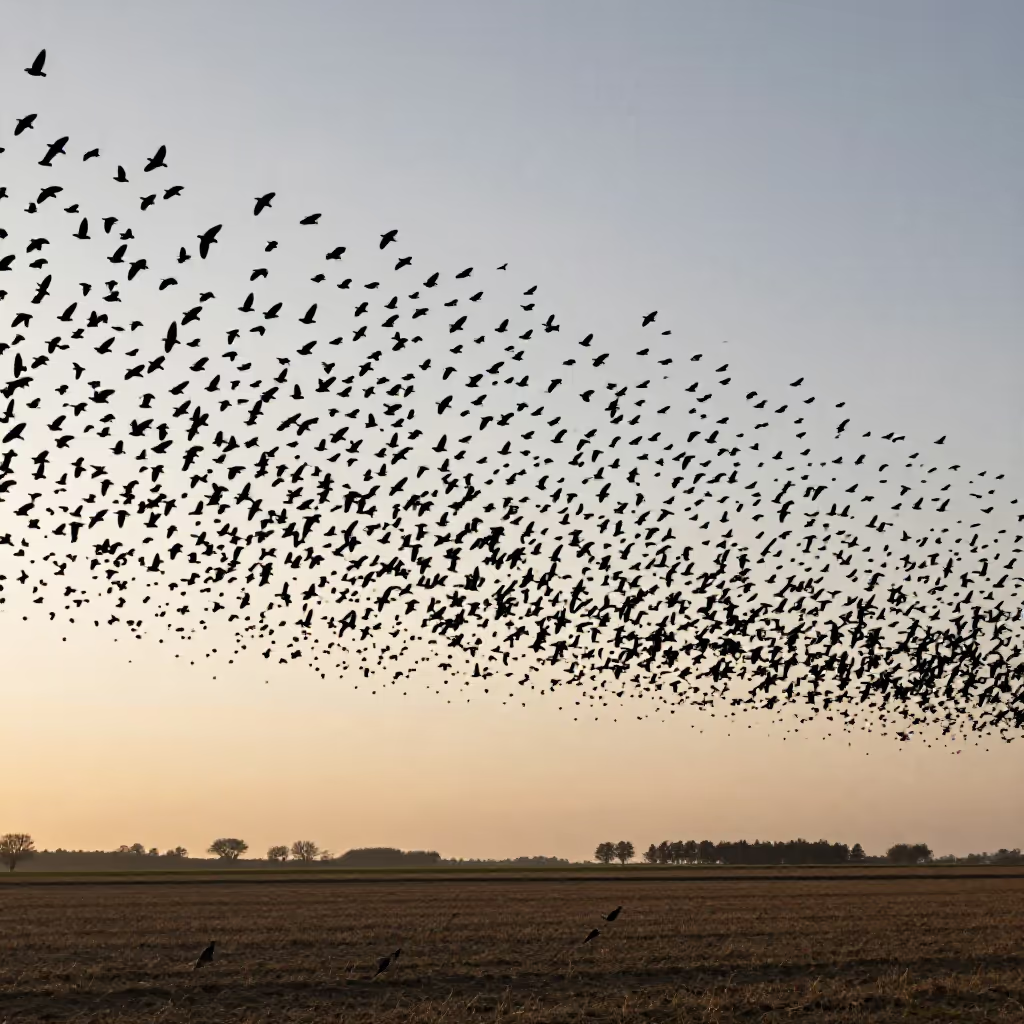
Am Himmel zog eine Schar von Wildgänsen vorbei.
A flock of wild geese passed by in the sky.
Typical collocations
When 'Schar' is used for people, it often describes a large, somewhat unorganized or lively group. Typical combinations are 'eine Schar Kinder' (a crowd of children), 'eine Schar Fans' (a crowd of fans), or 'eine Schar Touristen' (a crowd of tourists).
EXAMPLE
Eine Schar Kinder stürmte auf den Spielplatz.
A crowd of children stormed onto the playground.
Compare with
near_synonym · confusable
Schaar vs Gruppe
group
'Gruppe' and 'Schaar' can both mean many people or animals that are together. 'Gruppe' is the normal modern word and sounds neutral. 'Schaar' is an outdated spelling of 'Schar' and today appears mainly in old texts. It also tends to describe a larger, often not strictly organized group. Learners may confuse the words because their meanings are similar. In modern German, you should almost always use 'Gruppe' or the modern form 'Schar', not 'Schaar'.
Schaar
In dem alten Märchen folgt eine Schaar von Kindern dem Musiker.
In the old fairy tale, a crowd of children follows the musician.
Gruppe
Für die Stadtführung wartet eine Gruppe Touristen vor dem Rathaus.
A group of tourists is waiting in front of city hall for the city tour.