

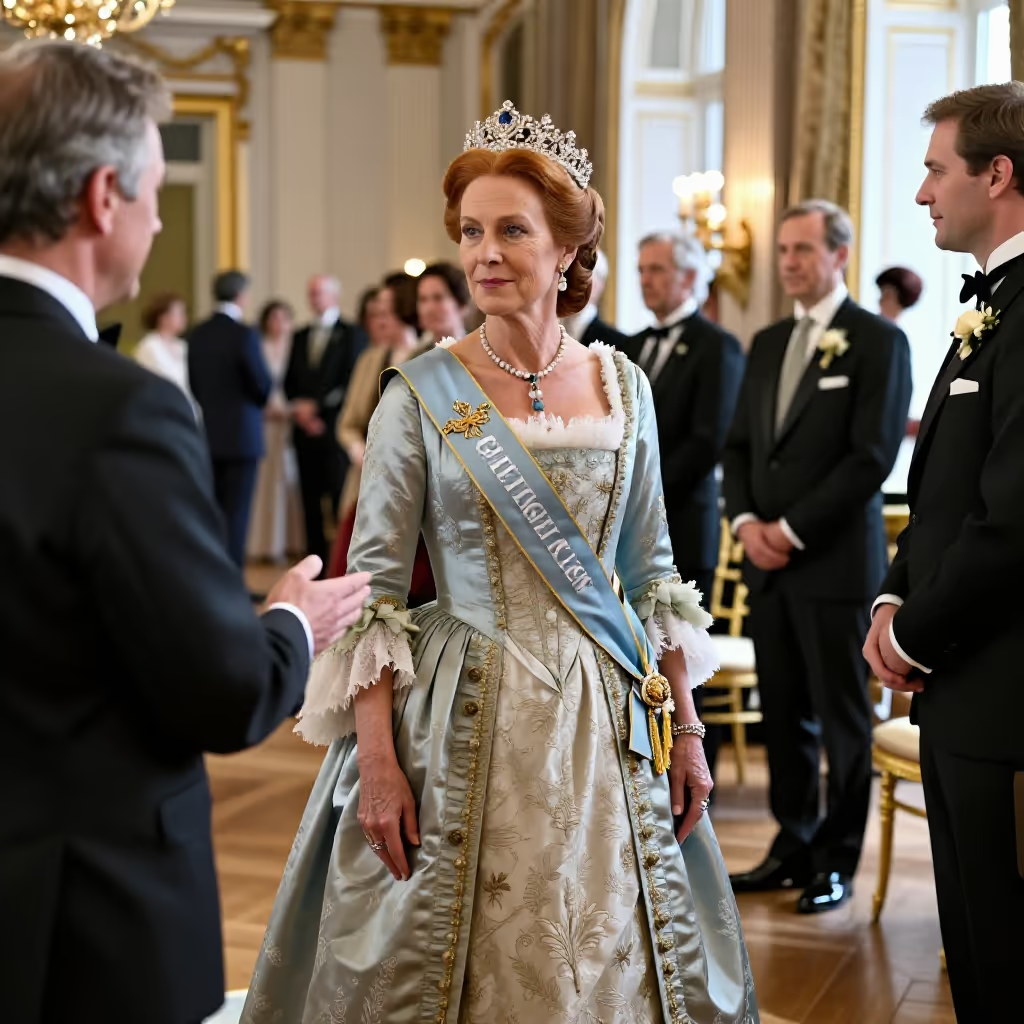
die Herzogin
duchess
A woman who holds the noble title of duke, either by birth or through marriage to a duke.
EXAMPLE
Die Herzogin von Sussex nahm an der Wohltätigkeitsveranstaltung teil.
The Duchess of Sussex attended the charity event.
duchess
Loading your saved state.
duchess
A woman who holds the noble title of duke, either by birth or through marriage to a duke.
Die Herzogin von Sussex nahm an der Wohltätigkeitsveranstaltung teil.
The Duchess of Sussex attended the charity event.
The word 'Herzogin' (duchess) is the feminine form of 'der Herzog' (duke). The ending '-in' is often used in German to form feminine terms for people. The vowel of the base word often changes to an umlaut in the process here: o → ö.
Die Herzogin besuchte die Ausstellung zusammen mit dem Herzog.
The duchess visited the exhibition together with the duke.
The title 'Herzogin' (duchess) is almost always used with the preposition 'von' (of/from) and a geographical name to indicate the territory ruled or the person's origin.
Die Geschichte der Herzogin von Alba ist sehr interessant.
The story of the Duchess of Alba is very interesting.
This word belongs to a formal register and is mainly used in historical, noble, or fairy-tale contexts.
Im Märchen heiratet der Prinz eine wunderschöne Herzogin.
In the fairy tale, the prince marries a beautiful duchess.