

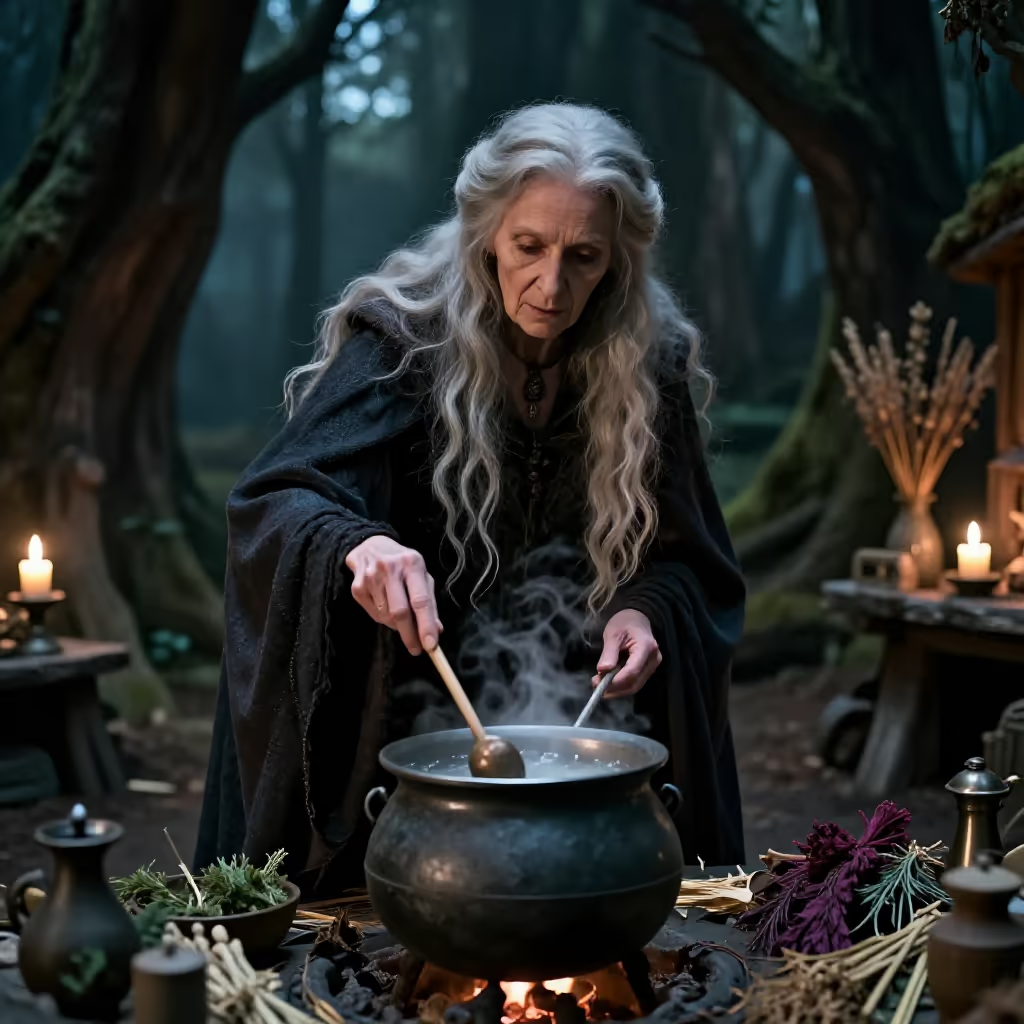
die Hexe
witch
A female figure in fairy tales, legends, and myths who is believed to have magical, often evil powers.
Im Märchen verwandelt die böse Hexe den Prinzen in einen Frosch.
In the fairy tale, the evil witch turns the prince into a frog.

witch
Loading your saved state.
witch
A female figure in fairy tales, legends, and myths who is believed to have magical, often evil powers.
Im Märchen verwandelt die böse Hexe den Prinzen in einen Frosch.
In the fairy tale, the evil witch turns the prince into a frog.

Witches are a central figure in German folklore, especially in connection with Walpurgis Night. On this night, witches are said to gather on the Blocksberg, also known as the Brocken, in the Harz Mountains to celebrate.
Zu Karneval verkleiden sich viele Kinder als Hexe.
At Carnival, many children dress up as witches.
In the context of fairy tales and legends, 'Hexe' (witch) is often associated with magical actions. Typical verbs are 'zaubern' (to do magic) or 'verhexen' (to put a spell on), and the witch often rides on a broom.
Die Hexe im Märchen konnte das Wetter beeinflussen.
The witch in the fairy tale could influence the weather.
When a woman is called a 'Hexe' (witch), it is a strong, derogatory insult. It expresses that the person is perceived as malicious or deceitful.
Er war so wütend, dass er sie eine böse Hexe nannte.
He was so angry that he called her an evil witch.
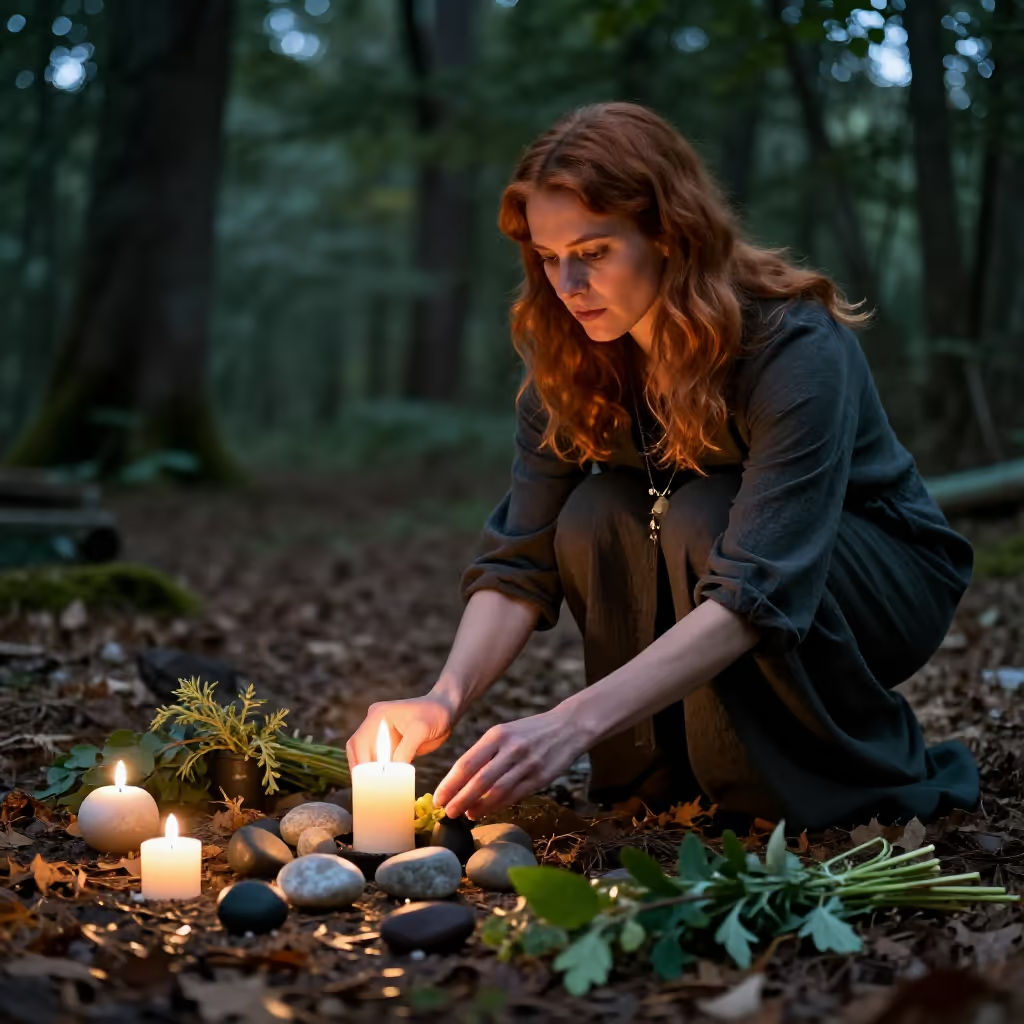
In contrast to the insult or the fairy-tale figure, 'Hexe' (witch) can also be a neutral or positive self-description. Followers of nature religions such as Wicca call themselves witches to describe their spiritual practice.
Als moderne Hexe beschäftigt sie sich viel mit Kräutern und Naturzyklen.
As a modern witch, she spends a lot of time studying herbs and natural cycles.
dragon / kite
'der Drache' and 'die Hexe' both often appear in fairy tales, legends, and fantasy stories. A dragon is usually a large animal-like creature, often with wings and fire. A witch is a female figure with magical powers. The words can be confused because both belong to a similar fairy-tale world. In addition, both words can be used derogatorily for an unpleasant woman. However, this is insulting and should be used carefully. In stories, 'Drache' fits better for a monster, while 'Hexe' fits better for a magical woman.

Die Hexe spricht einen Zauber und verschwindet im Wald.
The witch casts a spell and disappears into the forest.
Im Märchen bewacht der Drache einen Schatz in der Höhle.
In the fairy tale, the dragon guards a treasure in the cave.