

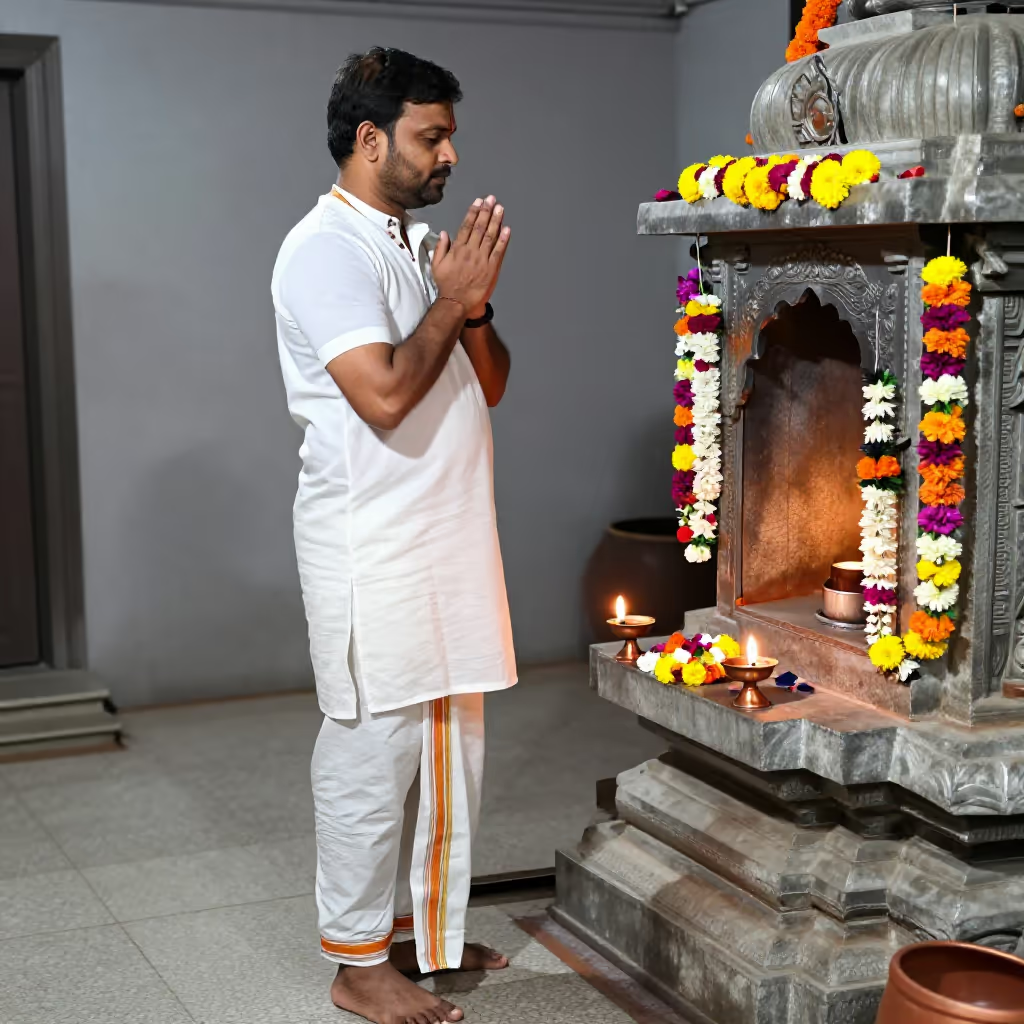
der Hindu
Hindu
A follower of Hinduism, one of the major world religions, which originated in India.
EXAMPLE
Der Hindu besuchte regelmäßig den Tempel zum Gebet.
The Hindu regularly visited the temple to pray.
Hindu
Loading your saved state.
Hindu
A follower of Hinduism, one of the major world religions, which originated in India.
Der Hindu besuchte regelmäßig den Tempel zum Gebet.
The Hindu regularly visited the temple to pray.
Although 'der Hindu' (the Hindu) is a masculine noun for a person, it is usually not declined in the singular. As a rule, it keeps the form 'Hindu' in all cases (nominative, genitive, dative, accusative).
Ich habe gestern mit einem Hindu über seine Religion gesprochen.
Yesterday I spoke with a Hindu about his religion.
The word 'Hindu' belongs to a word family that you should know. The religion is called 'der Hinduismus' (Hinduism), and the corresponding adjective is 'hinduistisch' (Hindu).
Der Hinduismus ist eine der ältesten Religionen der Welt.
Hinduism is one of the oldest religions in the world.
The word is used almost exclusively in a religious or cultural context. Typical verbs in this context are 'beten' (to pray), 'glauben' (to believe), or 'feiern' (to celebrate).
Als gläubiger Hindu geht er jeden Morgen in den Tempel.
As a devout Hindu, he goes to the temple every morning.