

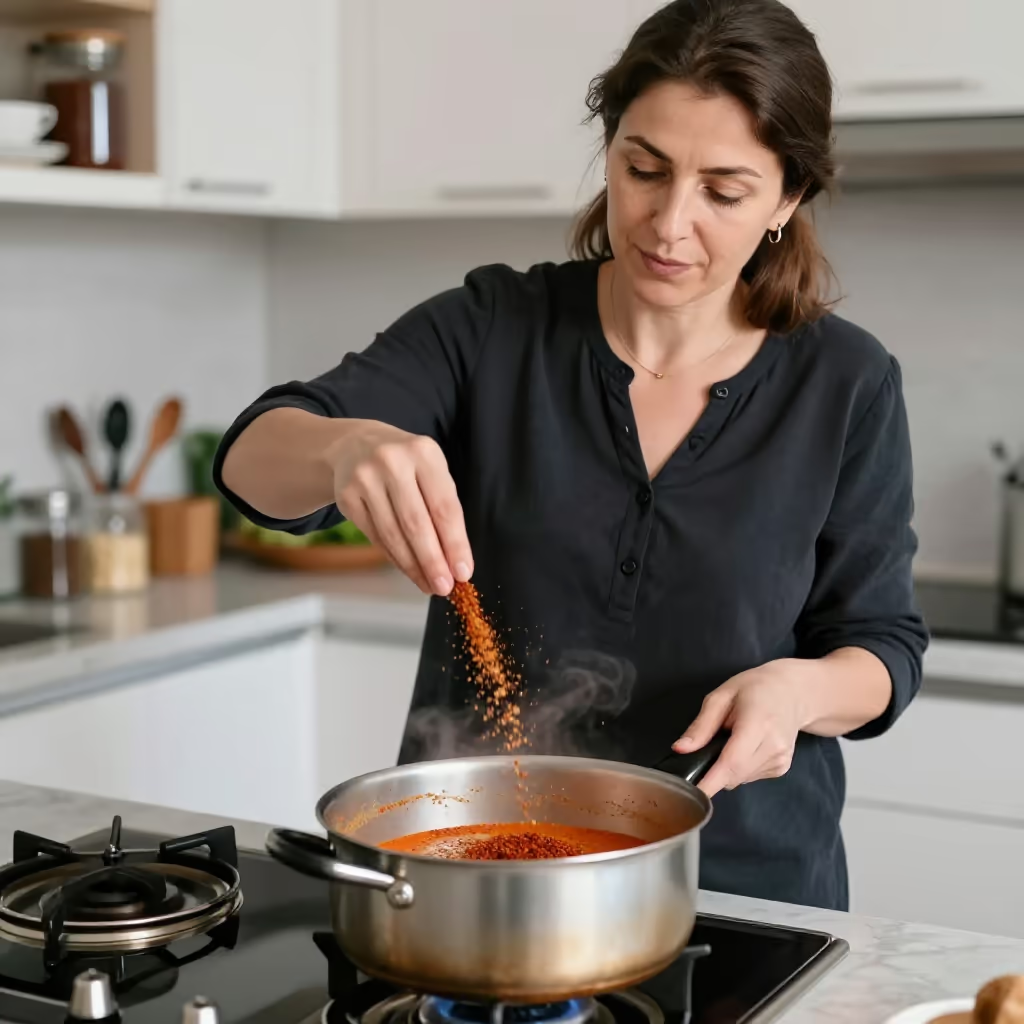
hinzugeben
to add
To add something to an already existing amount or mixture. The term is very commonly used in cooking instructions.
Zum Schluss die Kräuter hinzugeben und alles gut verrühren.
Finally, add the herbs and stir everything well.
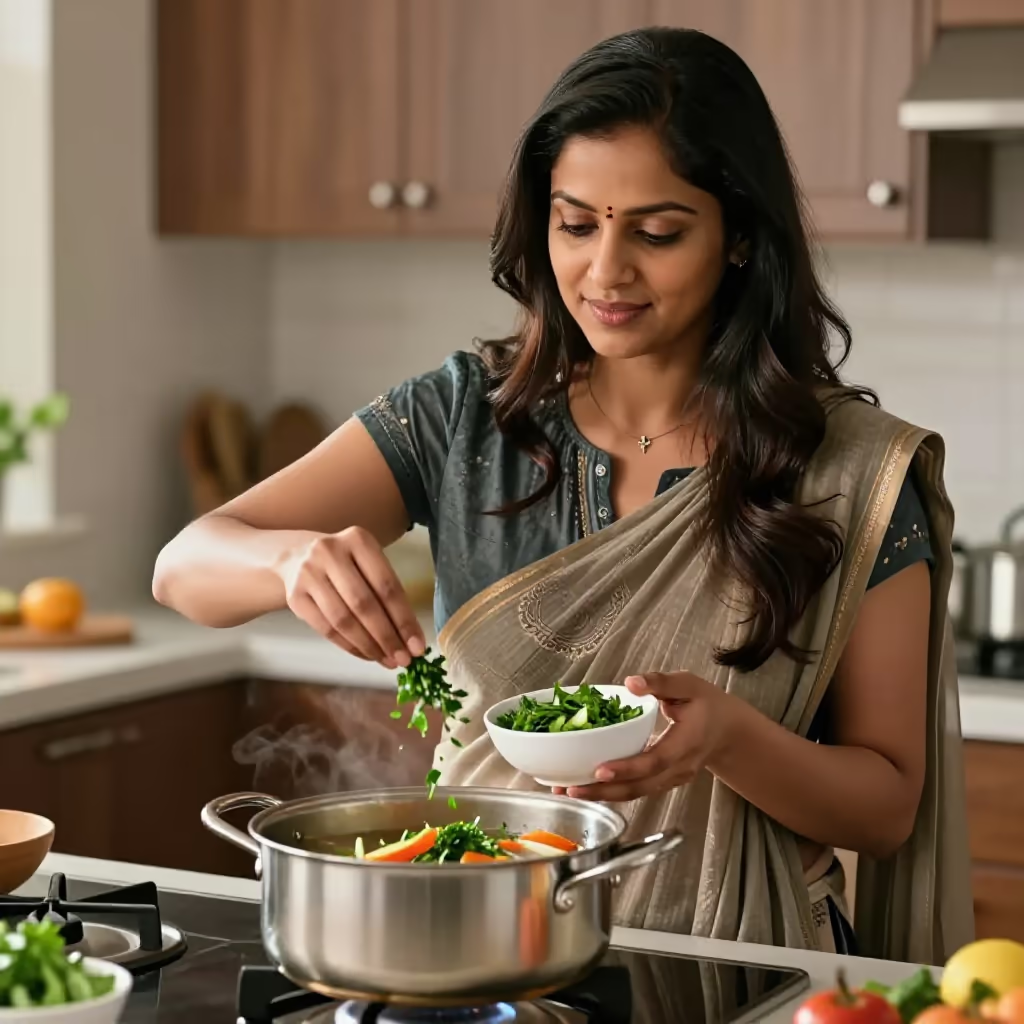
to add
Loading your saved state.
to add
To add something to an already existing amount or mixture. The term is very commonly used in cooking instructions.
Zum Schluss die Kräuter hinzugeben und alles gut verrühren.
Finally, add the herbs and stir everything well.

'Hinzugeben' (to add) is a separable verb. The prefix 'hinzu' comes at the end in a main clause. In the infinitive with 'zu', 'zu' comes between the prefix and the verb: 'hinzuzugeben'.
Geben Sie nun das Mehl und den Zucker hinzu.
Now add the flour and the sugar.
The prefix 'hinzu-' means 'in addition to something' or 'additionally'. It makes clear that something is being added to an already existing thing or mixture.
Man kann nach Belieben noch weitere Früchte hinzugeben.
You can add more fruit as desired.
This verb is especially common in the context of cooking and baking. Typical objects are ingredients such as 'Kräuter' (herbs), 'Gewürze' (spices), 'Zucker' (sugar), or 'Flüssigkeit' (liquid).
Vergessen Sie nicht, eine Prise Salz hinzuzugeben.
Don't forget to add a pinch of salt.
to admit / to add
'zugeben' and 'hinzugeben' can be used very similarly when cooking or mixing. Both mean that you add something to an existing amount. 'hinzugeben' emphasizes the movement toward the mixture a little more and sounds especially appropriate in recipes. 'zugeben' is also natural and a bit more general. The words are easy to confuse because, in this sense, they work almost the same way. The only important point is: 'zugeben' also has the other meaning 'to admit a mistake'; 'hinzugeben' does not.

Heute gibt er noch frische Kräuter zur Suppe hinzu.
Today he is adding fresh herbs to the soup as well.
In der Küche gibst du die Milch erst am Ende zum Teig zu.
In the kitchen, you add the milk to the dough only at the end.