


hinfällig
invalid
No longer valid, effective, or relevant. Often used in connection with plans, agreements, or rules.
EXAMPLE
Da der Zeuge nicht erschienen ist, ist die Anklage hinfällig.
Since the witness did not appear, the charges are invalid.
invalid / frail
Loading your saved state.
invalid
No longer valid, effective, or relevant. Often used in connection with plans, agreements, or rules.
Da der Zeuge nicht erschienen ist, ist die Anklage hinfällig.
Since the witness did not appear, the charges are invalid.

frail
Physically weak, frail, and in need of care, usually due to old age or illness.
Nach seiner schweren Operation war der alte Mann sehr hinfällig.
After his serious operation, the old man was very frail.
The meaning of 'hinfällig' depends on the context. If it refers to abstract things like plans, rules, or appointments, it means 'ungültig' (invalid). If it refers to a person, it means 'körperlich schwach' (physically weak) or 'gebrechlich' (frail).
Unser alter Plan ist jetzt hinfällig.
Our old plan is now invalid.
In the meaning 'ungültig' (invalid), 'hinfällig' is often combined with the verb 'werden' (to become). The phrase 'hinfällig werden' describes the process of something losing its validity.
Durch die neuen Gesetze werden einige alte Regelungen hinfällig.
Because of the new laws, some old regulations will become invalid.
In the meaning 'gebrechlich' (frail), the word describes a state of severe physical weakness, usually due to age or illness. It is a rather formal and strong word.
Der hinfällige Patient braucht ständige Pflege.
The frail patient needs constant care.
invalid
Ungültig describes an agreement that is not legally or formally valid. Hinfällig means that it is no longer valid, effective, or relevant, often because the circumstances have changed. Ungültig is appropriate for a formal defect, while hinfällig is more appropriate when the purpose no longer applies.
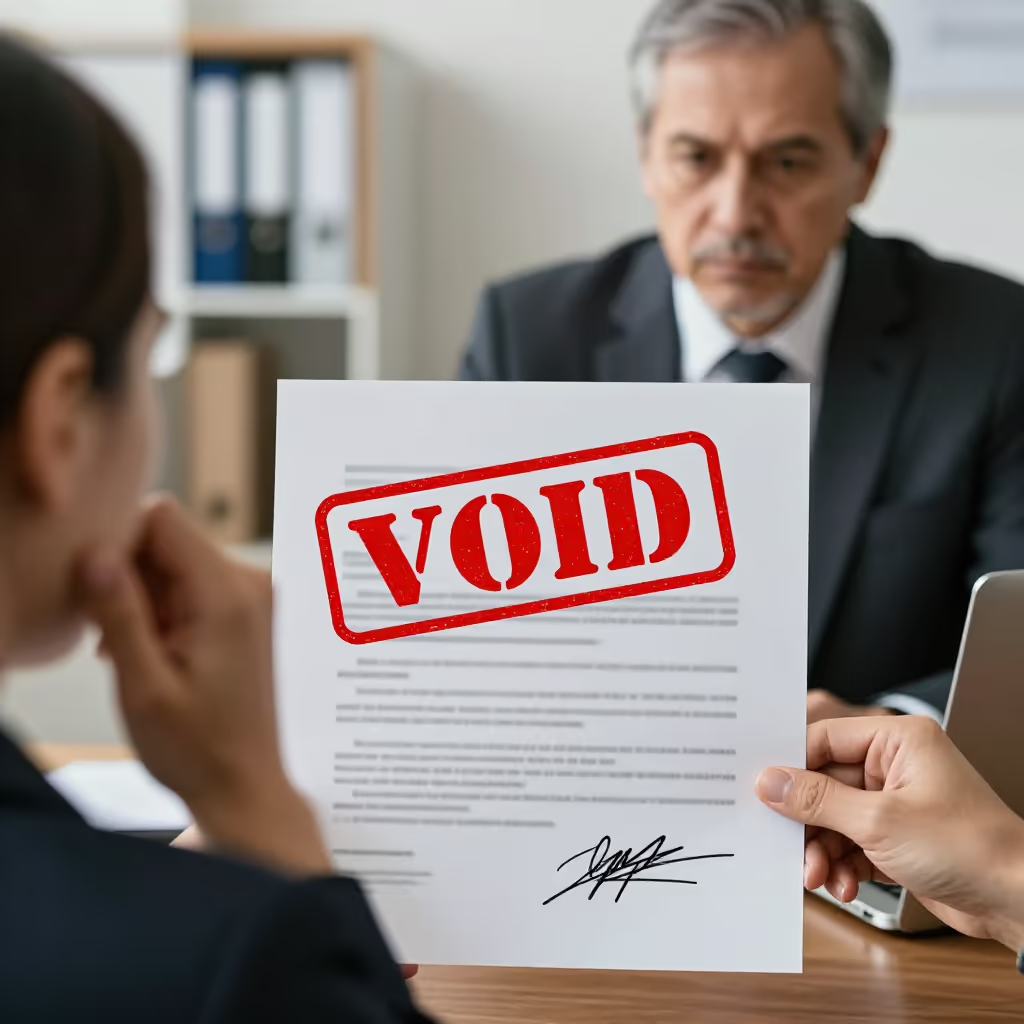
Die Vereinbarung ist durch die Absage des Projekts hinfällig geworden.
The agreement became moot when the project was canceled.
Die Vereinbarung ist wegen der fehlenden Unterschrift ungültig.
The agreement is invalid because it is missing a signature.