


die Hinrichtung
execution
The deliberate killing of a person as the carrying out of a death sentence.
EXAMPLE
Die öffentliche Hinrichtung sollte der Abschreckung dienen.
The public execution was meant to serve as a deterrent.
execution
Loading your saved state.
execution
The deliberate killing of a person as the carrying out of a death sentence.
Die öffentliche Hinrichtung sollte der Abschreckung dienen.
The public execution was meant to serve as a deterrent.
'Die Hinrichtung' (execution) is the noun corresponding to the verb 'hinrichten' (to execute). The ending '-ung' is often used to form a feminine noun from a verb that describes the action or the result.
Die Abschaffung der Hinrichtung ist ein Zeichen für eine humane Gesellschaft.
The abolition of execution is a sign of a humane society.
Common verbs used with 'Hinrichtung' (execution) are 'vollstrecken' (to carry out), 'anordnen' (to order), or 'beiwohnen' (to attend). People also speak of 'die Vollstreckung der Hinrichtung' (the carrying out of the execution).
Der Befehl zur Hinrichtung kam direkt vom Diktator.
The order for the execution came directly from the dictator.
To name the person, the preposition 'von' (+ dative) is used. To describe the method, you use 'durch' (+ accusative).
Die Hinrichtung von politischen Gegnern war an der Tagesordnung.
The execution of political opponents was the order of the day.
death penalty
The Todesstrafe is the legally prescribed killing of a person as punishment. Hinrichtung, by contrast, refers to the specific act of carrying out a death sentence. Todesstrafe is used for the type of punishment, while Hinrichtung is used for its actual enforcement.
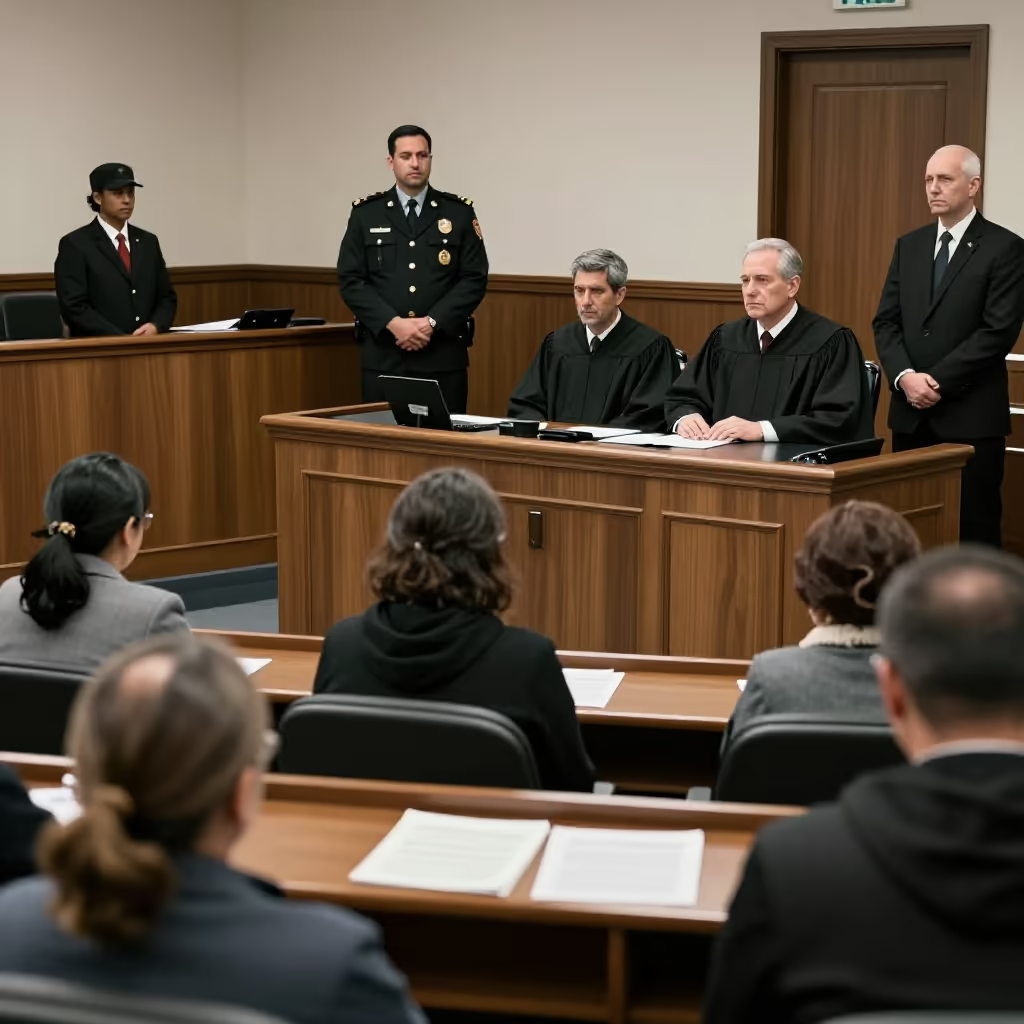
Die Hinrichtung des Verurteilten wurde am folgenden Morgen vollzogen.
The execution of the convicted person was carried out the following morning.
Das Gericht verhängte gegen den Verurteilten die Todesstrafe.
The court sentenced the convicted person to the death penalty.