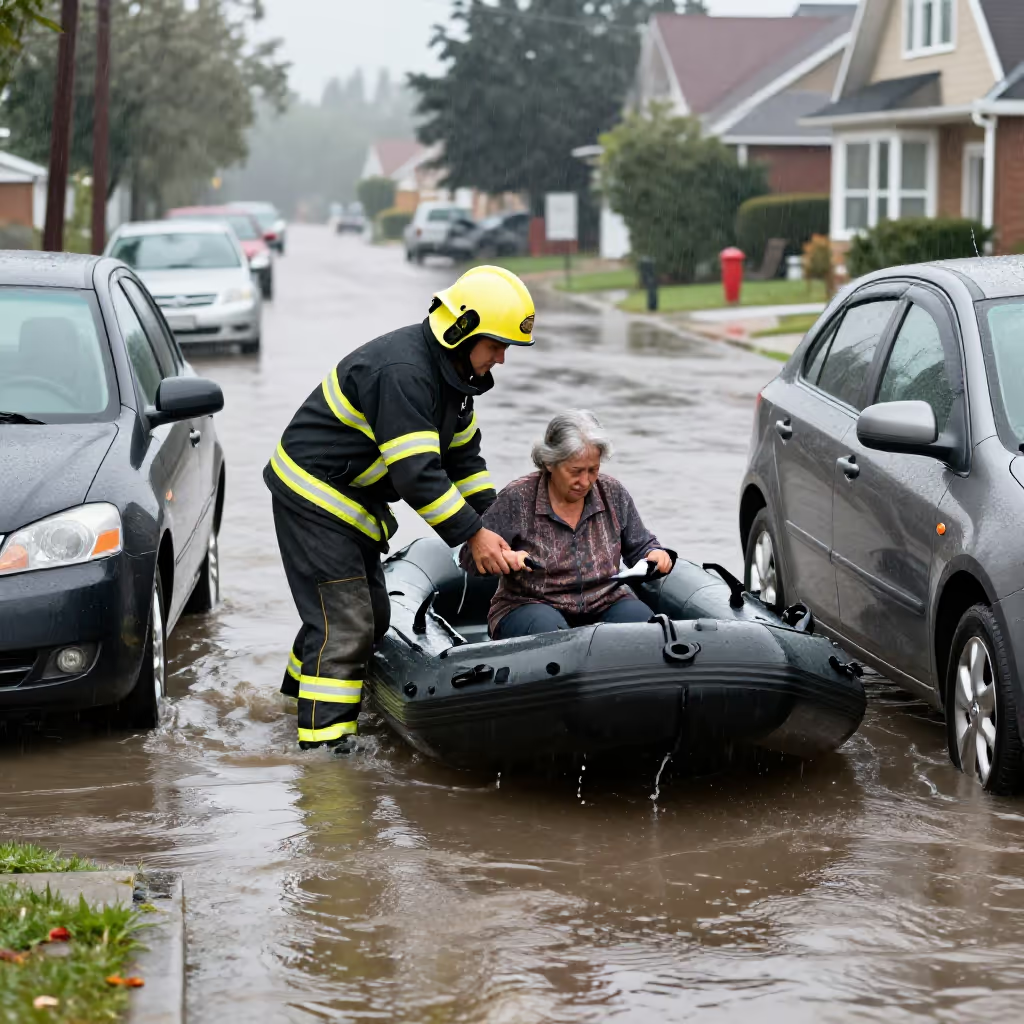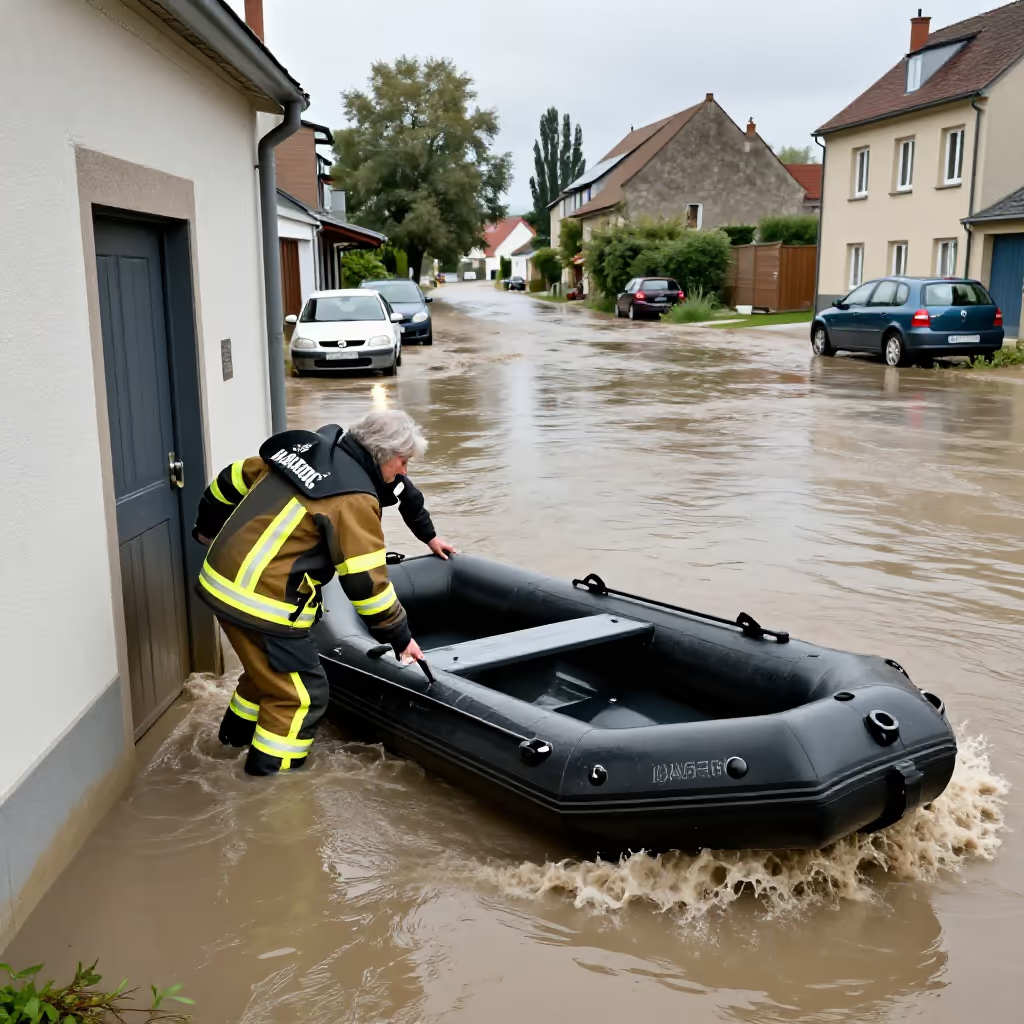
A situation in which a river has such a high water level that it bursts its banks and floods land.
example
Nach tagelangem Regen führte der Fluss Hochwasser und viele Keller liefen voll.
After days of rain, the river flooded, and many basements filled with water.
Usage tips
Compound word
The word is simply made up of 'hoch' (high) and 'Wasser' (water). So it describes a situation in which the water is high.
EXAMPLE
Wegen des Hochwassers sind viele Straßen gesperrt.
Because of the flood, many roads are closed.
Context clues
The context makes clear which meaning is intended. If a 'Fluss' (river) or 'Ufer' (bank) is mentioned, it is about flooding. If it is about the 'Meer' (sea), the 'Küste' (coast), or 'Ebbe und Flut' (ebb and flow / tides), the tide is meant.
EXAMPLE
Der Rhein führt Hochwasser und die Schifffahrt wurde eingestellt.
The Rhine is flooding, and shipping has been suspended.
Typical verbs
When a river bursts its banks, people often say 'der Fluss führt Hochwasser' (the river is in flood) or 'es gibt Hochwasser' (there is flooding). People can 'vom Hochwasser betroffen sein' (be affected by the flood).
EXAMPLE
Die Feuerwehr warnt, dass die Donau bald Hochwasser führen könnte.
The fire department is warning that the Danube could soon flood.
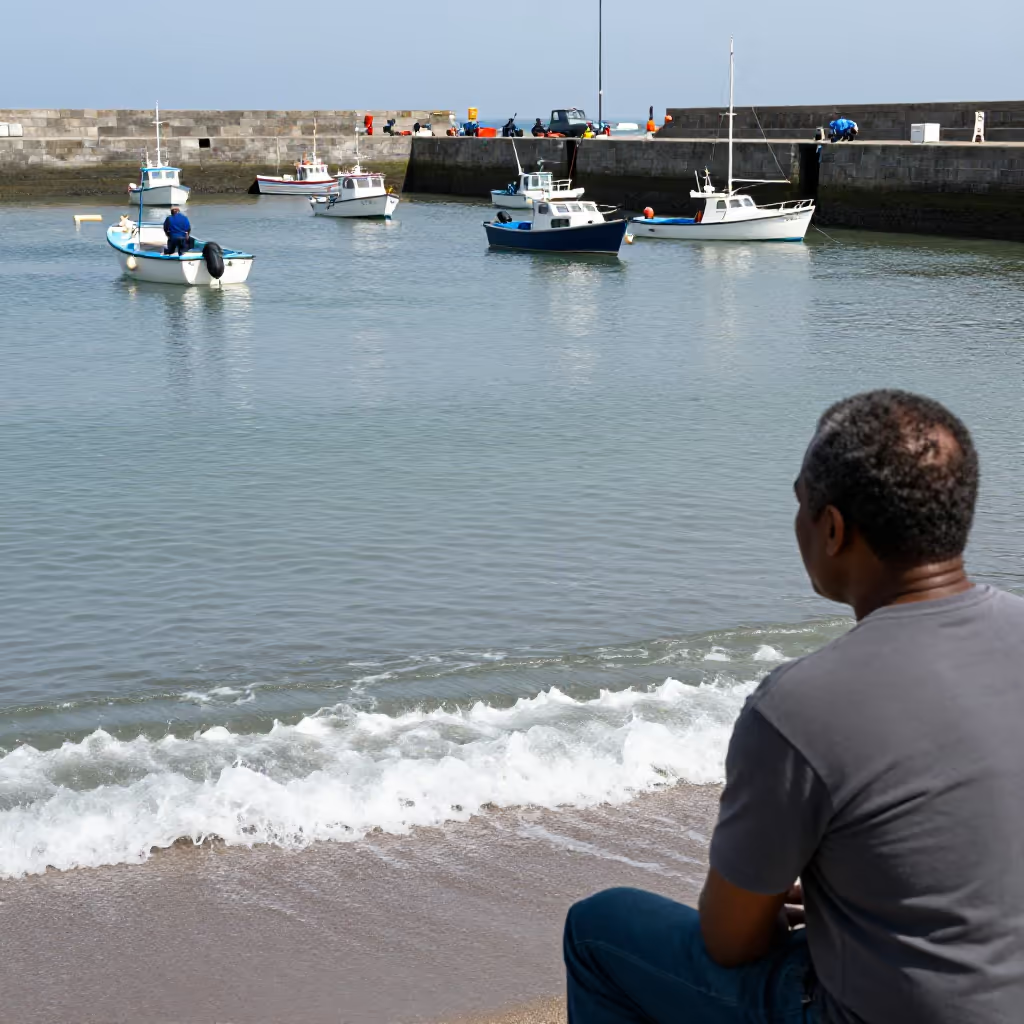
In the context of tides
When it comes to the tides, 'Hochwasser' (high tide) is the highest water level in the cycle of 'Ebbe und Flut' (ebb and flow / tides). The typical formulation is 'es ist Hochwasser' (it is high tide).
EXAMPLE
In sechs Stunden ist wieder Hochwasser.
In six hours it will be high tide again.
Compare with
near_synonym · confusable
Hochwasser vs Flut
tide / flood
'Flut' and 'Hochwasser' both have to do with a high water level. On the coast, 'Flut' can mean the period when the sea level is rising; 'Hochwasser' can mean the highest water level there. With rivers, people especially often say 'Hochwasser' when the water level is dangerously high and the water bursts its banks. 'Flut' can also mean a flood caused by large masses of water, and often sounds more general or more dramatic. The words can be confused because both fit with flooding. As a simple guide: at the sea, people often talk about 'Ebbe und Flut' (low tide and high tide); with a river, usually about 'Hochwasser'.
Hochwasser
Nach dem starken Regen steht der Keller wegen des Hochwassers unter Wasser.
After the heavy rain, the basement is under water because of the flooding.
Flut
An der Nordsee kommt die Flut am Nachmittag zurück.
On the North Sea coast, high tide comes back in the afternoon.