

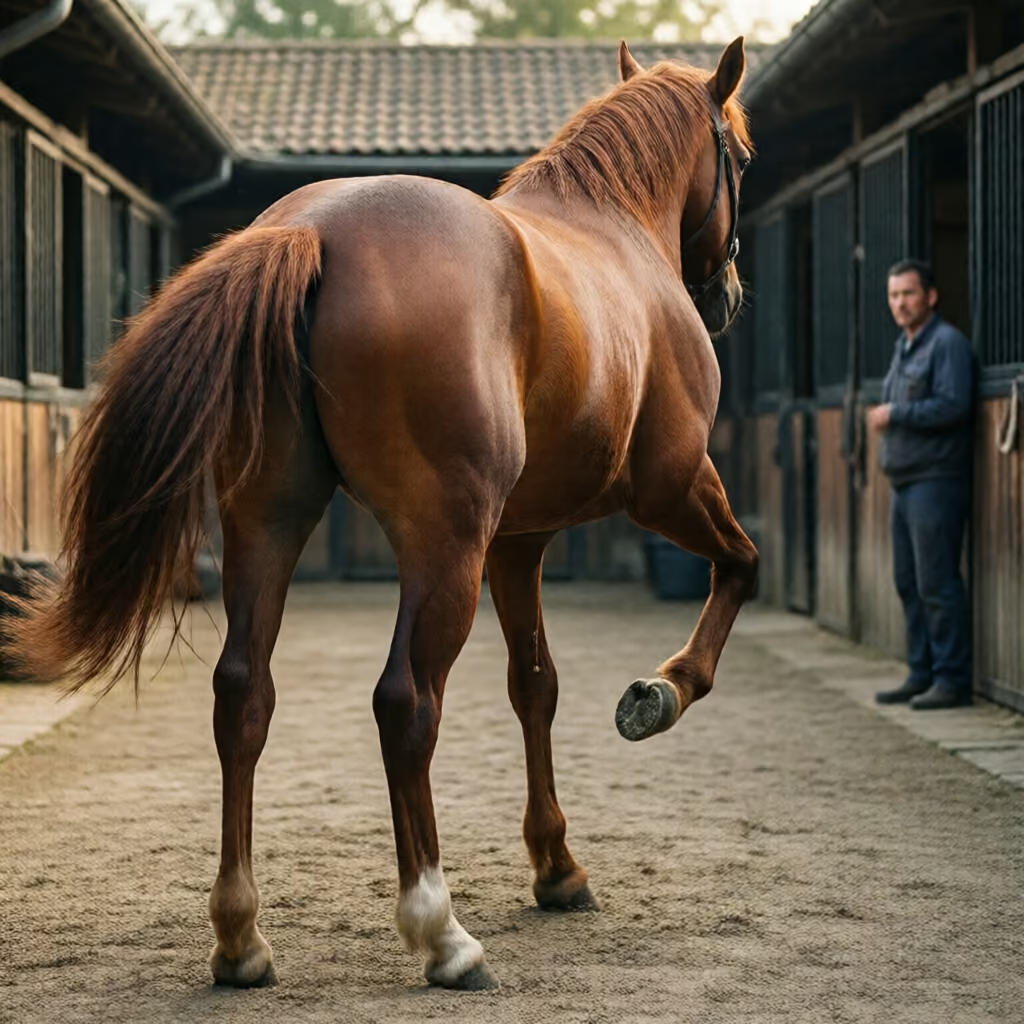
die Hinterhand
hindquarters
The rear part of the body of a four-legged animal, especially a horse.
EXAMPLE
Das Pferd trat mit der Hinterhand kräftig nach.
The horse kicked forcefully with its hindquarters.
hindquarters / rear hand
die Hinterhand
Loading your saved state.
hindquarters
The rear part of the body of a four-legged animal, especially a horse.
Das Pferd trat mit der Hinterhand kräftig nach.
The horse kicked forcefully with its hindquarters.

to have something in reserve
To have something available as a reserve or additional advantage and be able to use it later.
Für die Verhandlungen haben wir noch einige gute Argumente in der Hinterhand.
We still have some good arguments in reserve for the negotiations.
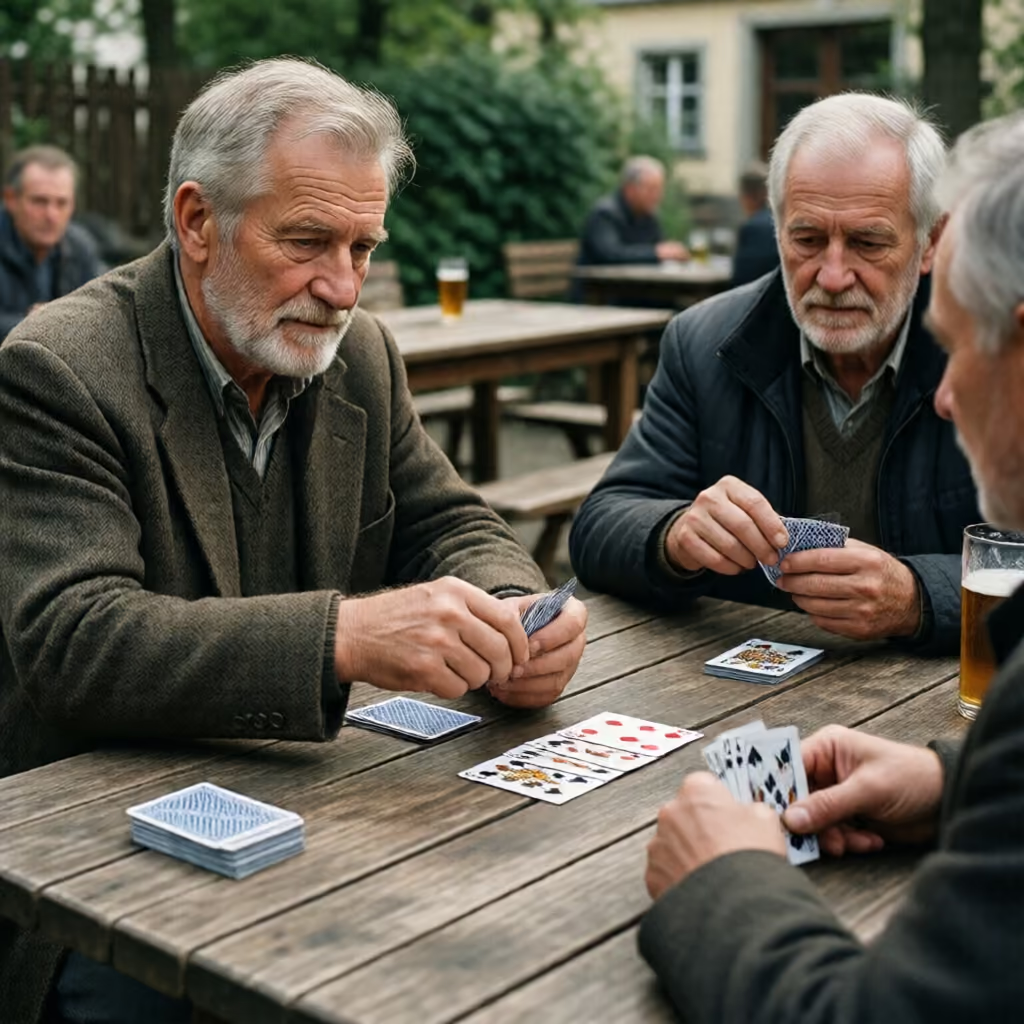
rear hand (in Skat)
In card games, especially Skat, the player who plays their card last in a trick, or that player's position in the order.
Beim Skat legt die Hinterhand ihre Karte als Letzte und sieht daher vorher schon die beiden anderen Karten des Stichs.
In Skat, the rear hand plays their card last and therefore sees the other two cards in the trick beforehand.
| gender | feminine die |
|---|---|
| genitive | der Hinterhand |
| singular | plural | |
|---|---|---|
| nominative | die Hinterhand | – |
| accusative | die Hinterhand | – |
| dative | der Hinterhand | – |
| genitive | der Hinterhand | – |
The article changes with the case; it is shown in colour.
When describing an animal, 'eine kräftige Hinterhand' (powerful hindquarters) and 'eine gut bemuskelte Hinterhand' (well-muscled hindquarters) are typical collocations. They are used, for example, when assessing horses and dogs.
Der junge Hengst hat eine kräftige Hinterhand.
The young stallion has powerful hindquarters.
In riding lessons, 'Hinterhand' (hindquarters) is often used with 'aktivieren' (to activate). This means that the horse uses its hind legs more actively as it moves.
Mit dieser Übung kannst du die Hinterhand deines Pferdes aktivieren.
You can use this exercise to activate your horse's hindquarters.
The pattern is 'etwas in der Hinterhand haben' (to have something in reserve): the reserve is the accusative object, while 'in der Hinterhand' remains unchanged. 'Noch' (still) is often used to emphasize that this reserve is additionally available.
Falls unser erster Vorschlag abgelehnt wird, haben wir noch einen zweiten Plan in der Hinterhand.
If our first proposal is rejected, we still have a second plan in reserve.