


A place where secret, unofficial, or illegal agreements and deals take place. The term is often used pejoratively for undemocratic or non-transparent decisions in politics or business.
example
Die wichtigen politischen Entscheidungen werden oft im Hinterzimmer getroffen.
Important political decisions are often made in the back room.
Usage tips
Word composition
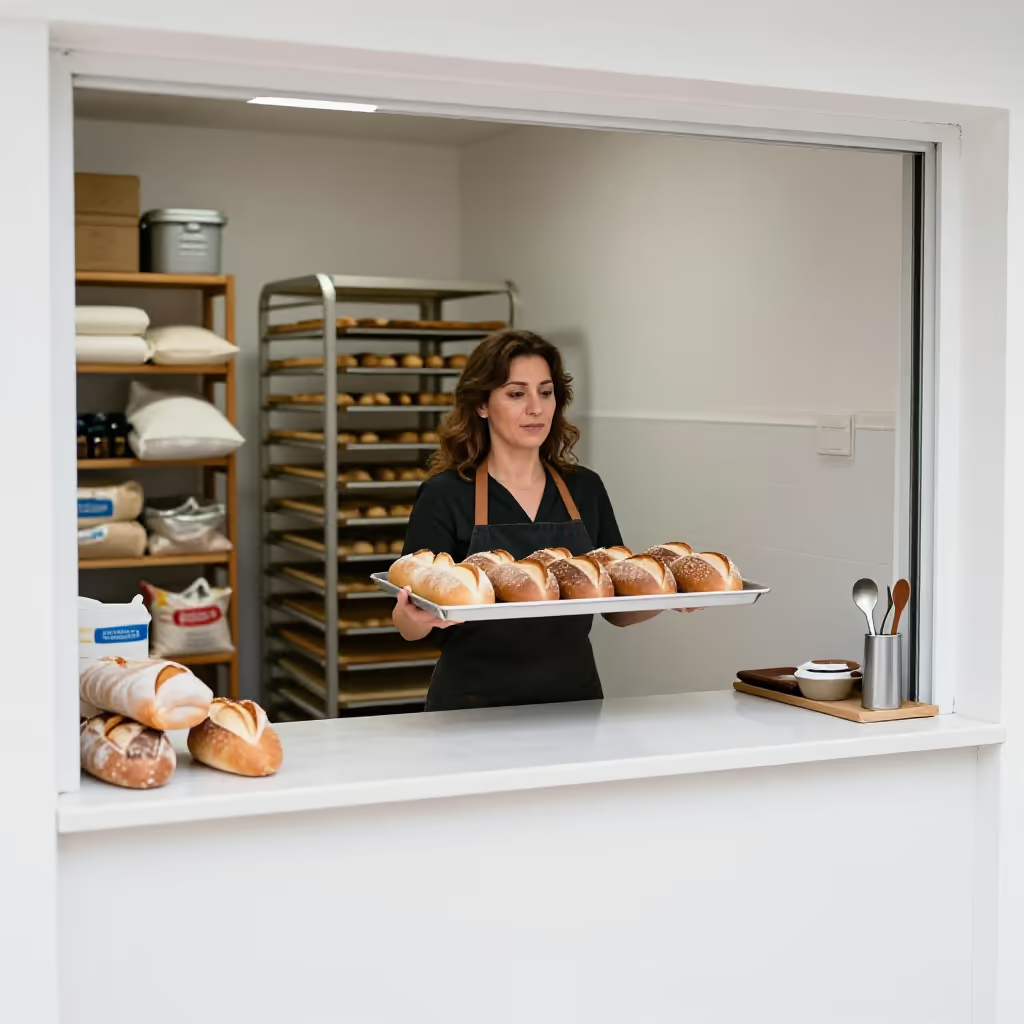
The word is made up of 'hinter' (behind) and 'Zimmer' (room). So it literally means 'a room located at the back.' This direct meaning also helps you understand the figurative meaning.
EXAMPLE
Die Ware wird im Hinterzimmer gelagert.
The goods are stored in the back room.
Context clue
The meaning depends heavily on the context. If it is about a building such as a shop or a restaurant, the literal room is meant. In texts about politics or business, 'Hinterzimmer' (back room) almost always refers to secret, undemocratic agreements.
EXAMPLE
Der Wirt verschwand kurz ins Hinterzimmer.
The innkeeper briefly disappeared into the back room.
Negative meaning
In its figurative meaning, 'Hinterzimmer' (back room) has a strongly negative connotation. It criticizes a lack of transparency and undemocratic processes. People also often speak of 'Hinterzimmerpolitik' (back-room politics).
EXAMPLE
Die Bürger protestierten gegen die Hinterzimmer-Absprachen der Politiker.
The citizens protested against the politicians' back-room agreements.
Typical verbs
In the figurative sense, 'Hinterzimmer' (back room) is often combined with verbs of deciding and negotiating. Typical phrases are 'im Hinterzimmer aushandeln' (to negotiate in the back room), 'im Hinterzimmer beschließen' (to decide in the back room), or 'im Hinterzimmer ausmachen' (to settle in the back room).
EXAMPLE
Der Koalitionsvertrag wurde in langen Nächten im Hinterzimmer ausgehandelt.
The coalition agreement was negotiated in the back room over long nights.
Compare with
near_synonym · confusable
Hinterzimmer vs Nebenzimmer
adjoining room
'das Hinterzimmer' and 'das Nebenzimmer' can both mean a room that is not the main room. A 'Hinterzimmer' is more likely to be at the back, for example behind a shop or dining room. In addition, 'Hinterzimmer' can be used figuratively and often negatively when secret agreements are made. A 'Nebenzimmer' is simply next to another room and sounds neutral. The words can be confused when talking about rooms in restaurants, offices, or shops. If only the position next to the main room is important, 'Nebenzimmer' fits. If the room is at the back or there is a hint of something secretive, 'Hinterzimmer' is a better fit.
Hinterzimmer
Die Entscheidung wurde nicht öffentlich besprochen, sondern in einem Hinterzimmer getroffen.
The decision was not discussed publicly, but made in a back room.
Nebenzimmer
Nach dem Gespräch hat das Team im Nebenzimmer weitergearbeitet.
After the meeting, the team continued working in the adjoining room.