

hissen
to hoist
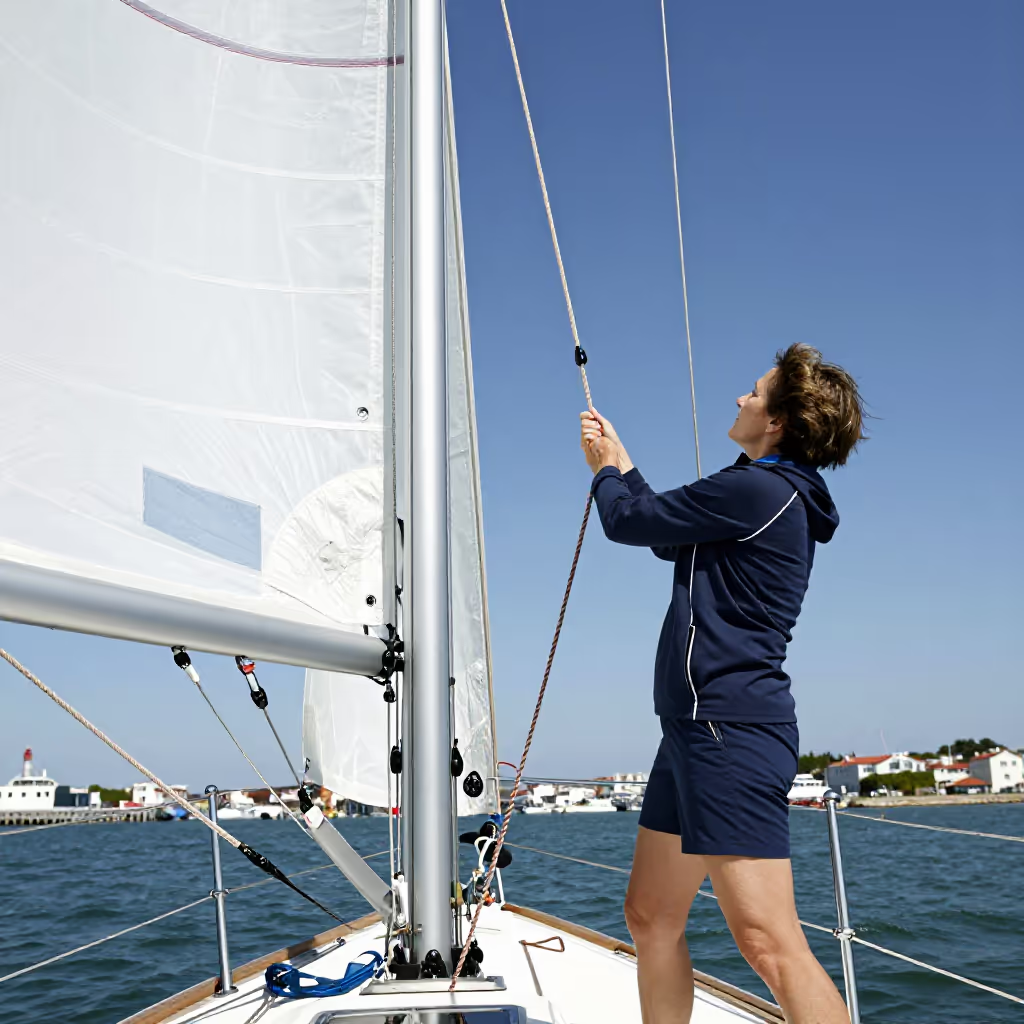
To pull something, especially a flag or a sail, up a mast or pole using a rope.
EXAMPLE
Jeden Morgen wird vor der Schule feierlich die Flagge gehisst.
Every morning, the flag is ceremonially hoisted in front of the school.
to hoist
Loading your saved state.
to hoist
To pull something, especially a flag or a sail, up a mast or pole using a rope.
Jeden Morgen wird vor der Schule feierlich die Flagge gehisst.
Every morning, the flag is ceremonially hoisted in front of the school.
This verb is used almost exclusively with three objects: 'die Flagge hissen' (to hoist the flag), 'die Fahne hissen' (to hoist the flag), or 'die Segel hissen' (to hoist the sails). The object is always in the accusative.
Die Matrosen hissten bei Sonnenaufgang die Segel.
The sailors hoisted the sails at sunrise.
Especially in connection with flags, 'hissen' (to hoist) is very often used in the passive. This emphasizes the action itself without saying who performs it.
Zum Nationalfeiertag wird an allen öffentlichen Gebäuden die Fahne gehisst.
On the national holiday, the flag is hoisted on all public buildings.
The hoisting of a flag usually takes place in an official or ceremonial setting, e.g. in the military, government, or sports. The hoisting of sails belongs to the context of seafaring.
Die Piraten hissten ihre schwarze Flagge, als sie das Handelsschiff sahen.
The pirates hoisted their black flag when they saw the merchant ship.
to set / put
When getting a sail ready, both setzen and hissen can fit. setzen is more general here and means bringing the sail into its working position, while hissen specifically emphasizes pulling it up with a rope at the mast. Use hissen when the upward movement is important.

Die Mannschaft hisste das Segel mit einem Seil am Mast.
The crew hoisted the sail with a rope at the mast.
Die Mannschaft setzte das Segel, damit das Boot weiterfahren konnte.
The crew set the sail so that the boat could continue on its way.