

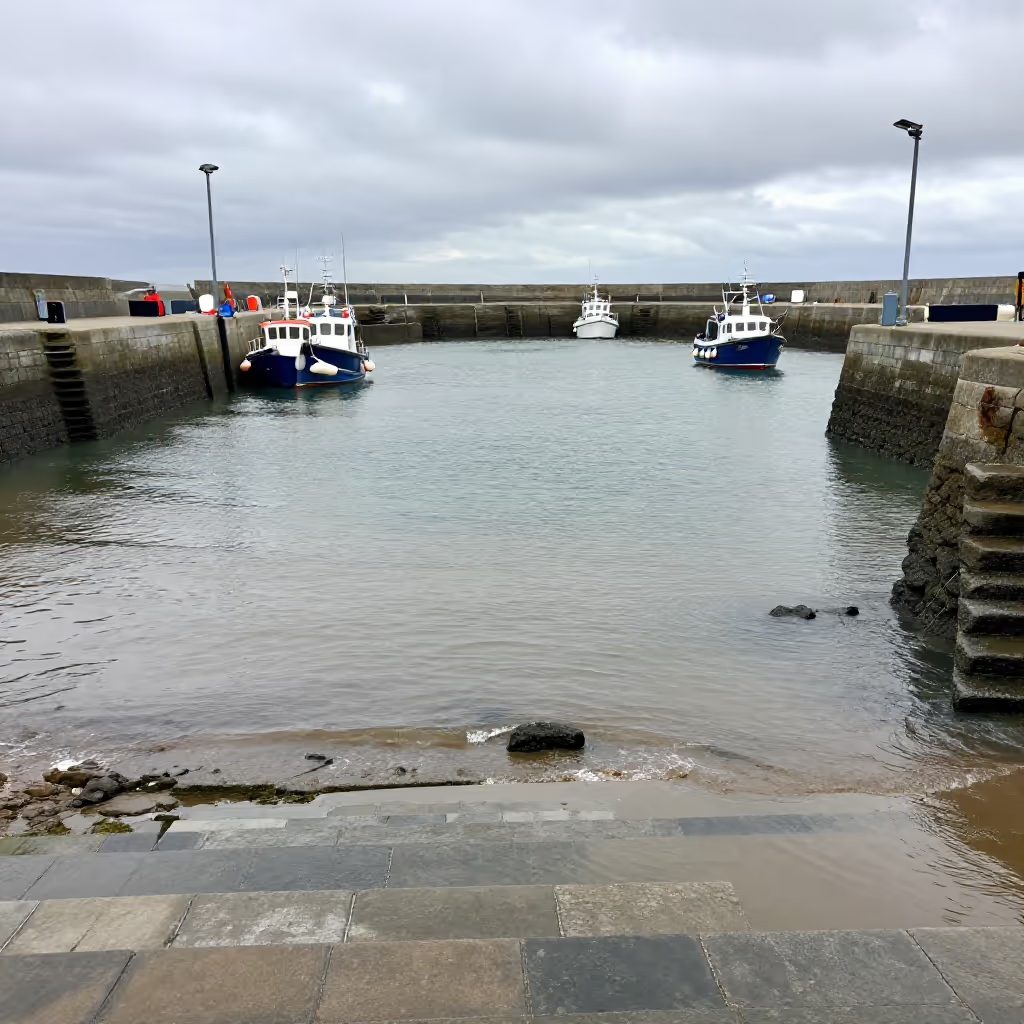
die Flut
high tide
The period during which the sea level rises, in contrast to low tide.
EXAMPLE
Bei Flut kann man hier nicht am Strand spazieren gehen.
At high tide, you can't go for a walk on the beach here.
tide / flood
Loading your saved state.
high tide
The period during which the sea level rises, in contrast to low tide.
Bei Flut kann man hier nicht am Strand spazieren gehen.
At high tide, you can't go for a walk on the beach here.
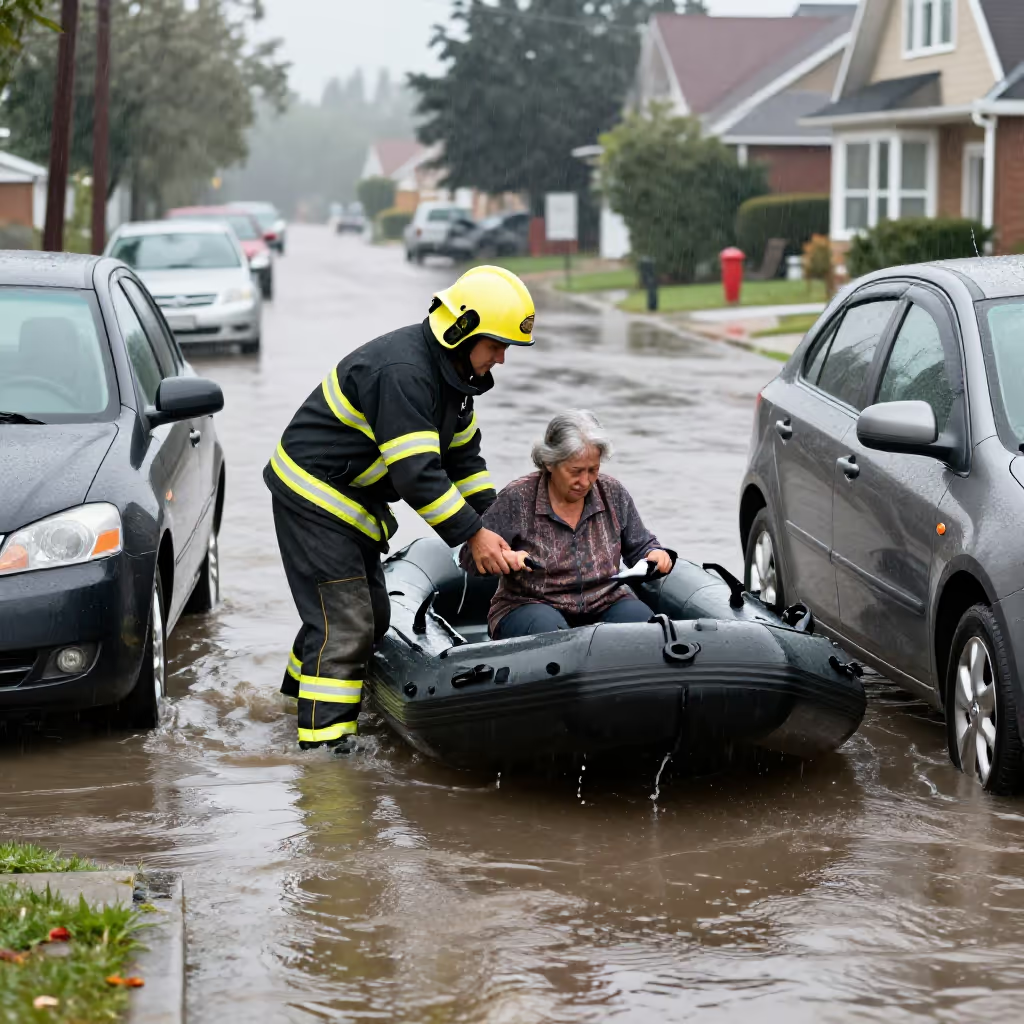
flood
An overflow in which large masses of water cover land that is normally dry.
Nach den starken Regenfällen kam es in der ganzen Region zu einer verheerenden Flut.
After the heavy rainfall, there was a devastating flood throughout the region.

flood
A very large amount or excess of something, often used figuratively.
Er wurde mit einer Flut von E-Mails und Anfragen überschwemmt.
He was flooded with a flood of emails and requests.
'Flut' (tide / flood) is related to the verb 'fließen' (to flow). It describes a large, flowing movement of water—or, in a figurative sense, of other things.
Nach dem Dammbruch flossen riesige Wassermassen ins Tal.
After the dam burst, huge masses of water flowed into the valley.
If people are talking about the sea, the tidal meaning of 'Flut' is meant, often in the pair 'Ebbe und Flut' (ebb and flow / low tide and high tide). If it is about a water-related disaster, a flood is meant. A 'Flut von' (flood of) something abstract is always the figurative meaning.
Wir müssen warten, bis die Flut zurückgeht, um die Muscheln zu sammeln.
We have to wait until the tide goes out to collect the shells.
'Flut' (high tide) is very frequently used together with its opposite 'Ebbe' (low tide) as the fixed pair 'Ebbe und Flut' (low tide and high tide) to describe the tides.
An der Nordsee bestimmt der Rhythmus von Ebbe und Flut das Leben.
On the North Sea, the rhythm of low tide and high tide determines life.
In the figurative meaning, 'Flut' (flood) is almost always used with the preposition 'von' (of) and a plural noun. This construction describes an overwhelming amount.
Nach seiner Rede erhielt er eine Flut von Glückwünschen.
After his speech, he received a flood of congratulations.
rain
In figurative use, Regen and Flut can both refer to a large amount of something coming toward someone. Regen suggests many individual things coming down evenly, while Flut emphasizes the overwhelming quantity. Use Flut when the amount is particularly intense or difficult to manage.

Nach dem Sieg musste die Mannschaft eine Flut von Glückwünschen beantworten.
After the victory, the team had to respond to a flood of congratulations.
Nach dem Sieg erhielt die Mannschaft einen Regen von Glückwünschen.
After the victory, the team received a shower of congratulations.