

Expresses a very high probability; with near certainty. It means that something is very likely to happen or to be the case.
example
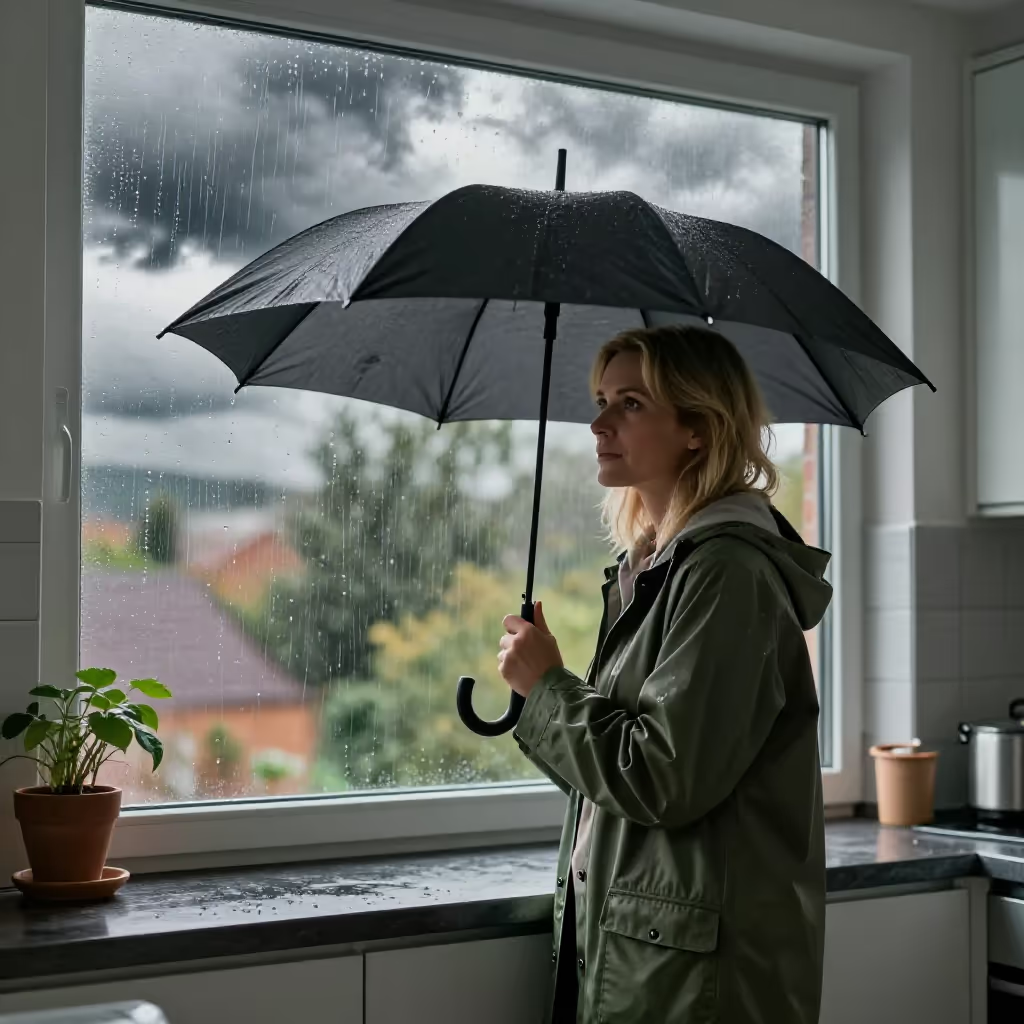
Aufgrund der dunklen Wolken wird es höchstwahrscheinlich bald regnen.
Because of the dark clouds, it will most likely rain soon.

Usage tips
Word composition
The word is composed of 'höchst-' and 'wahrscheinlich' (likely/probable). 'Höchst' is the superlative of 'hoch' (high) and here intensifies 'wahrscheinlich' to the highest degree. So it literally means 'most likely'.
EXAMPLE
Die Lieferung kommt höchstwahrscheinlich morgen an.
The delivery will most likely arrive tomorrow.
Sentence position
As an adverb, 'höchstwahrscheinlich' (most likely) can stand in different positions in the sentence. Most commonly, it stands either in position 1 (then the verb follows) or inside the sentence after the finite verb.
EXAMPLE
Höchstwahrscheinlich hat sie den Zug verpasst.
Most likely, she missed the train.
Use in a sentence
This adverb refers to the statement of the whole sentence and expresses the speaker's assessment. It does not describe the manner of an action. For example, you cannot say 'höchstwahrscheinlich rennen' (to run most likely).
EXAMPLE
Er ist krank, deshalb bleibt er heute höchstwahrscheinlich zu Hause.
He is sick, so he will most likely stay home today.
Compare with
near_synonym · confusable
höchstwahrscheinlich vs wohl
probably / well
'wohl' and 'höchstwahrscheinlich' can both express an assumption. The difference is mainly in strength. 'wohl' means that you consider something likely, but are not completely sure. It often sounds natural in conversation. 'höchstwahrscheinlich' is much stronger and means that something is almost certain. Learners may confuse the words because neither expresses absolute certainty. If you are only making a cautious assumption, 'wohl' fits better. If you are very sure, 'höchstwahrscheinlich' is more precise.
höchstwahrscheinlich
Nach dem Gespräch fährt du höchstwahrscheinlich doch mit dem Zug.
After the conversation, you will most likely go by train after all.
wohl
Wir brauchen wohl morgen einen neuen Akku für das Gerät.
We will probably need a new battery for the device tomorrow.