

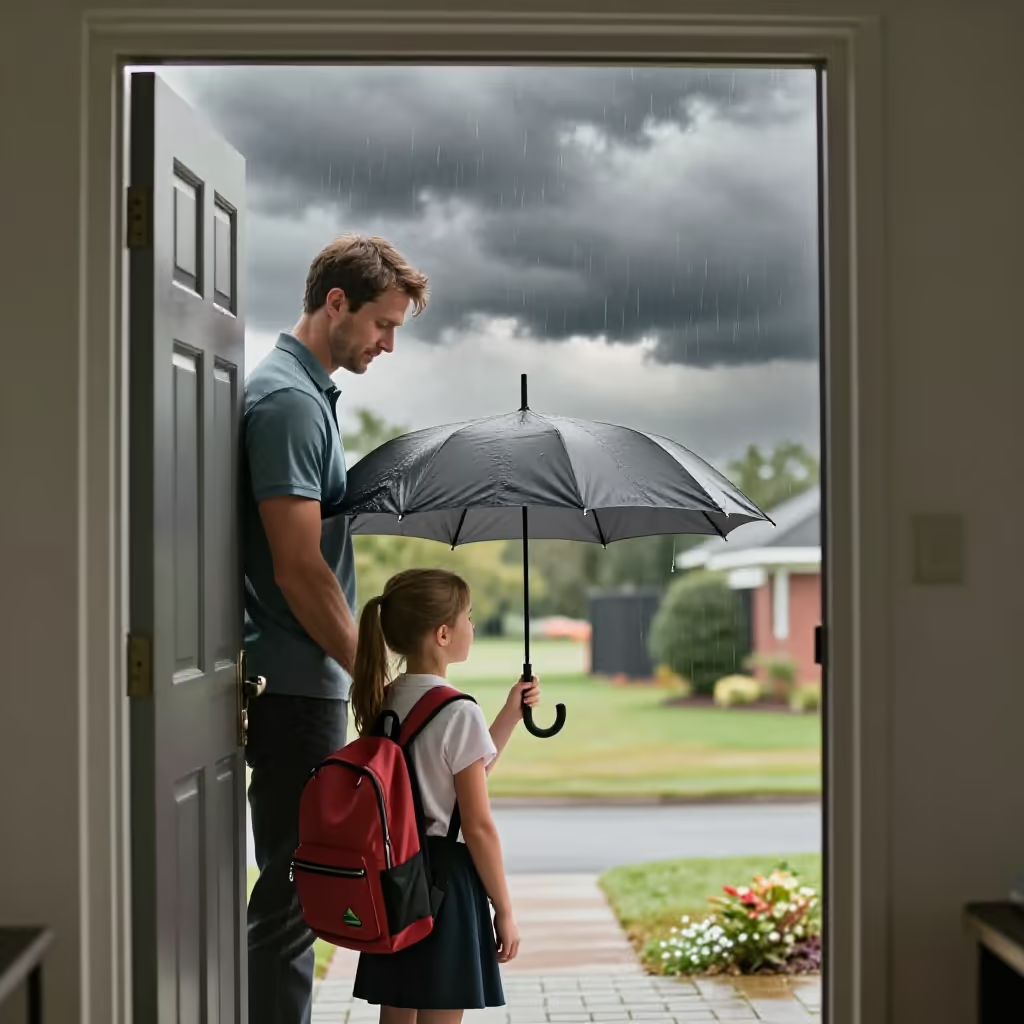
Expresses that something will happen or is the case with a high degree of probability; it is very possible or to be expected.
example
Er ist noch nicht da, er steckt wahrscheinlich im Stau.
He isn't here yet; he's probably stuck in traffic.

Usage tips
Word structure
The word is a compound of 'wahr' (true) and 'scheinen' (to seem). Something that is 'wahrscheinlich' (probable/likely) therefore 'seems' to be 'true'. This derivation helps you understand and remember the meaning.
EXAMPLE
Seine Geschichte scheint wahr zu sein.
His story seems to be true.
Word order
As an adverb, 'wahrscheinlich' (probably) usually comes after the conjugated verb (position 3). However, it can also stand in position 1 to emphasize the assumption; then the verb follows directly after it.
EXAMPLE
Wir werden wahrscheinlich am Wochenende zu Hause bleiben.
We will probably stay home on the weekend.
Adjective or adverb
'Wahrscheinlich' (probable/likely) can stand before a noun as an adjective and is then declined. More often, however, it is used as an unchanging adverb that refers to the whole sentence.
EXAMPLE
Ein Gewitter ist die wahrscheinliche Ursache für den Stromausfall.
A thunderstorm is the probable cause of the power outage.
Compare with
near_synonym · confusable
wahrscheinlich vs wohl
probably / well
'wohl' and 'wahrscheinlich' both express that something is not certain, but very possible. 'wahrscheinlich' is neutral and clear; it fits in almost any context. 'wohl' often sounds a bit more personal or cautious, as if you are making an assumption based on the situation. Learners may confuse the words because they seem similar in many sentences. If you want to say very clearly 'with high probability', 'wahrscheinlich' is usually simpler. 'wohl' works well in short assumptions in conversation.
wahrscheinlich
Bei meinen Eltern gibt es heute wahrscheinlich Abendessen um sieben.
At my parents' place, dinner will probably be at seven today.
wohl
Meine Nachbarin ist wohl noch im Büro, weil ihr Auto nicht vor dem Haus steht.
My neighbor is probably still at the office because her car is not in front of the house.