


hoffen
to hope
To have the wish or confident expectation that something positive will happen. Often used with 'auf' (for) or a 'dass' (that) clause.
EXAMPLE
Ich hoffe, dass du deine Prüfung bestanden hast.
I hope that you passed your exam.
to hope
Loading your saved state.
to hope
To have the wish or confident expectation that something positive will happen. Often used with 'auf' (for) or a 'dass' (that) clause.
Ich hoffe, dass du deine Prüfung bestanden hast.
I hope that you passed your exam.

to hope
In general, to have a confident and positive attitude toward the future.
Auch wenn die Situation schwierig ist, müssen wir weiter hoffen.
Even if the situation is difficult, we have to keep hoping.
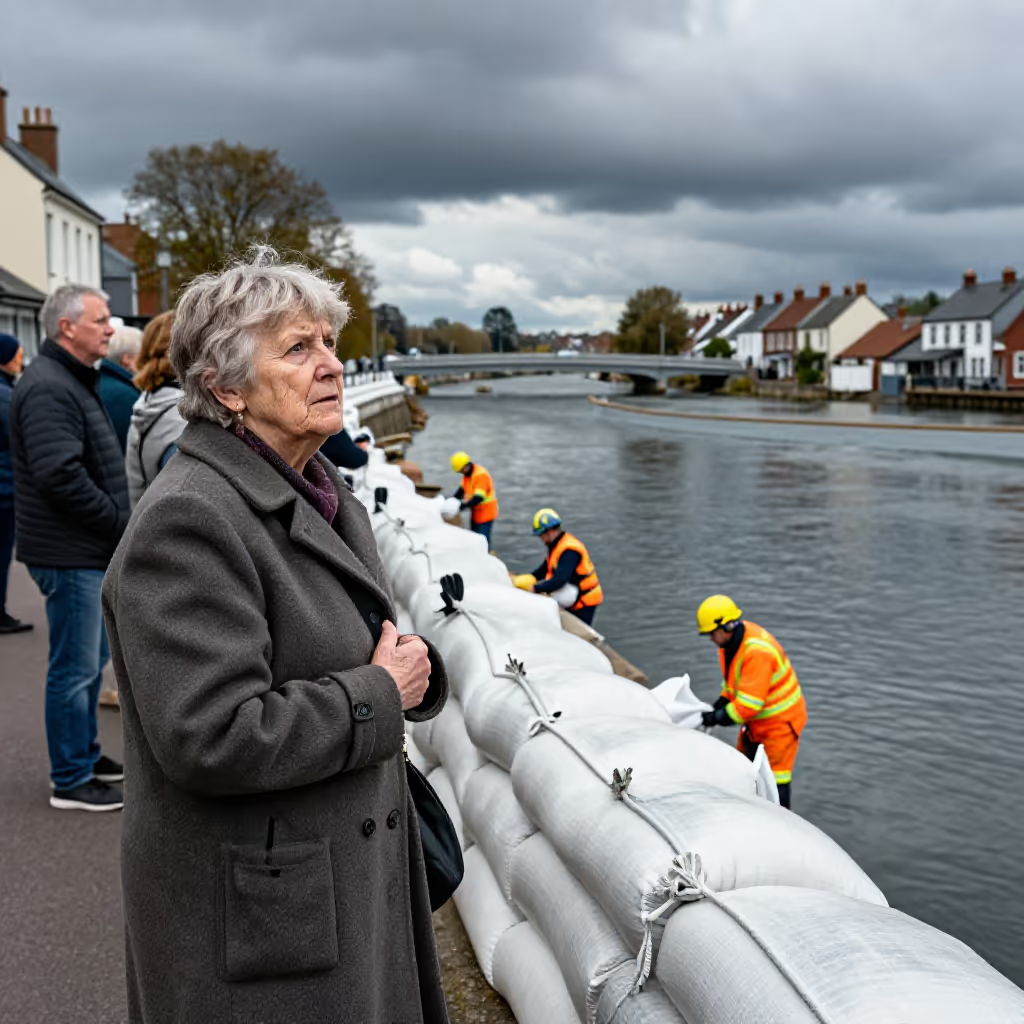
it remains to be hoped
A fixed expression that expresses that one wishes for a positive outcome, even though the result is uncertain.
Es bleibt zu hoffen, dass sich die Lage bald wieder beruhigt.
It remains to be hoped that the situation will soon calm down again.
The verb 'hoffen' (to hope) is usually constructed in two ways: with the preposition 'auf' followed by the accusative when you hope for a thing, or with a 'dass' (that) clause when you hope for an action or event.
Wir hoffen auf besseres Wetter für das Wochenende.
We are hoping for better weather for the weekend.
The verb 'hoffen' (to hope) belongs to the word family around 'die Hoffnung' (hope). If you know the noun, you can easily work out the meaning of the verb.
Solange es Leben gibt, gibt es auch Hoffnung.
As long as there is life, there is also hope.
When you hope for something, typical nouns that follow are: 'eine Besserung' (an improvement), 'ein Wunder' (a miracle), 'gute Nachrichten' (good news), or 'Unterstützung' (support).
Die Ärzte hoffen auf eine schnelle Besserung seines Zustands.
The doctors are hoping for a quick improvement in his condition.
In the general meaning 'to be confident', 'hoffen' (to hope) can also stand without an object or subordinate clause. It then describes a generally positive attitude.
Die Lage ist ernst, aber wir hoffen weiter.
The situation is serious, but we keep hoping.
The phrase 'es bleibt zu hoffen' (it remains to be hoped) is a fixed expression with an impersonal 'es' (it). It expresses a wish in an uncertain situation and is often followed by a 'dass' (that) clause.
Es bleibt zu hoffen, dass die Verhandlungen erfolgreich sein werden.
It remains to be hoped that the negotiations will be successful.
to expect
Hoffen and erwarten can refer to the same future event. Hoffen expresses a desire for a positive outcome. Erwarten, on the other hand, means that you anticipate the event based on the circumstances, regardless of your own wishes.

Trotz des unsicheren Gesprächs hoffe ich, dass ich die Stelle bekomme.
Despite the uncertain interview, I hope I get the job.
Nach der klaren Zusage erwarte ich, dass ich die Stelle bekomme.
After the clear confirmation, I expect to get the job.