

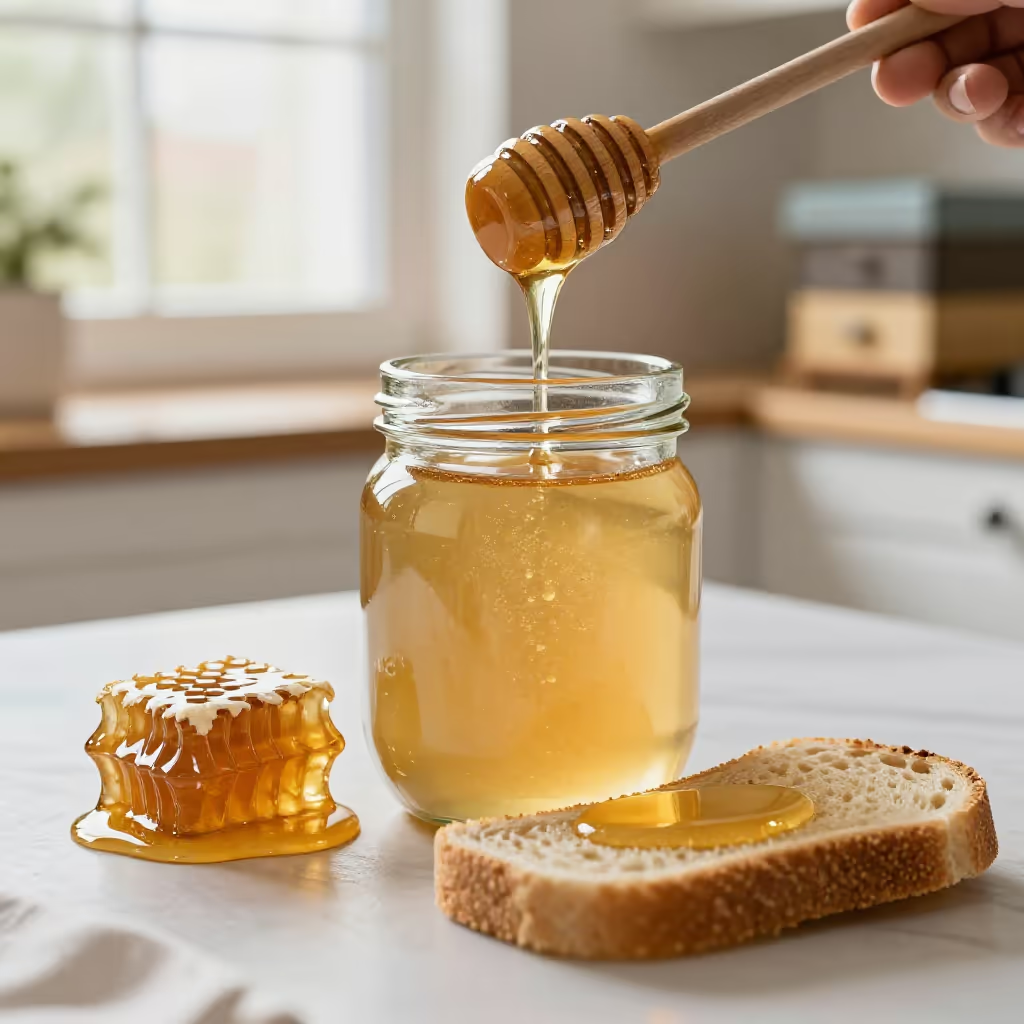
der Honig
honey
A sweet, sticky liquid made by bees from the nectar of flowers.
EXAMPLE
Ich süße meinen Tee gerne mit einem Löffel Honig.
I like to sweeten my tea with a spoonful of honey.
honey
Loading your saved state.
honey
A sweet, sticky liquid made by bees from the nectar of flowers.
Ich süße meinen Tee gerne mit einem Löffel Honig.
I like to sweeten my tea with a spoonful of honey.

to butter someone up
To flatter someone excessively in order to gain an advantage.
Er versucht, seinem Professor Honig ums Maul zu schmieren, um eine bessere Note zu bekommen.
He is trying to butter up his professor in order to get a better grade.
'Honig' (honey) is normally an uncountable noun (mass noun). You do not count it directly, but use quantity expressions such as 'ein Löffel Honig' (a spoonful of honey), 'ein Glas Honig' (a jar of honey), or 'etwas Honig' (some honey).
Für das Rezept brauchst du etwas flüssigen Honig.
For the recipe, you need some runny honey.
Common combinations are 'Honig in den Tee tun' (to put honey in tea), 'mit Honig süßen' (to sweeten with honey), or 'vom Imker Honig kaufen' (to buy honey from a beekeeper).
Manche Leute süßen ihren Joghurt mit Honig.
Some people sweeten their yogurt with honey.
The idiom 'jemandem Honig ums Maul schmieren' (to butter someone up) is fixed. The person being flattered is always in the dative.
Sie schmiert ihrer Chefin Honig ums Maul, weil sie eine Gehaltserhöhung will.
She is buttering up her boss because she wants a raise.