

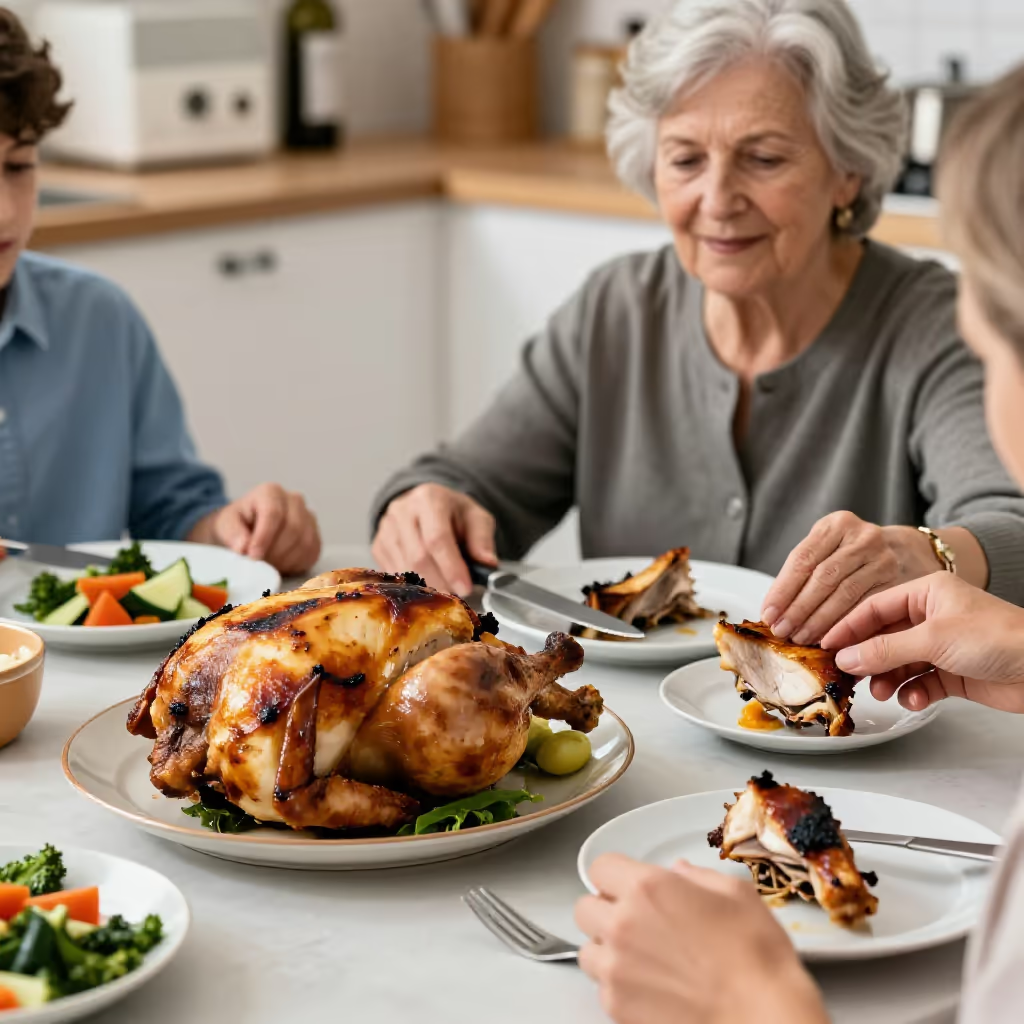
das Hühnchen
chicken
The meat of a chicken prepared as food.
EXAMPLE
Am Sonntag gibt es bei uns oft gebratenes Hühnchen mit Pommes.
On Sundays, we often have roast chicken with fries.
chicken
Loading your saved state.
chicken
The meat of a chicken prepared as food.
Am Sonntag gibt es bei uns oft gebratenes Hühnchen mit Pommes.
On Sundays, we often have roast chicken with fries.
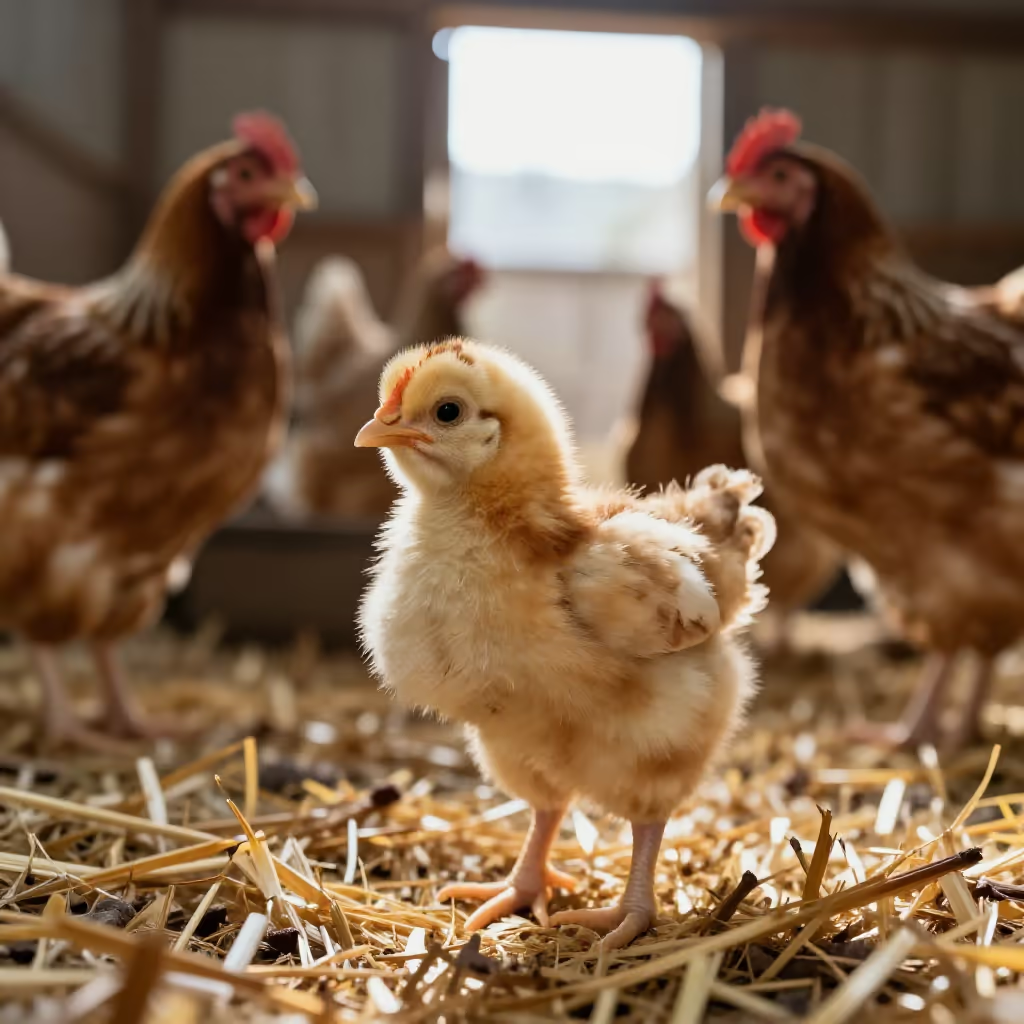
chick / little chicken
A young or small chicken; the diminutive form of 'Huhn' (chicken/hen).
Die Glucke passt gut auf ihre kleinen Hühnchen auf.
The hen takes good care of her little chicks.

to have a bone to pick with someone
An idiom meaning that you need to have an argument or clarifying conversation with someone because you are annoyed.
Warte, bis ich dich erwische, ich habe mit dir noch ein Hühnchen zu rupfen!
Wait until I catch you; I still have a bone to pick with you!
'Hühnchen' (little chicken/chicken meat) is the diminutive form of 'das Huhn' (the chicken/hen). The ending '-chen' is often used in German not only for small things, but also for meat dishes.
Ein kleines Hühnchen lief über den Hof.
A little chicken ran across the yard.
Whether the animal or the dish is meant becomes clear from context. Verbs like 'essen' (to eat), 'kochen' (to cook), or 'braten' (to roast/fry) point to the meat. Words like 'Bauernhof' (farm) or verbs like 'laufen' (to run/walk) and 'piepen' (to peep) refer to the living animal.
Ich bestelle im Restaurant ein halbes Hühnchen.
I order half a chicken at the restaurant.
When 'Hühnchen' (chicken) refers to food, it often appears together with the method of preparation or the side dishes. Typical examples are 'gebratenes Hühnchen' (roast/fried chicken), 'Hühnchen-Curry' (chicken curry), or 'Hühnchen mit Reis' (chicken with rice).
Mein Lieblingsessen ist Hühnchen mit Pommes und Salat.
My favorite meal is chicken with fries and salad.
The idiom 'mit jemandem ein Hühnchen zu rupfen haben' (to have a bone to pick with someone) means that you are annoyed and need to have a clarifying conversation with that person. The person is in the dative after the preposition 'mit' (with).
Ich habe mit dir noch ein Hühnchen zu rupfen, weil du zu spät gekommen bist!
I still have a bone to pick with you because you arrived late!
chicken
Both Huhn and Hühnchen can refer to chicken meat as food. Huhn is the more general term for the meat, while Hühnchen tends to refer to a prepared small portion or dish. Use Huhn for the food in general and Hühnchen for the specific dish.

Im Restaurant bestelle ich ein Hühnchen mit Gemüse.
I’m ordering chicken with vegetables at the restaurant.
Für den Salat brauche ich etwas gekochtes Huhn.
I need some cooked chicken for the salad.