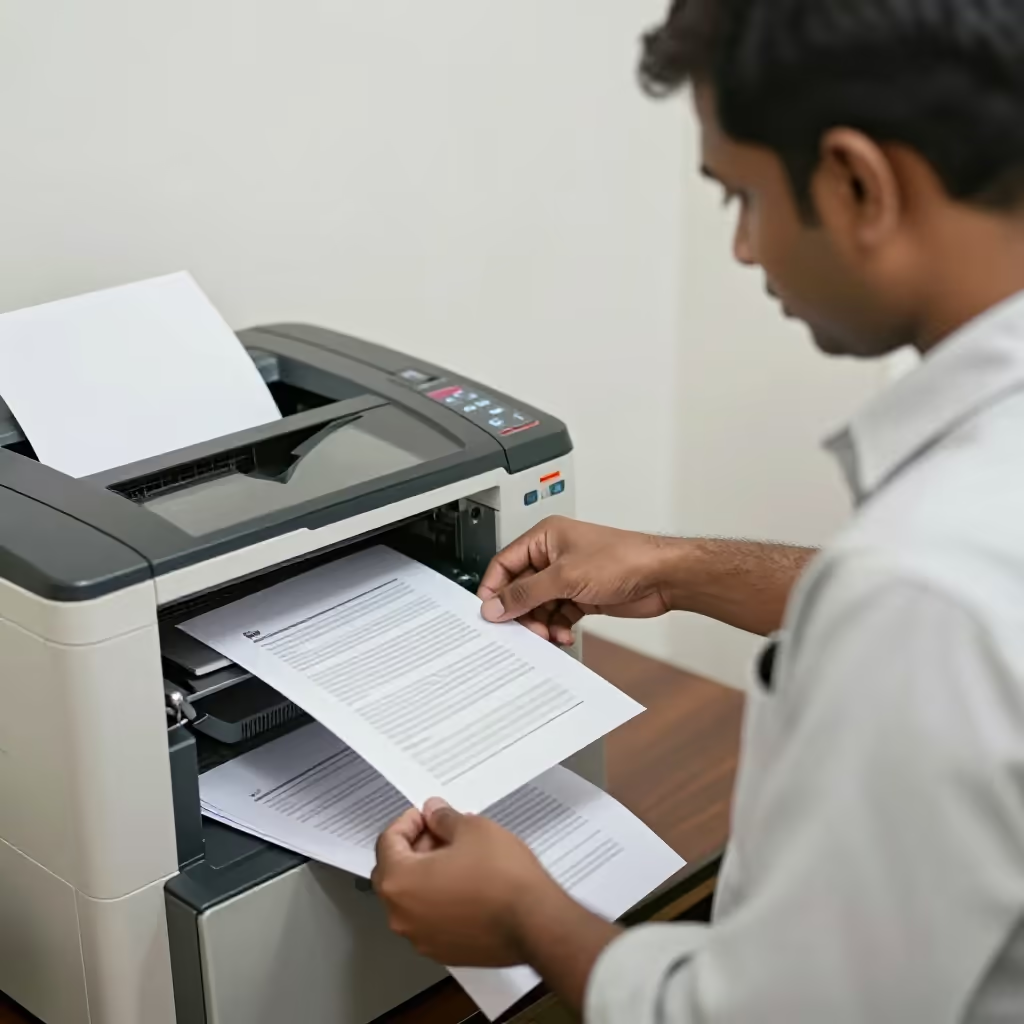
nachmachen
to imitate
To imitate or copy another person's actions, voice, or behavior, often in a playful or mocking way.
Mein kleiner Bruder versucht immer, alles nachzumachen, was ich tue.
My little brother always tries to imitate everything I do.
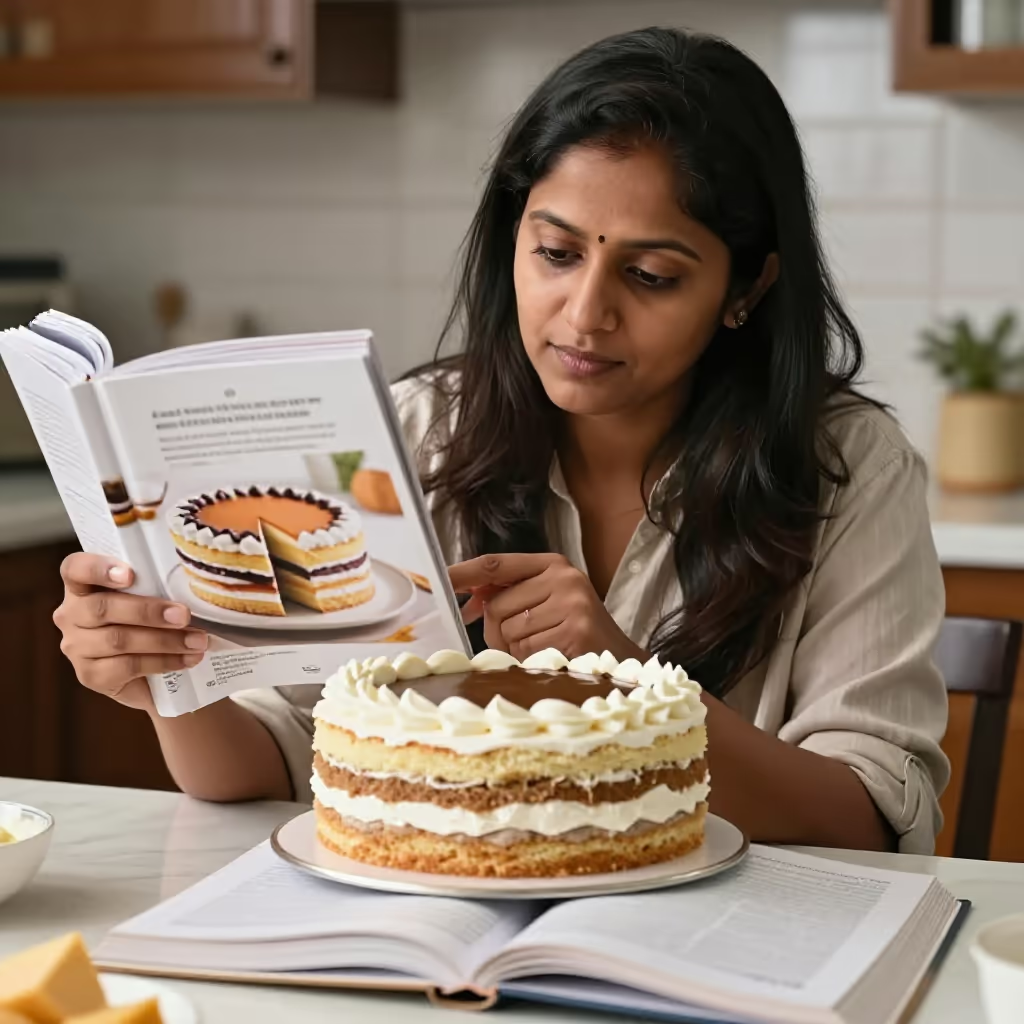
to imitate / copy
Loading your saved state.

to imitate
To imitate or copy another person's actions, voice, or behavior, often in a playful or mocking way.
Mein kleiner Bruder versucht immer, alles nachzumachen, was ich tue.
My little brother always tries to imitate everything I do.


to copy
To copy or reproduce an object, product, or work of art. This can be legal, such as recreating a recipe, or illegal, such as counterfeiting branded goods.
Diese Handtasche ist nicht echt, die wurde billig in Asien nachgemacht.
This handbag isn't real; it was copied cheaply in Asia.

to match someone
To also achieve or accomplish another person's special achievement or ability. Often used in the negative to emphasize the uniqueness of the achievement.
Sie hat ihr Unternehmen in nur drei Jahren zum Erfolg geführt – das macht ihr so schnell keiner nach.
She made her company successful in just three years — no one will match that anytime soon.
'Nachmachen' (to imitate / copy) is a separable verb. The prefix 'nach' comes at the end in a main clause, but remains attached to the verb in a subordinate clause. In the infinitive with 'zu', 'zu' goes between 'nach' and 'machen'.
Pass auf, dass die Kinder im Chemieunterricht nichts Gefährliches nachmachen.
Make sure the children don't copy anything dangerous in chemistry class.
The prefix 'nach-' here has the meaning of 'afterward' or 'as the second one'. So 'nachmachen' (to imitate / copy) literally means to do something after someone else has demonstrated it.
Er sang ein Lied und alle machten es ihm nach.
He sang a song and everyone copied him.
When you specify whose action you are imitating or copying, that person or thing is in the dative. The structure is often: 'jemandem (dative) etwas (accusative) nachmachen' (to imitate/copy something from someone).
Meine kleine Schwester macht mir alles nach.
My little sister copies everything I do.
The object of the sentence makes the meaning clear. If it is a person, a gesture, or a sound, 'imitieren' (to imitate) is meant. If it is a product, a recipe, or a document, 'reproduzieren' (to reproduce) or 'fälschen' (to counterfeit) is meant.
Der Komiker kann perfekt die Stimmen von Politikern nachmachen.
The comedian can imitate the voices of politicians perfectly.
To express that an achievement is extraordinary, the negated form is often used: 'Das macht ihm so schnell keiner nach.' (No one will match that anytime soon.) This is an expression of admiration.
Mit 90 Jahren noch einen Marathon laufen? Das macht ihr so schnell keiner nach!
Running a marathon at 90? No one will match her anytime soon!
to copy
Kopieren emphasizes reproducing an existing model as accurately as possible. Nachmachen can also mean making an object or product again based on a model, without the result having to be an exact copy. For a direct duplicate, kopieren is the better choice; for creating your own reproduction based on a model, use nachmachen.

Die Designerin macht die Lampe nach einer vorhandenen Zeichnung nach.
The designer recreates the lamp based on an existing drawing.
Die Designerin kopiert die digitale Zeichnung exakt in eine zweite Datei.
The designer copies the digital drawing exactly into a second file.