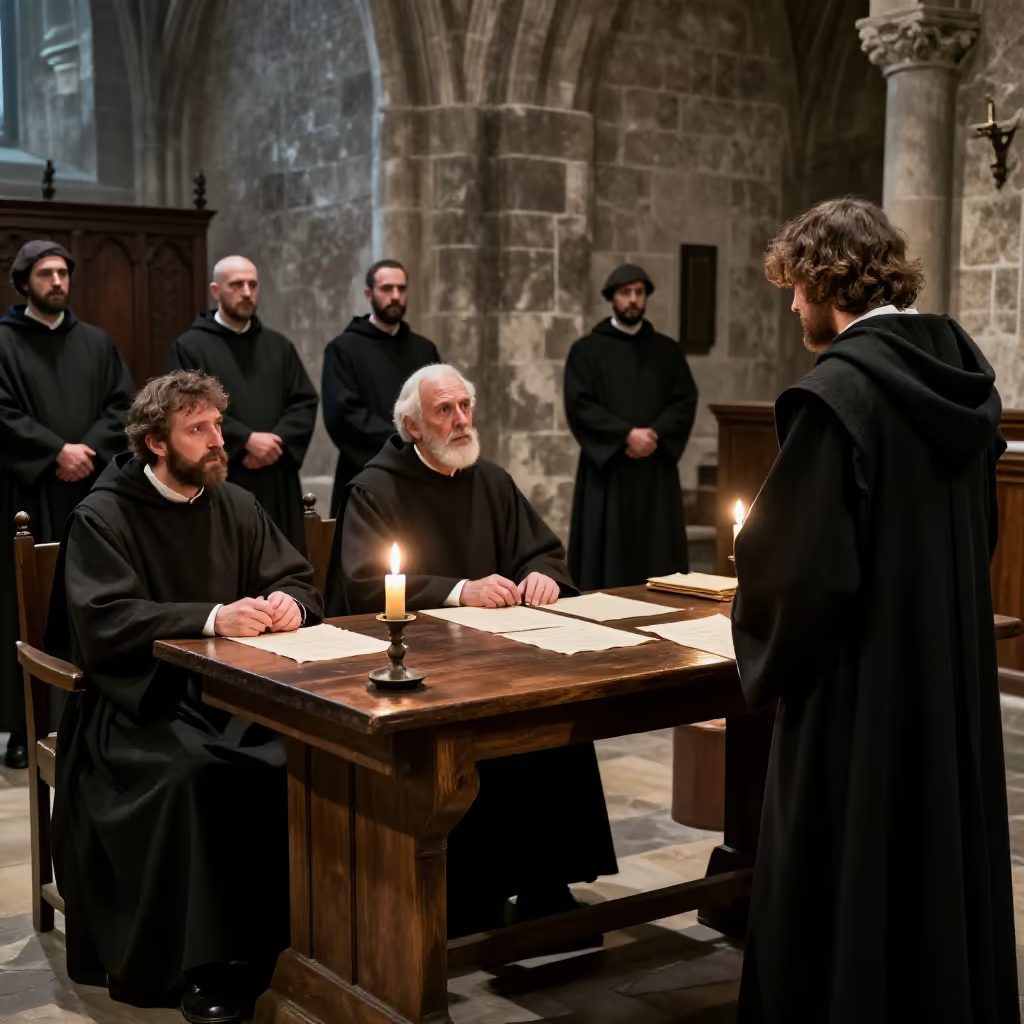
A historical institution of the Catholic Church that, from the Middle Ages onward, had the task of tracking down, interrogating, and condemning so-called heretics.
example
Die Spanische Inquisition war für ihre besonders strengen und grausamen Methoden bekannt.
The Spanish Inquisition was known for its particularly strict and cruel methods.

Usage tips
Word family and origin
The word 'Inquisition' comes from the Latin 'inquisitio', meaning 'investigation.' It is related to the verb 'inquirere' (to investigate), which explains the meaning of a strict interrogation.
EXAMPLE
Die Methoden der Inquisition waren gefürchtet.
The methods of the Inquisition were feared.
Context clue
You can recognize the figurative meaning from the context. If 'Chef' (boss), 'Eltern' (parents), 'Verhör' (interrogation), or 'Befragung' (questioning) are mentioned in a modern everyday context, the figurative, negative meaning is usually intended.
EXAMPLE
Das Gespräch mit meinen Eltern über meine Noten war die reinste Inquisition.
The conversation with my parents about my grades was a complete inquisition.
Register and style
The figurative use of 'Inquisition' is colloquial and a hyperbole (a strong exaggeration). It expresses that someone feels they are being questioned unfairly and excessively strictly.
EXAMPLE
Jedes Mal, wenn ich spät nach Hause komme, erwartet mich eine Inquisition.
Every time I come home late, an inquisition is waiting for me.
Typical collocations
In the figurative meaning, the word is often used in comparisons. Typical formulations are 'sich anfühlen wie eine Inquisition' (to feel like an inquisition) or 'das war die reinste Inquisition' (that was a complete inquisition).
EXAMPLE
Die Befragung durch den Anwalt fühlte sich an wie eine Inquisition.
The questioning by the lawyer felt like an inquisition.
Compare with
near_synonym · confusable
Inquisition vs Untersuchung
investigation / examination
'Untersuchung' and 'Inquisition' can both have to do with examining, questioning, or clarifying something. 'Untersuchung' is neutral and can be factual, official, or scientific. 'Inquisition' first refers to a historical church institution. In a figurative sense, it means a very harsh, strict, and seemingly unfair questioning or investigation. The words can be confused when strict questioning is involved. But 'Inquisition' is strongly judgmental and does not fit a normal examination of facts. For neutral situations, you say 'Untersuchung'.
Inquisition
Nach dem Fehler fühlte sich das Gespräch mit dem Chef wie eine Inquisition an.
After the mistake, the conversation with the boss felt like an inquisition.
Untersuchung
Die Untersuchung der Dokumente brachte neue Informationen ans Licht.
The examination of the documents brought new information to light.