

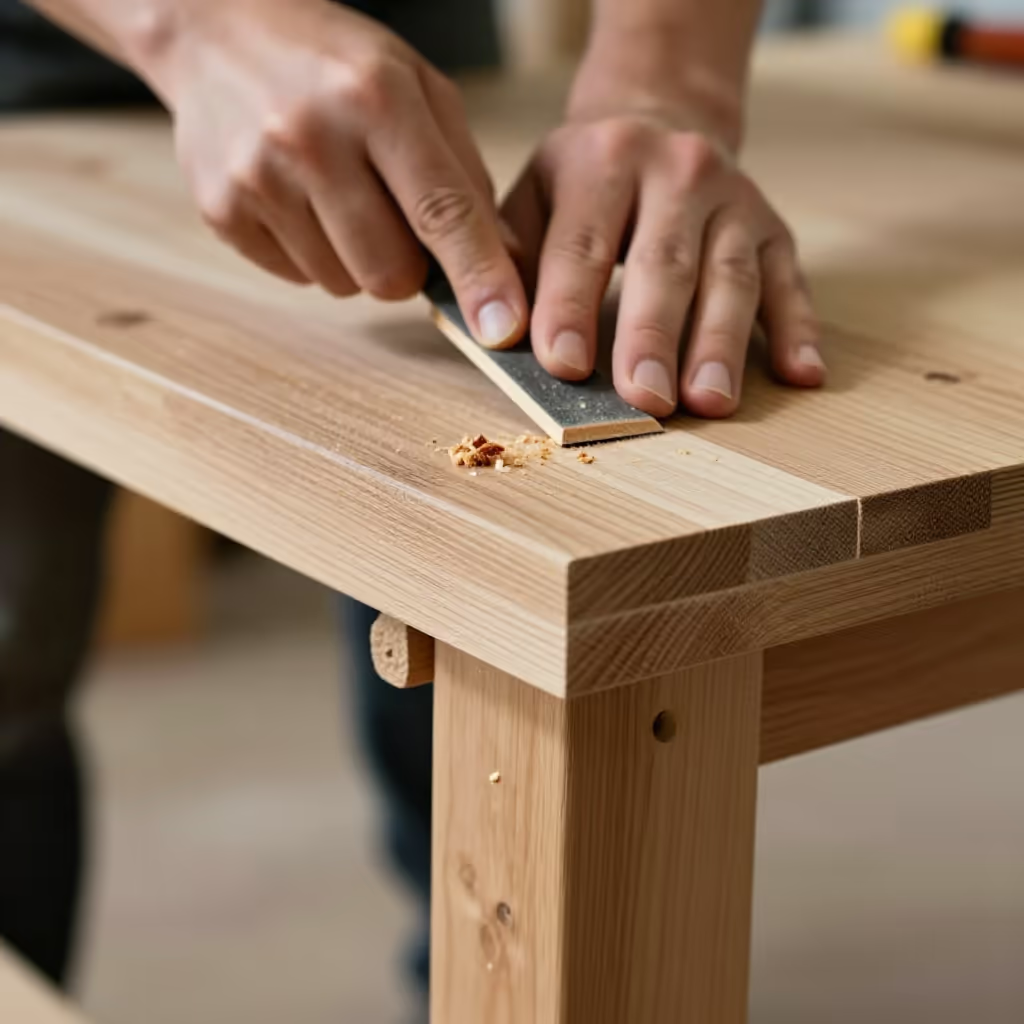
die Kante
edge
The outer line or sharp border where two surfaces of an object meet.
EXAMPLE
Ich habe mich an der scharfen Kante des Tisches gestoßen.
I bumped myself on the sharp edge of the table.
edge
Loading your saved state.
edge
The outer line or sharp border where two surfaces of an object meet.
Ich habe mich an der scharfen Kante des Tisches gestoßen.
I bumped myself on the sharp edge of the table.

savings
A colloquial expression for money that someone has saved and put aside.
Für schlechte Zeiten sollte man immer etwas auf der hohen Kante haben.
For hard times, you should always have a little money put aside.

to dump/fire someone
A colloquial expression meaning to fire someone or to end a relationship with someone.
Nach dem erneuten Betrug hat sie ihm endgültig die Kante gegeben.
After he cheated again, she finally dumped him for good.

cut very close
A colloquial expression describing that something is very tightly calculated or limited, whether clothing that fits very tightly or a financial situation that leaves hardly any room to maneuver.
Das Budget für den Umbau war so auf Kante genäht, dass keine unvorhergesehenen Ausgaben möglich waren.
The budget for the renovation was cut so close that no unforeseen expenses were possible.
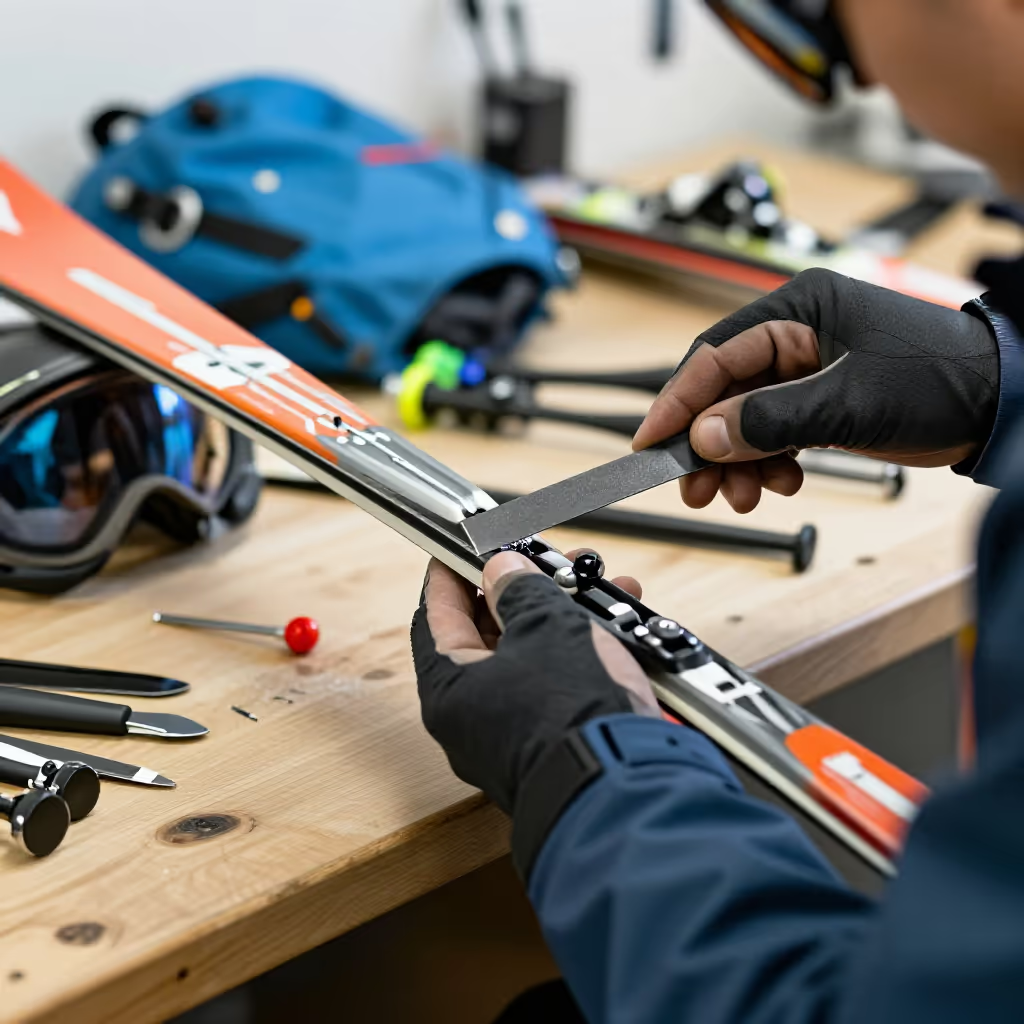
edge
The side edge, usually reinforced with metal, of a ski or snowboard, which is crucial for steering and grip in the snow.
Beim Carving ist der richtige Einsatz der Kante entscheidend.
In carving, using the edge correctly is crucial.
Most meanings of 'Kante' (edge) are fixed, colloquial expressions. If you hear phrases like 'hohe Kante' (savings), 'Kante geben' (to dump/fire someone), or 'auf Kante' (cut very close), a figurative meaning is almost always intended.
Sei vorsichtig, die Kante des Papiers ist sehr scharf.
Be careful, the edge of the paper is very sharp.
In the literal meaning, the preposition is important. Movement toward an edge is expressed with the accusative ('an die Kante' — to the edge), while a position at an edge is expressed with the dative ('an der Kante' — at the edge).
Stell das Glas nicht so nah an die Kante des Tisches!
Don't put the glass so close to the edge of the table!
The idiom 'etwas auf der hohen Kante haben' is a fixed unit meaning 'to have saved money'. The word 'hoch' (high) is a fixed part of the expression here.
Sie hat für ihre Weltreise lange etwas auf der hohen Kante gehabt.
She had saved up money for her trip around the world for a long time.
In the colloquial expression 'jemandem die Kante geben' (to dump/fire someone), the person who is fired or left is always in the dative.
Der Chef hat ihm wegen seiner Unzuverlässigkeit die Kante gegeben.
The boss fired him because of his unreliability.
This meaning of 'Kante' (edge) is specific to winter sports. It is used only in the context of skiing or snowboarding.
Ein guter Skifahrer weiß, wie man die Kanten richtig einsetzt.
A good skier knows how to use the edges correctly.
edge / margin
Rand refers to the outer area or boundary of a surface or object. Kante more precisely means the line where two surfaces meet, and it can be sharp. Rand is used for the peripheral area, while Kante refers to the line between surfaces.
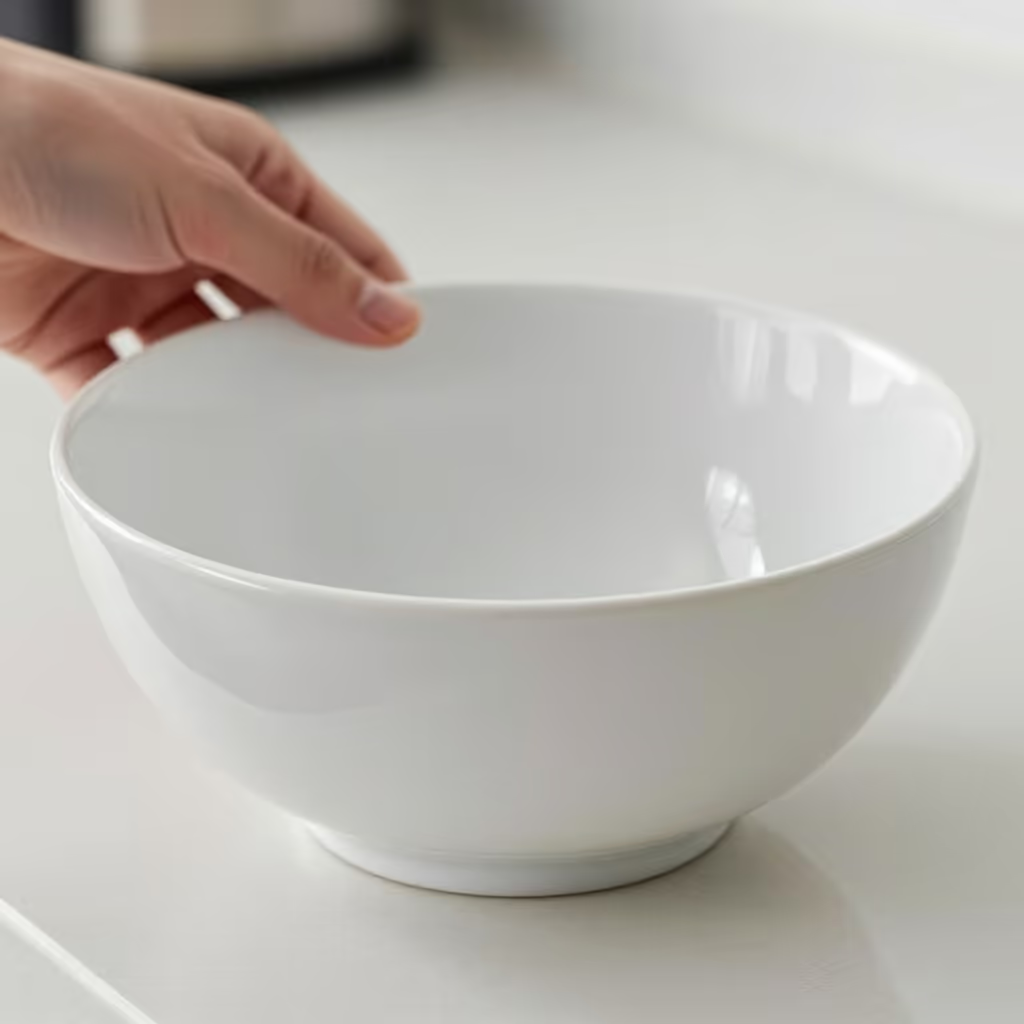
Die Kante zwischen Oberseite und Seitenfläche der Tischplatte ist scharf.
The edge where the top and side of the tabletop meet is sharp.
Am Rand der Tischplatte liegt ein langer Kratzer.
There is a long scratch along the edge of the tabletop.