

israelisch
Israeli
Refers to the modern state of Israel, its population, culture, or politics.
EXAMPLE
Er las einen Roman eines bekannten israelischen Autors.
He read a novel by a well-known Israeli author.
Israeli
Loading your saved state.
Israeli
Refers to the modern state of Israel, its population, culture, or politics.
Er las einen Roman eines bekannten israelischen Autors.
He read a novel by a well-known Israeli author.
The adjective 'israelisch' (Israeli) is derived from the country name 'Israel' with the typical ending '-isch' (-ish/-ic). This ending is used for many adjectives that describe origin or affiliation.
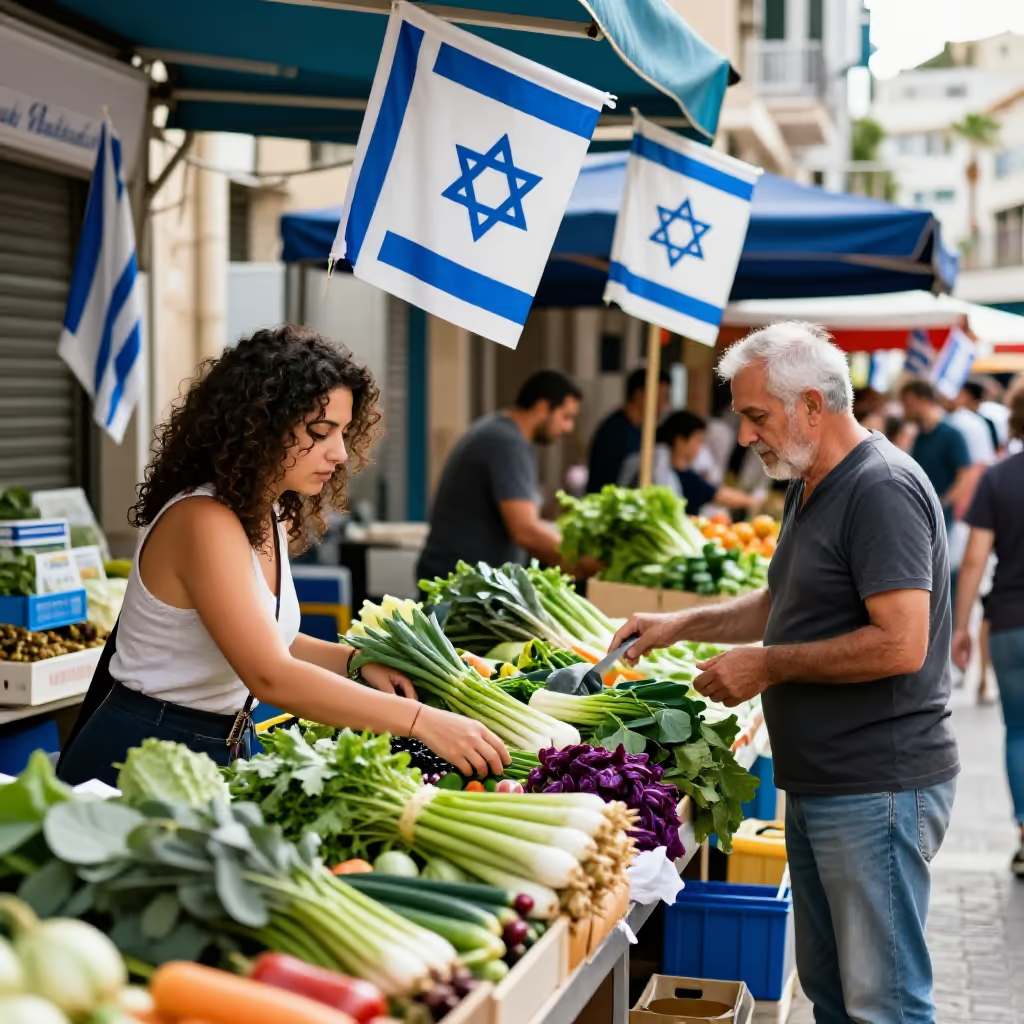
Die israelische Flagge hat einen Davidstern in der Mitte.
The Israeli flag has a Star of David in the middle.
The adjective 'israelisch' (Israeli) describes things, but not people. To refer to a person from Israel, you use the noun 'der Israeli' for a man or 'die Israeli' for a woman.
Mein Nachbar ist Israeli und kommt aus Tel Aviv.
My neighbor is Israeli and comes from Tel Aviv.
Frequent and natural combinations include, for example, 'die israelische Regierung' (the Israeli government), 'die israelische Küste' (the Israeli coast), 'israelische Produkte' (Israeli products), or 'die israelische Küche' (Israeli cuisine).
Ich probiere gerne Gerichte aus der israelischen Küche.
I like trying dishes from Israeli cuisine.
Jewish
Both words can describe a person or community, but they refer to different forms of belonging. „Jüdisch“ refers to religion, culture, history, or origin, while „israelisch“ concerns the modern state of Israel and its population. Choose according to whether religious and cultural or national affiliation is meant.

Die israelische Autorin schreibt über das Leben in ihrem Staat.
The Israeli author writes about life in her country.
Die jüdische Autorin schreibt über die Geschichte ihrer Familie.
The Jewish author writes about her family’s history.