

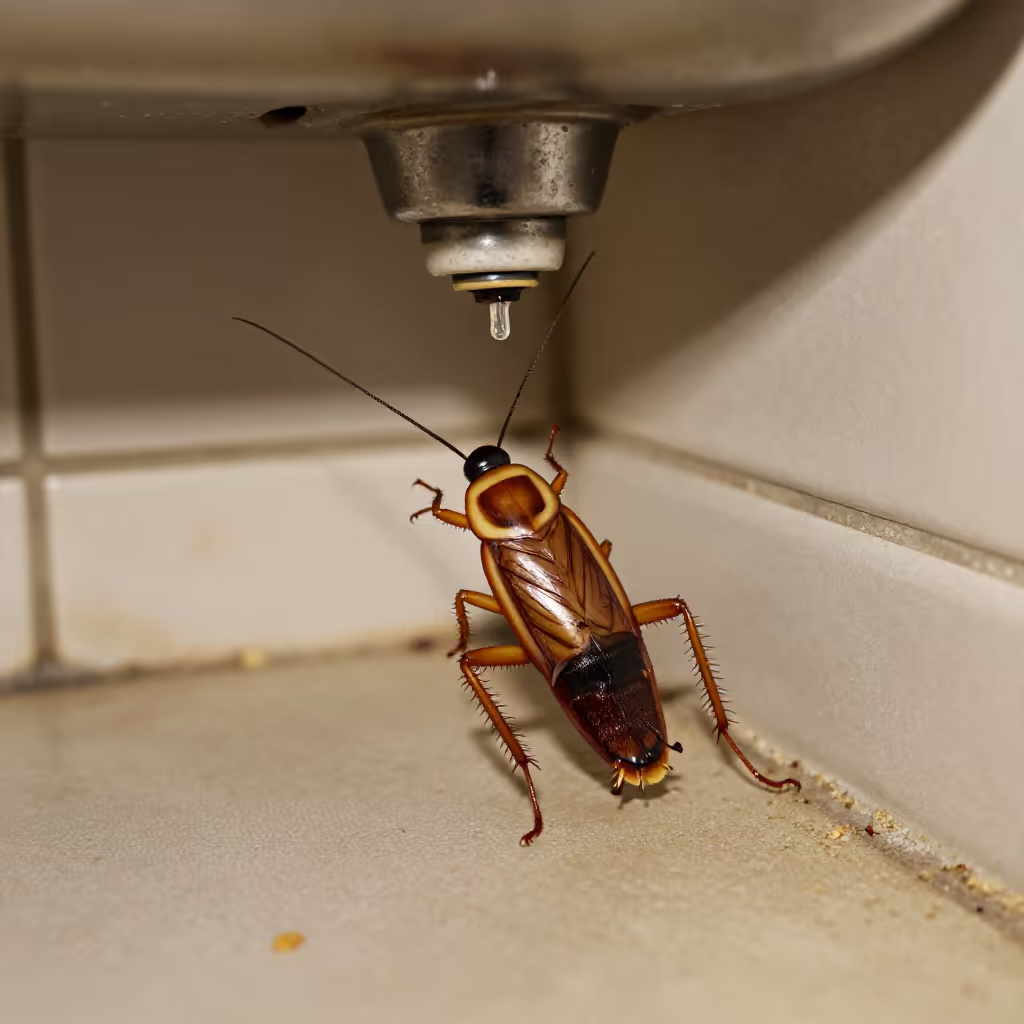
A usually brownish insect considered a pest that often lives in damp and warm environments; also called a roach.
example
Als er das Licht in der Küche anmachte, sah er eine Kakerlake über den Boden huschen.
When he turned on the light in the kitchen, he saw a cockroach scurry across the floor.
Usage tips
Strong negative emotion
The word 'Kakerlake' (cockroach) is very strongly associated with feelings such as disgust, dirt, and pest infestation. It is used almost exclusively in a negative context.
EXAMPLE
Allein der Gedanke an eine Kakerlake in der Wohnung ist für viele unangenehm.
For many people, just the thought of a cockroach in the apartment is unpleasant.
Typical verbs
Cockroaches are often described with verbs of fast, creepy movement, for example 'huschen' (to scurry) or 'krabbeln' (to crawl). People try to 'bekämpfen' (fight/control) or 'vernichten' (destroy/exterminate) them.
EXAMPLE
Plötzlich huschte eine Kakerlake unter den Kühlschrank.
Suddenly, a cockroach scurried under the refrigerator.
Use in compounds
When 'Kakerlake' (cockroach) is part of a compound word, a linking -n is often inserted. Examples include 'die Kakerlakenplage' (cockroach infestation) or 'das Kakerlakenspray' (cockroach spray).
EXAMPLE
Der Kammerjäger wurde wegen einer Kakerlakenplage gerufen.
The exterminator was called because of a cockroach infestation.