

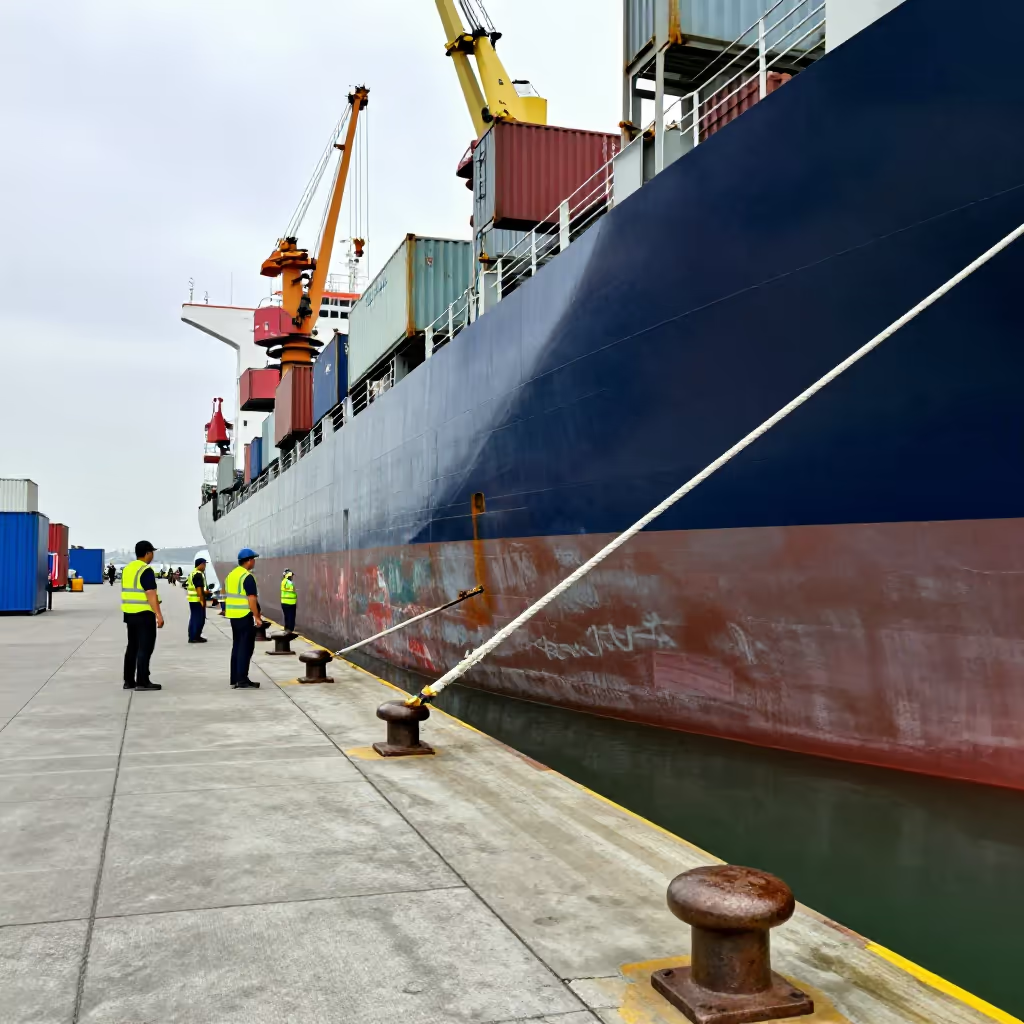
der Kai
quay
A reinforced waterfront wall in a harbor or along a river where ships can dock to be loaded and unloaded.
EXAMPLE
Das große Kreuzfahrtschiff machte am Kai fest.
The large cruise ship docked at the quay.
quay
Loading your saved state.
quay
A reinforced waterfront wall in a harbor or along a river where ships can dock to be loaded and unloaded.
Das große Kreuzfahrtschiff machte am Kai fest.
The large cruise ship docked at the quay.
A related word is 'die Kaimauer' (quay wall). It describes the wall of the quay and helps you imagine the meaning as a solid, wall-like bank reinforcement in a harbor.
Die alte Kaimauer wird derzeit saniert.
The old quay wall is currently being renovated.
Pay attention to the preposition and the case: 'am Kai' (at the quay) with the dative describes a fixed location. 'An den Kai' (to the quay) with the accusative describes movement toward it.
Das Schiff liegt sicher am Kai.
The ship is safely at the quay.
In connection with 'Kai' (quay), verbs related to shipping are often used. Typical combinations are 'am Kai anlegen' (to dock at the quay), 'am Kai festmachen' (to moor at the quay), or 'am Kai liegen' (to be docked at the quay).
Ein großes Containerschiff hat am Kai angelegt.
A large container ship docked at the quay.
investor / pier
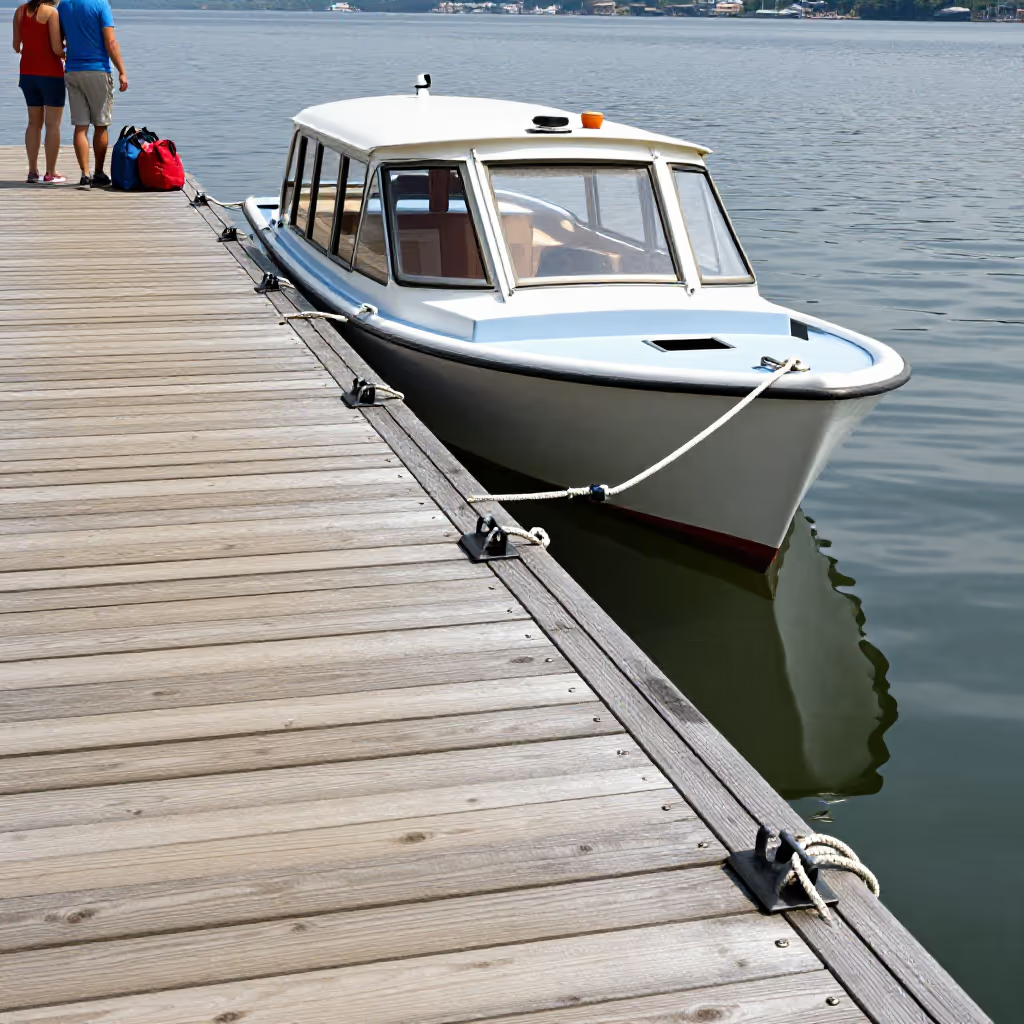
Both a „Kai“ and an „Anleger“ allow ships to dock. A „Kai“ is a reinforced waterfront wall used especially for loading and unloading. „Anleger“ more often refers to the specific, frequently smaller structure used for docking and mooring.
Das Frachtschiff liegt zum Entladen am langen Kai.
The cargo ship is at the long quay to be unloaded.
Die Fähre liegt zum Einsteigen am schwimmenden Anleger.
The ferry is at the floating pier for passengers to board.