


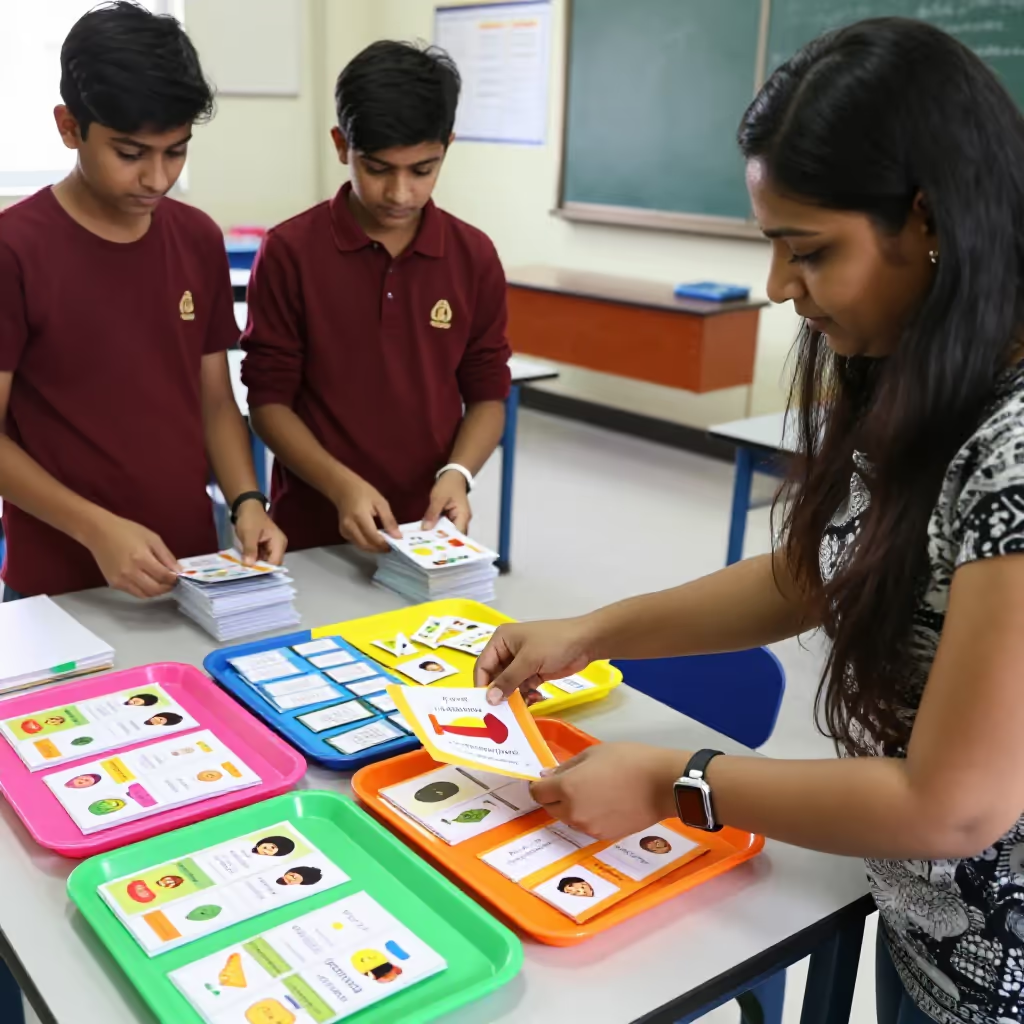
The process in which things, people, or ideas are sorted into groups or classes (categories) according to certain characteristics.
example
Die Kategorisierung der Dokumente half dabei, die Übersicht im Archiv zu behalten.
The categorization of the documents helped keep the archive organized.
Usage tips
Word structure
The noun 'Kategorisierung' (categorization) is derived from the verb 'kategorisieren' (to categorize). The ending '-ung' is a typical German ending used to make a noun from a verb that describes the process or result of the action.
EXAMPLE
Wir müssen zuerst die Produkte kategorisieren.
We first have to categorize the products.
Sentence structure with genitive
To express what is being categorized, you usually use the genitive or the preposition 'von' with the dative. The genitive is more common in written language.
EXAMPLE
Die Kategorisierung der Kundendaten ist für das Marketing wichtig.
The categorization of customer data is important for marketing.
Register
The word 'Kategorisierung' (categorization) is mainly used in formal, administrative, or academic contexts. It belongs to written language and technical language.
EXAMPLE
In seiner Studie schlägt der Forscher eine neue Kategorisierung vor.
In his study, the researcher proposes a new categorization.
Compare with
confusable
Kategorisierung vs Kategorie
category
'die Kategorie' and 'die Kategorisierung' are closely related, but they do not mean the same thing. A 'Kategorie' is the group itself, for example 'Sport', 'Politik', or 'Reisen'. 'Kategorisierung' refers to the process of sorting things into such groups. Learners may confuse the words because both come from the same base word. Remember: the category is the result or the group; categorization is the act of sorting things into groups.
Kategorisierung
Bei der Kategorisierung der Bücher achtet die Bibliothekarin auf Thema und Sprache.
When categorizing the books, the librarian pays attention to topic and language.
Kategorie
Dieser Artikel passt in die Kategorie „Gesundheit“.