

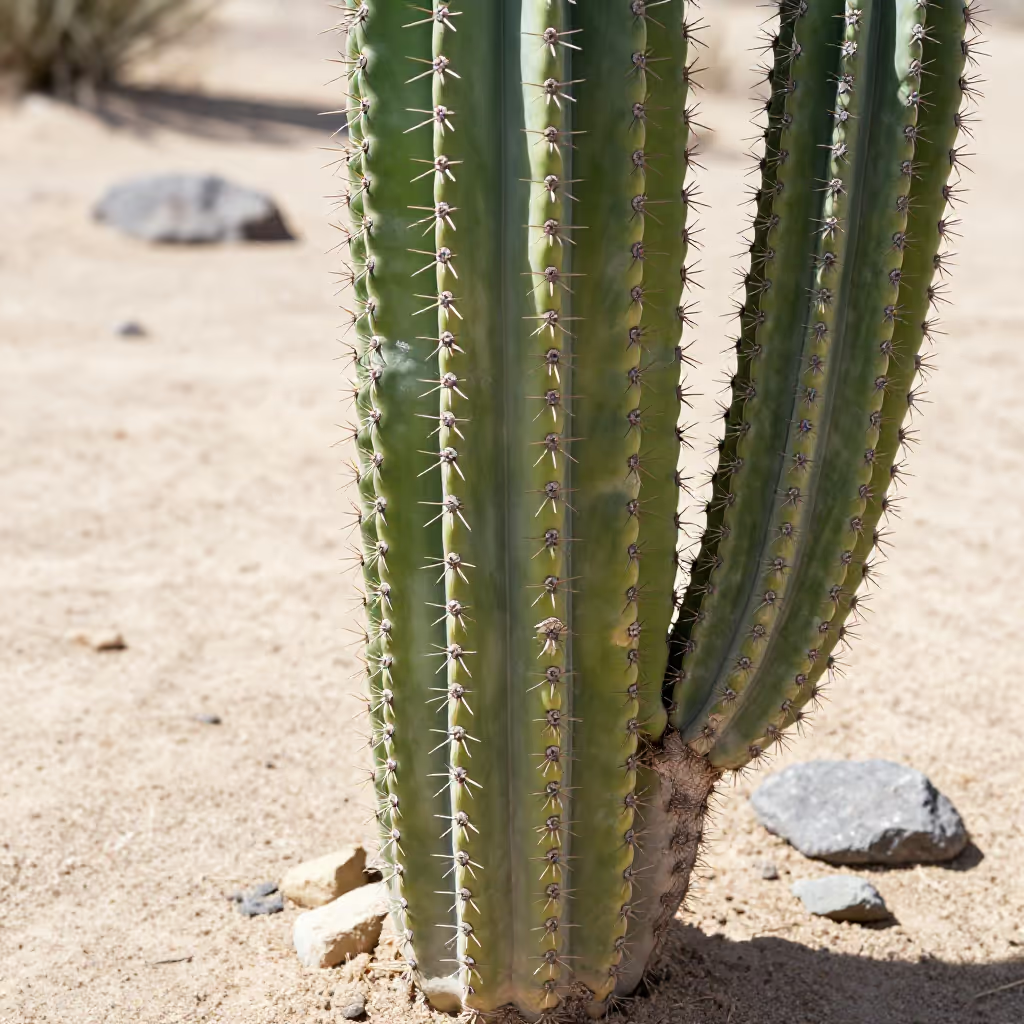
A type of plant from the succulent family that typically has thick, fleshy stems and spines and is adapted to dry climates.
example
Auf der Fensterbank steht ein kleiner Kaktus, der nur selten Wasser braucht.
There is a small cactus on the windowsill that only rarely needs water.
Usage tips
Typical features
A cactus is known for its 'Stacheln' (spines/needles). The related verb is 'stechen' (to prick/sting), and the adjective is 'stachelig' (prickly/spiny).
EXAMPLE
Vorsicht, der Kaktus sticht!
Careful, the cactus pricks!
Typical verbs
Certain verbs are typical when talking about caring for a cactus. You only have to 'selten gießen' (water it rarely), because it 'wenig Wasser braucht' (needs little water), and sometimes it can even 'blühen' (bloom).
EXAMPLE
Du darfst den Kaktus nicht zu oft gießen.
You must not water the cactus too often.
Typical context
A cactus is often described as an easy-care 'Zimmerpflanze' (houseplant) that you find on a 'Fensterbank' (windowsill). Its natural habitat is the 'Wüste' (desert).
EXAMPLE
Ich habe mir einen kleinen Kaktus für meine Fensterbank gekauft.
I bought myself a small cactus for my windowsill.
Compare with
confusable
Kaktus vs Aloe
aloe
'die Aloe' and 'der Kaktus' can easily be confused because both plants often have thick, fleshy parts and cope well with dryness. An aloe usually has fleshy leaves and is known, for example, through aloe vera; gel for cosmetics or skincare is also obtained from it. A cactus typically has thick stems and often spines. So not every plant that looks dry or has fleshy parts is a cactus. If you are talking about skincare gel, you usually mean aloe; if you are thinking of a spiny desert plant, 'Kaktus' is more appropriate.
Kaktus
Für das helle Fenster hat Tom einen kleinen Kaktus gekauft.
Tom bought a small cactus for the bright window.
Aloe
Nach dem Sonnenbrand trägt Maria etwas Aloe auf die Haut auf.
After getting sunburned, Maria applies some aloe to her skin.