

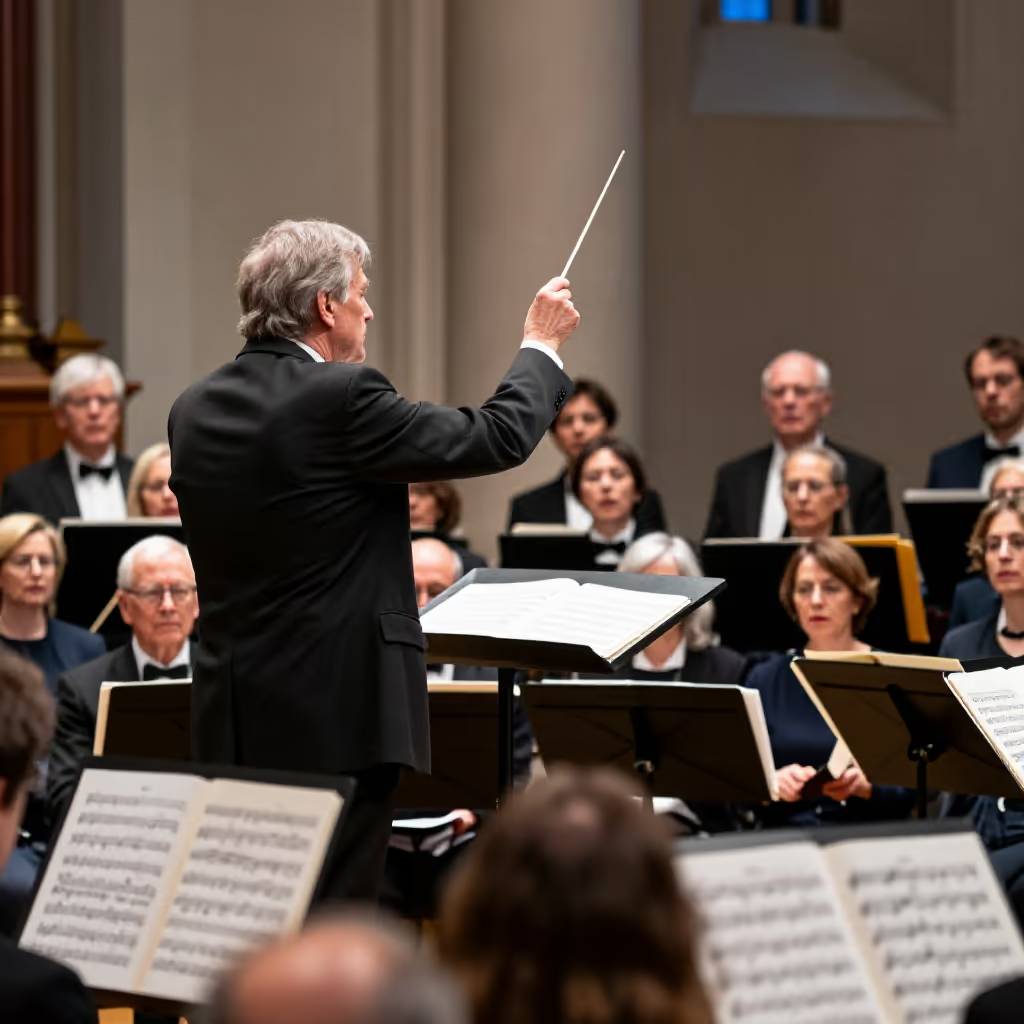
The musical director or conductor of an orchestra or choir. The term is often used in historical contexts for musicians at courts or in churches, but also still today for leaders of certain ensembles.
example
Johann Sebastian Bach war ein berühmter Kapellmeister in Leipzig.
Johann Sebastian Bach was a famous kapellmeister in Leipzig.
Usage tips
Word composition
The word is made up of 'die Kapelle' (chapel/band) and 'der Meister' (master). Besides a small church, 'Kapelle' can also refer to a small orchestra. So the 'Kapellmeister' is the 'master of the orchestra'.
EXAMPLE
Der junge Musiker träumte davon, eines Tages Kapellmeister zu werden.
The young musician dreamed of becoming a kapellmeister one day.
Historical context
The term is very often used in connection with European music history, especially the Baroque and Classical periods. It describes the position of composers who were employed at courts or in large churches.
EXAMPLE
Joseph Haydn war lange Zeit als Kapellmeister am Hof der Familie Esterházy tätig.
Joseph Haydn worked for a long time as kapellmeister at the court of the Esterházy family.
Typical collocations
You often find the term in compounds that describe the workplace more precisely, for example 'Hofkapellmeister' (at the court of a noble) or 'Domkapellmeister' (at a city's cathedral).
EXAMPLE
Die Stelle des Domkapellmeisters in Köln ist sehr angesehen.
The position of cathedral kapellmeister in Cologne is highly respected.
Compare with
near_synonym · confusable
Kapellmeister vs Dirigent
conductor
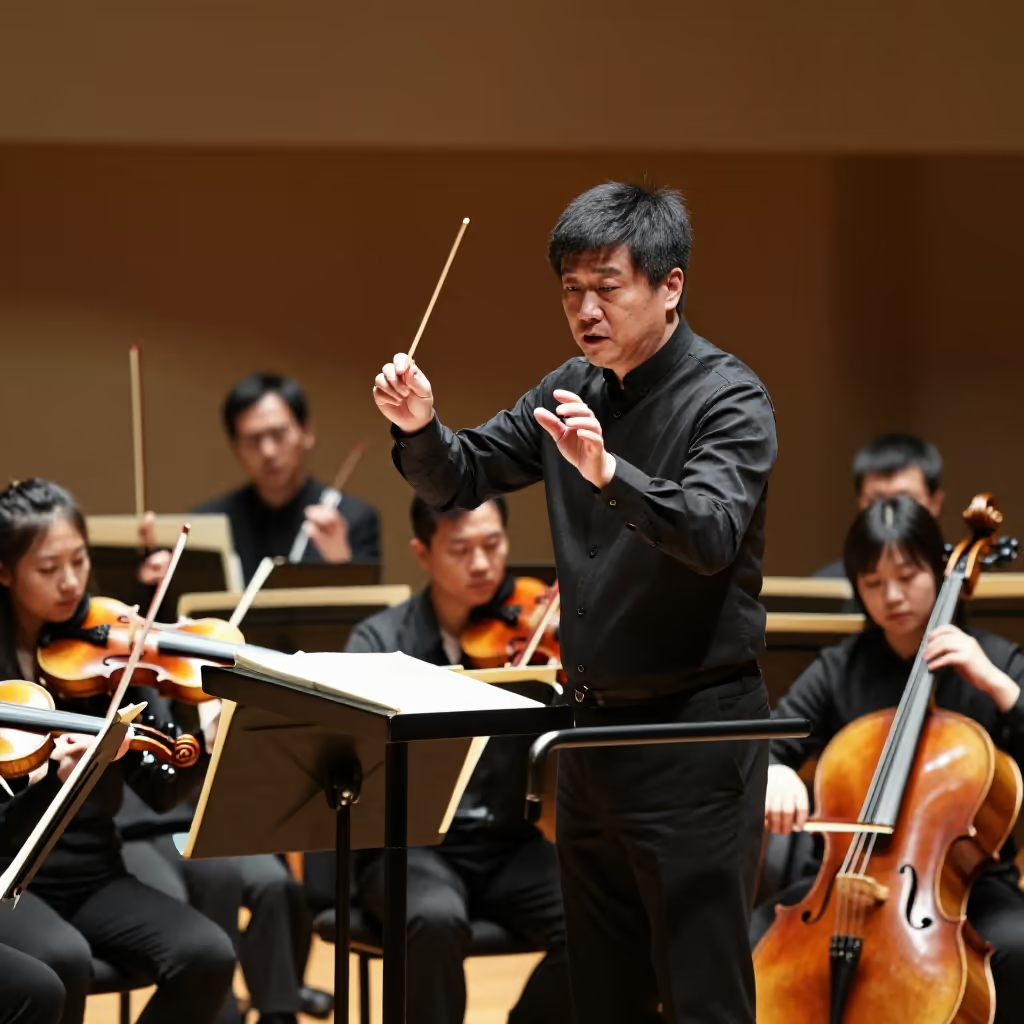
'der Dirigent' and 'der Kapellmeister' can both refer to the musical director of an orchestra or choir. 'Dirigent' is the normal and general term today. 'Kapellmeister' sounds more specific and often somewhat more traditional or historical, for example with old court orchestras, church music, or certain ensembles. The words can be confused because a kapellmeister can indeed conduct. When speaking neutrally about a modern concert, 'Dirigent' is usually more natural. 'Kapellmeister' fits when the tradition or a particular type of ensemble is important.
Kapellmeister
Der Kapellmeister leitete früher die Musik am Hof des Fürsten.
The kapellmeister used to direct the music at the prince's court.
Dirigent
Morgen probt der Dirigent mit dem Orchester für das Sommerkonzert.
Tomorrow the conductor is rehearsing with the orchestra for the summer concert.