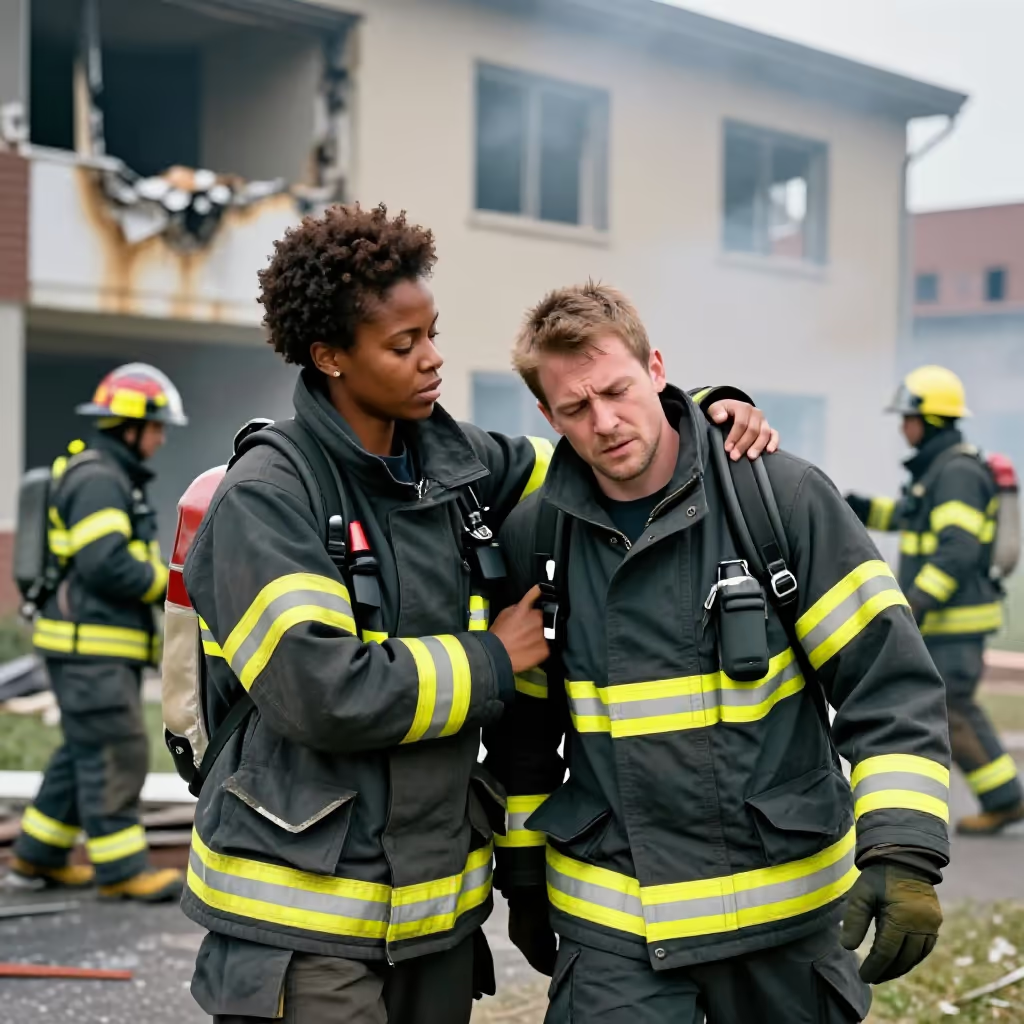
A member of a group with strong cohesion, especially in the military, fire brigade, or similar organizations. The term emphasizes loyalty and mutual support.
example
Er hat seinem Kameraden im Einsatz das Leben gerettet.
He saved his comrade's life during the operation.

Usage tips
N-declension
'Kamerad' is a masculine noun of the N-declension. This means that it takes the ending '-en' in all cases except the nominative singular.
EXAMPLE
Ich habe meinem Kameraden geholfen.
I helped my comrade.
Word family
The word is part of a word family that emphasizes loyalty and cohesion. This includes the adjective 'kameradschaftlich' (comradely) and the noun 'die Kameradschaft' (comradeship).
EXAMPLE
Unter den Kollegen herrscht ein sehr kameradschaftlicher Umgang.
There is a very comradely way of interacting among the colleagues.
Context clue
This meaning is strongly connected with organizations such as the military, fire brigade, or police. Words like 'Soldat' (soldier), 'Einsatz' (operation/mission), or 'Einheit' (unit) in the sentence point to this context.
EXAMPLE
Die Soldaten trauerten um ihren gefallenen Kameraden.
The soldiers mourned their fallen comrade.
Register and style
As a term for a friend, 'Kamerad' often sounds somewhat more formal or traditional. It emphasizes an especially loyal and reliable friendship, often formed through shared experiences.
EXAMPLE
Er war mir in der schweren Zeit ein treuer Kamerad.
He was a loyal companion to me during that difficult time.
Compare with
near_synonym · confusable
Kamerad vs Freund
friend / boyfriend
'der Freund' and 'der Kamerad' can both mean a male person with whom you have a good relationship. 'Freund' is the normal everyday word for a close personal relationship. It can also mean a steady partner or boyfriend if the context fits. 'Kamerad' emphasizes community, shared experiences, and mutual help, especially in the military, the fire brigade, or similar groups. It often sounds less private than 'Freund'. Learners may confuse the words because both express closeness. In everyday life, people usually say 'Freund'; in a group with strong solidarity, 'Kamerad' is more likely.
Kamerad
Bei der Feuerwehr hilft jeder Kamerad dem anderen.
In the fire brigade, every comrade helps the others.
Freund
Heute treffe ich einen alten Freund aus meiner Nachbarschaft.
Today I'm meeting an old friend from my neighborhood.