

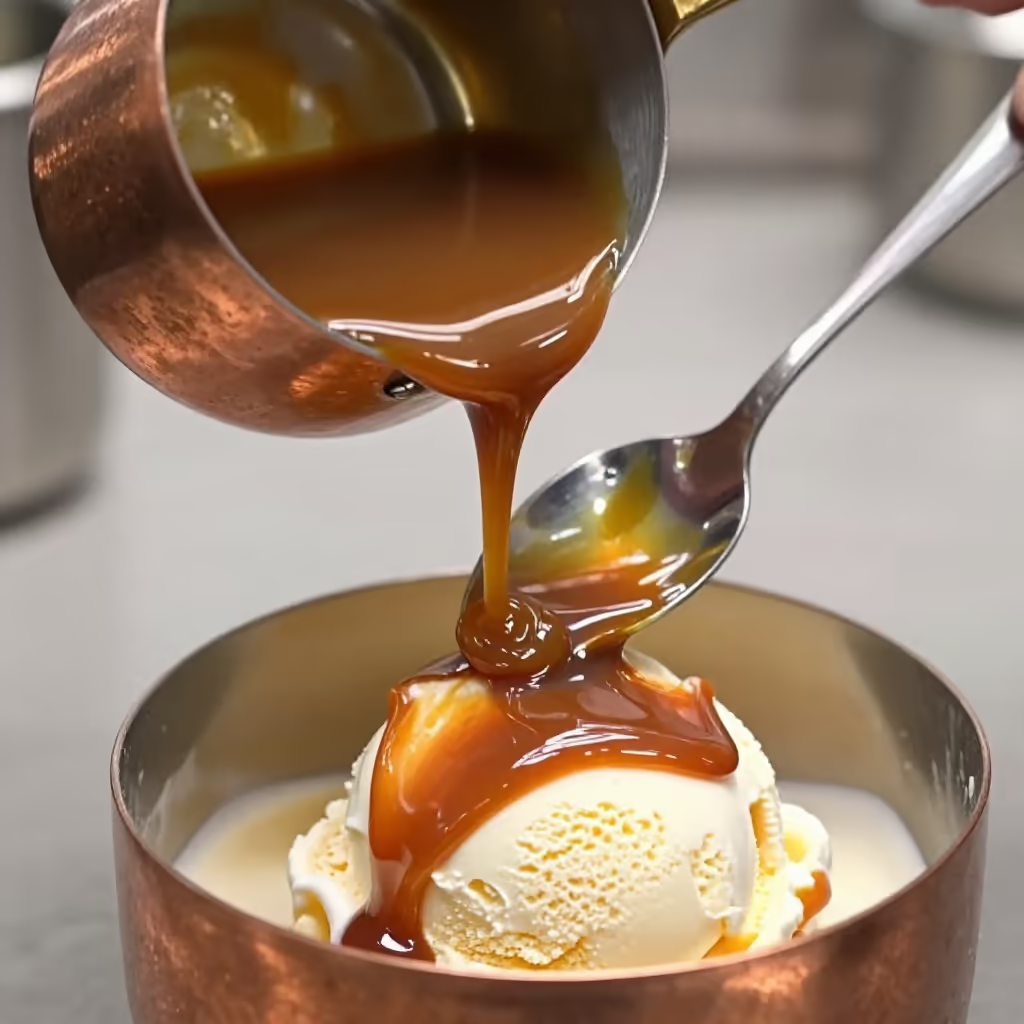
A brown, sweet substance made by heating sugar. It is used as an ingredient in sweets, as a sauce for desserts, or to make candies.
example
Das Dessert bestand aus Vanilleeis mit heißer Karamellsoße.
The dessert consisted of vanilla ice cream with hot caramel sauce.
Usage tips
Countable or uncountable?
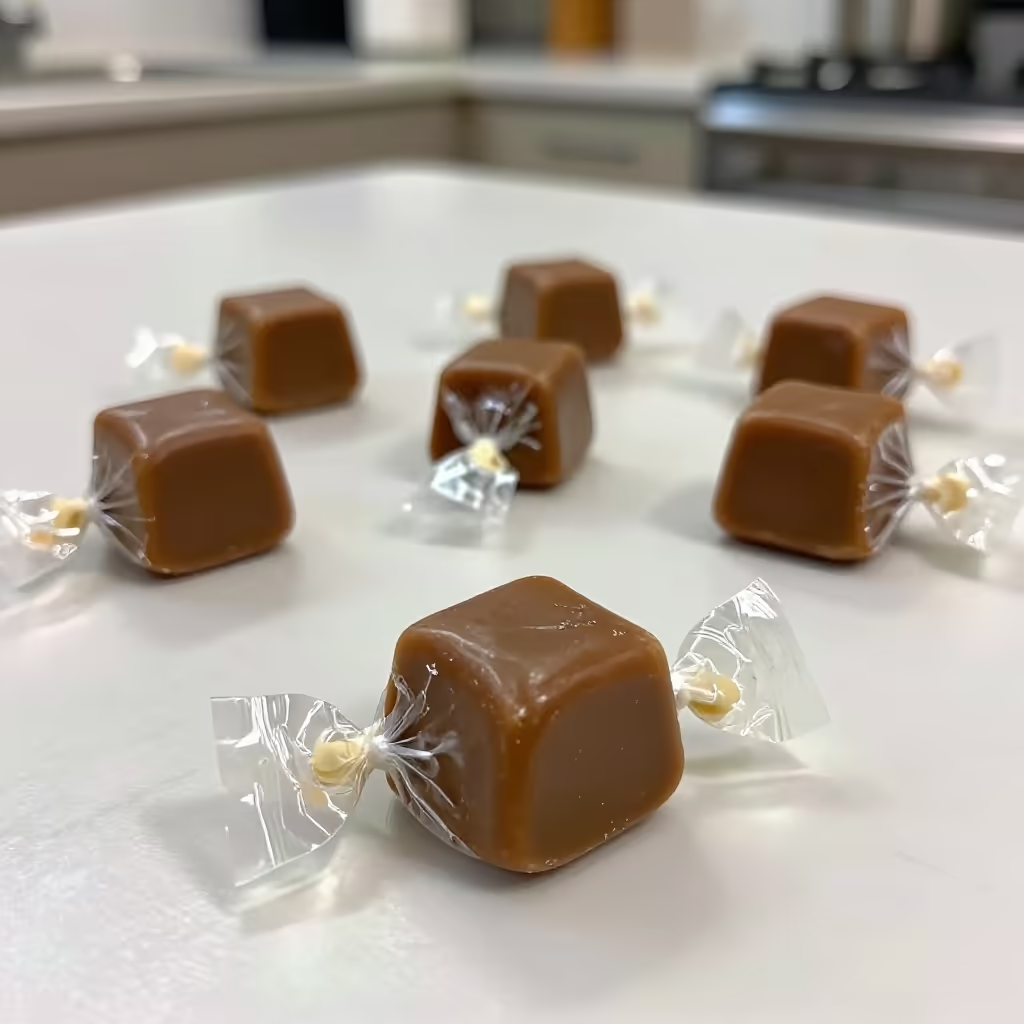
The word 'Karamell' (caramel) can be countable or uncountable. 'Das Karamell' (the caramel), without an article or with 'das', refers to the sweet substance, while 'ein Karamell' (a caramel candy) means a single candy.
EXAMPLE
Die Praline hat einen Kern aus flüssigem Karamell.
The praline has a center of liquid caramel.
Productive compounds
'Karamell-' (caramel) is often used as the first part of compound words to describe a flavor or ingredient. This helps you quickly recognize what something is about.
EXAMPLE
Ich hätte gern einen Becher Karamelleis.
I would like a cup of caramel ice cream.
Typical verbs
When it comes to preparation, 'Karamell' (caramel) is often combined with verbs such as 'herstellen' (to make/produce), 'schmelzen' (to melt), or 'zubereiten' (to prepare).
EXAMPLE
Für die Soße müssen wir zuerst Zucker in einem Topf schmelzen.
For the sauce, we first need to melt sugar in a pot.
Compare with
near_synonym · confusable
Karamell vs Bonbon
candy
'Bonbon' and 'Karamell' can both refer to a sweet. A 'Bonbon' is generally a small candy that you suck or chew. 'Karamell' first refers to the brown, sweet substance made from heated sugar. But it can also be a single candy made from this substance. The words can be confused because there are 'Karamellbonbons' (caramel candies). If you mean the form of the sweet, 'Bonbon' fits. If you are talking about the flavor, the substance, or a candy made from caramel, 'Karamell' is more precise.
Karamell
Für den Nachtisch kocht Sofia Karamell aus Zucker und etwas Butter.
For dessert, Sofia makes caramel from sugar and a little butter.