

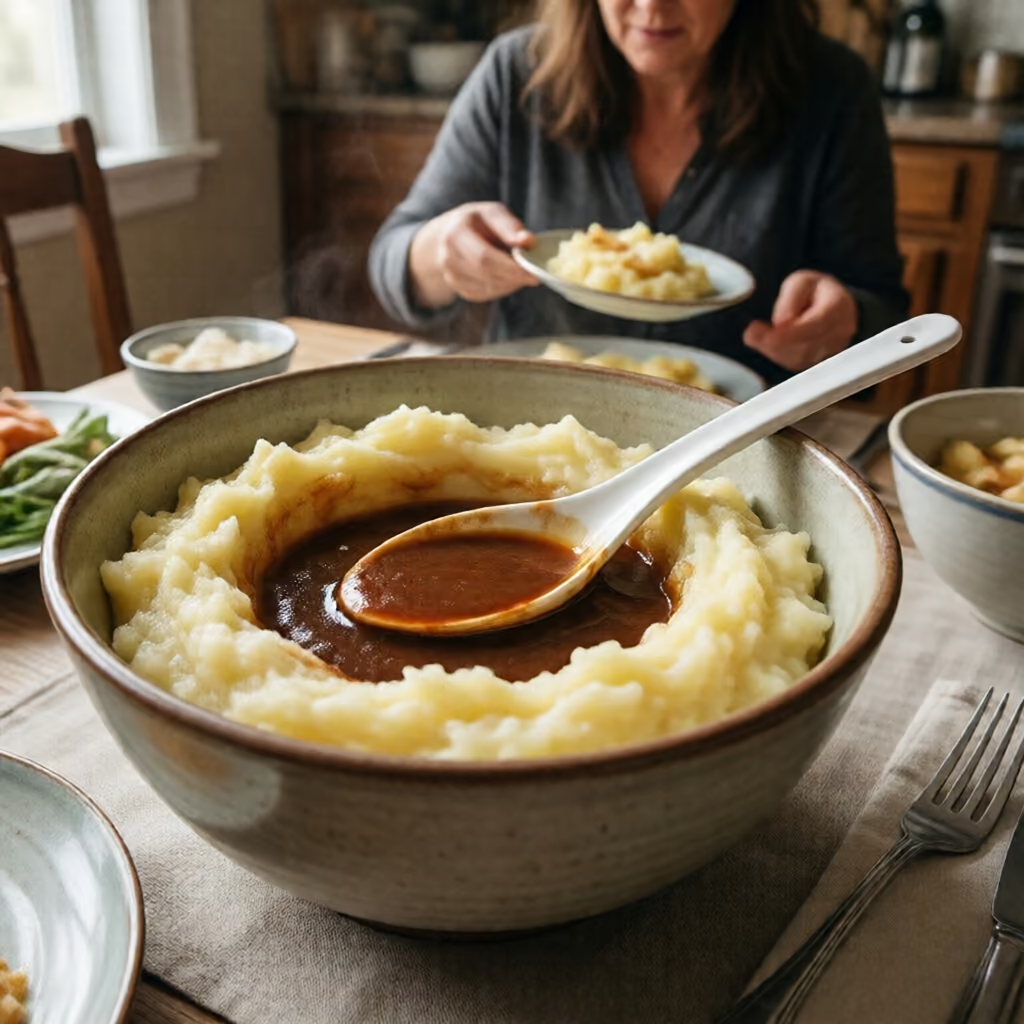
der Kartoffelbrei
mashed potatoes
A soft dish made from boiled and mashed potatoes, usually prepared with milk and butter.
EXAMPLE
Der Kartoffelbrei schmeckt besonders gut mit Bratensoße.
The mashed potatoes taste especially good with gravy.
mashed potatoes
der Kartoffelbrei, die Kartoffelbreie
Loading your saved state.
mashed potatoes
A soft dish made from boiled and mashed potatoes, usually prepared with milk and butter.
Der Kartoffelbrei schmeckt besonders gut mit Bratensoße.
The mashed potatoes taste especially good with gravy.
| gender | masculine der |
|---|---|
| plural | die Kartoffelbreie |
| genitive | des Kartoffelbreies |
| singular | plural | |
|---|---|---|
| nominative | der Kartoffelbrei | die Kartoffelbreie |
| accusative | den Kartoffelbrei | die Kartoffelbreie |
| dative | dem Kartoffelbrei | den Kartoffelbreien |
| genitive | des Kartoffelbreies des Kartoffelbreis | der Kartoffelbreie |
The article changes with the case; it is shown in colour.
„Kartoffelbrei“ consists of „Kartoffel“ (potato) and „Brei“ (mash). The second part describes the type of dish, while the first names the main ingredient.
Für den Kartoffelbrei brauchen wir noch Kartoffeln und etwas Butter.
We still need potatoes and some butter for the mashed potatoes.
In recipes, you will often find the phrase „Kartoffelbrei mit Muskat abschmecken“ (to season mashed potatoes with nutmeg). „Abschmecken“ (to season to taste) refers to carefully seasoning and tasting the dish at the end of preparation.
Schmecke den Kartoffelbrei mit Salz und etwas Muskat ab.
Season the mashed potatoes with salt and a little nutmeg.
A common pattern is „Kartoffelbrei als Beilage zu etwas servieren“ (to serve mashed potatoes as a side dish with something). After „zu“ (with/to), the dish is in the dative case.
Wir servieren Kartoffelbrei als Beilage zu gebratenem Fisch.
We serve mashed potatoes as a side dish with fried fish.