

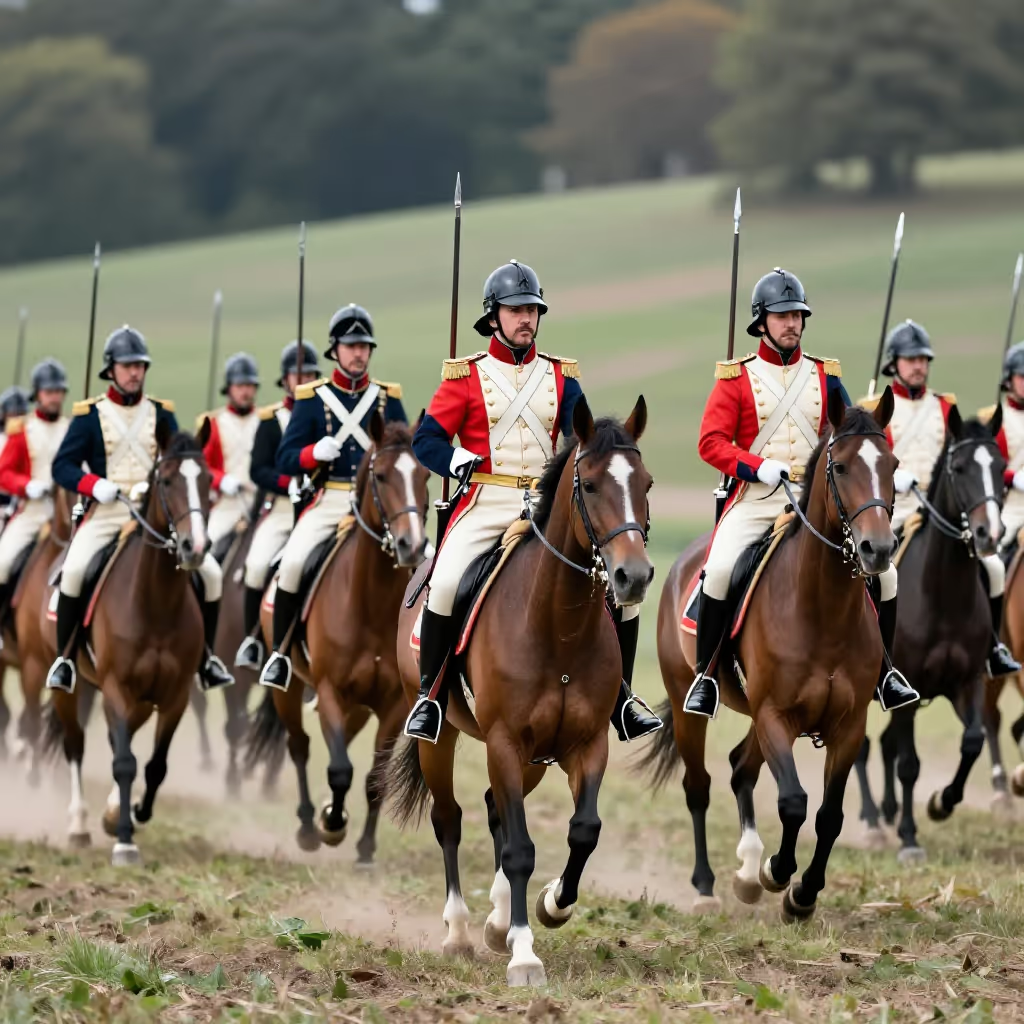
die Kavallerie
cavalry
A historical branch of an army whose soldiers fought on horseback.
In der Schlacht führte die Kavallerie einen entscheidenden Angriff an der Flanke durch.
In the battle, the cavalry carried out a decisive attack on the flank.
cavalry
Loading your saved state.

cavalry
A historical branch of an army whose soldiers fought on horseback.
In der Schlacht führte die Kavallerie einen entscheidenden Angriff an der Flanke durch.
In the battle, the cavalry carried out a decisive attack on the flank.

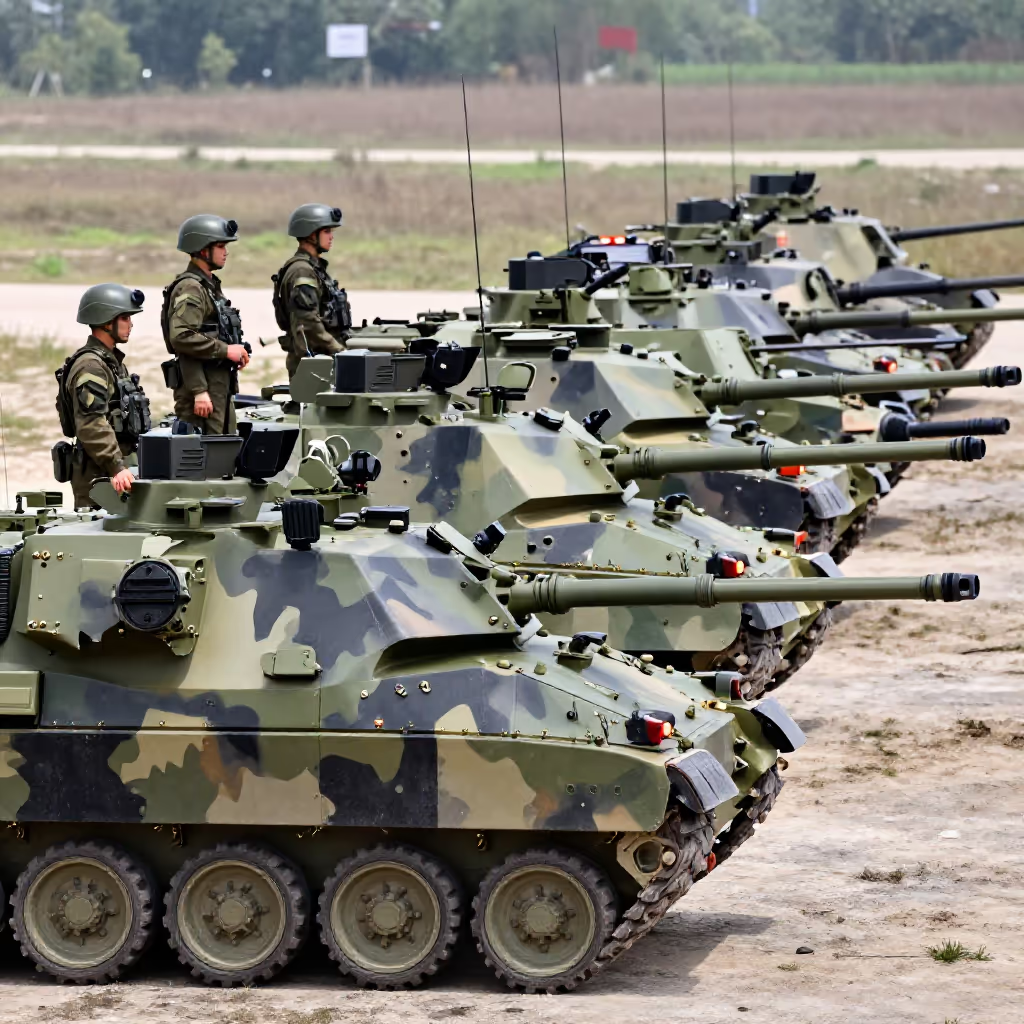
cavalry
In modern armies, a branch of the military equipped with tanks or armored vehicles that continues the tradition of mounted troops.
Die moderne Kavallerie ist heute mit schnellen Aufklärungsfahrzeugen für die Erkundung zuständig.
Today, the modern cavalry is responsible for reconnaissance using fast reconnaissance vehicles.
The word 'Kavallerie' (cavalry) belongs to the specialist language of the military and history. In normal everyday life, it is used only rarely, except in figurative expressions.
Der Historiker hielt einen Vortrag über die Rolle der Kavallerie im 19. Jahrhundert.
The historian gave a lecture on the role of the cavalry in the 19th century.
You can tell from the context whether historical or modern 'Kavallerie' (cavalry) is meant. Words like 'Pferde' (horses), 'Säbel' (sabers), or 'historisch' (historical) point to mounted troops. Terms like 'Panzer' (tanks) or 'gepanzerte Fahrzeuge' (armored vehicles) refer to the modern branch of the military.
Die Kavallerie griff mit blanken Säbeln an.
The cavalry attacked with drawn sabers.
The expression 'die Kavallerie schicken' (to send in the cavalry) or 'die Kavallerie kommt' (the cavalry is coming) is often used jokingly or metaphorically. It means that quick and powerful help or reinforcements are arriving to solve a problem.
Das Projekt hatte große Probleme, also schickte die Chefin die Kavallerie in Form von zwei neuen Experten.
The project had major problems, so the boss sent in the cavalry in the form of two new experts.