


kehren
to sweep
To clean the floor with a broom by sweeping dirt and dust together.
EXAMPLE
Jeden Samstag muss ich den Hof kehren.
Every Saturday I have to sweep the yard.
to sweep / turn
Loading your saved state.
to sweep
To clean the floor with a broom by sweeping dirt and dust together.
Jeden Samstag muss ich den Hof kehren.
Every Saturday I have to sweep the yard.

to turn one's back on someone
To end a relationship or contact with someone and deliberately turn away from that person.
Nach dem heftigen Streit hat er seiner besten Freundin den Rücken gekehrt.
After the heated argument, he turned his back on his best friend.

to sweep something under the rug
To try to hide or cover up a problem, mistake, or unpleasant fact instead of dealing with it.
Die Leitung versuchte, die finanziellen Probleme der Firma unter den Teppich zu kehren.
Management tried to sweep the company's financial problems under the rug.
to turn around
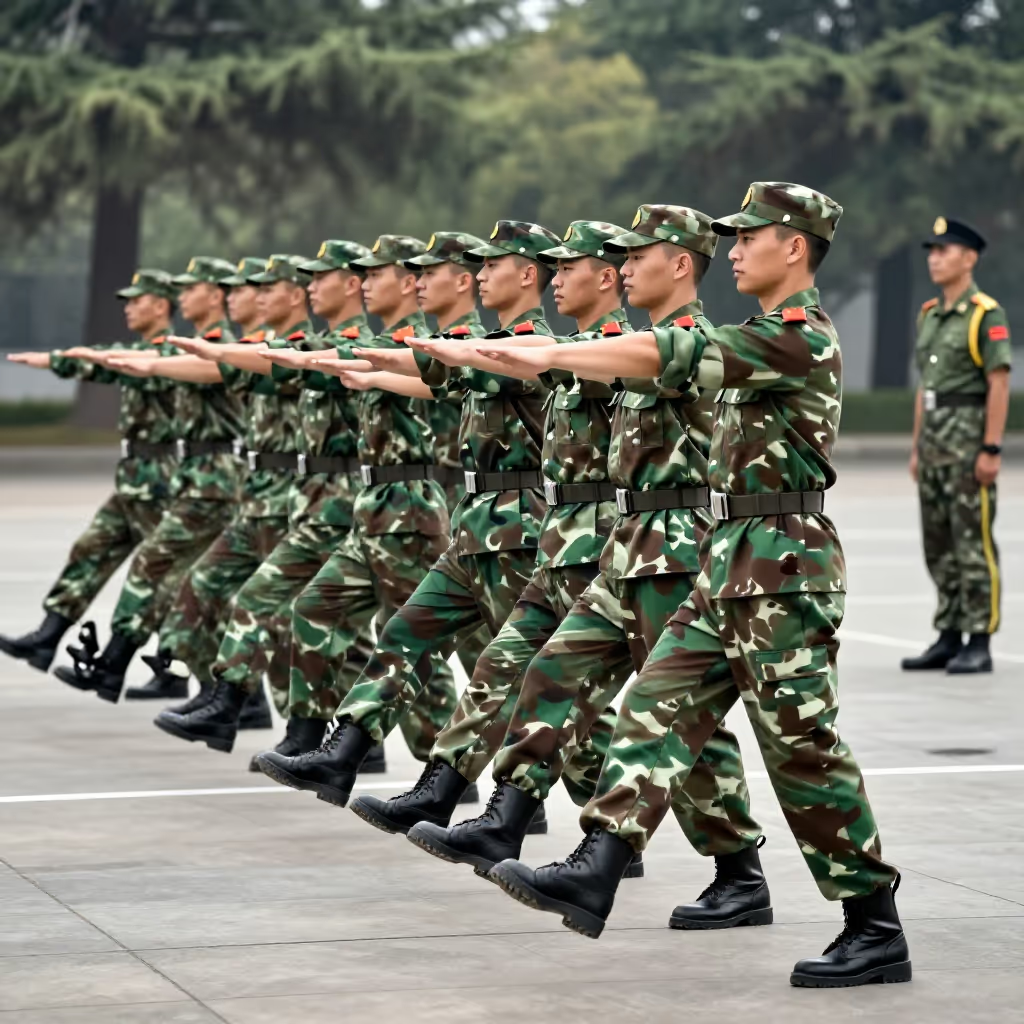
To make a 180-degree turn or reversal; to change direction completely. Today it is used almost only as a command (e.g., in the military) or in derived words like 'Kehrtwende' (about-face / U-turn).
Der Feldwebel schrie: „Kompanie, kehrt!“
The sergeant shouted, 'Company, about-face!'

to turn inward
To withdraw in order to calmly think about oneself, one's thoughts, and feelings; to meditate or reflect.
Im Kloster hatte er endlich Zeit, in sich zu kehren und über sein Leben nachzudenken.
In the monastery, he finally had time to turn inward and think about his life.
The basic meaning of 'kehren' is 'to make a turn.' This idea appears in all meanings: when sweeping with a broom (moving/turning dirt), in the military about-face, or in idioms like 'jemandem den Rücken kehren' (to turn one's back on someone).
Mit einer schnellen Bewegung kehrte er den Schmutz auf ein Kehrblech.
With a quick movement, he swept the dirt onto a dustpan.
In the meaning 'fegen' (to sweep), 'kehren' is usually combined with places that have a floor or ground surface. Typical phrases are 'den Hof kehren' (to sweep the yard), 'die Straße kehren' (to sweep the street), or 'den Bürgersteig kehren' (to sweep the sidewalk).
Der Hausmeister muss jeden Morgen den Eingangsbereich kehren.
The caretaker has to sweep the entrance area every morning.
The idiom 'jemandem den Rücken kehren' (to turn one's back on someone) is fixed. The person one turns away from is always in the dative.
Nach dem großen Verrat hat sie ihm für immer den Rücken gekehrt.
After the great betrayal, she turned her back on him forever.
'Etwas unter den Teppich kehren' (to sweep something under the rug) is a fixed idiom. The thing one wants to conceal is the accusative object of the sentence.
Die Firma hat versucht, den Skandal unter den Teppich zu kehren.
The company tried to sweep the scandal under the rug.
The meaning 'sich umdrehen' (to turn around) is now outdated. You find it almost only in military commands ('Kehrt!' = About-face!) or in fixed nouns like 'die Kehrtwende' (a complete change of direction or opinion).
In der Politik gab es eine überraschende Kehrtwende bei diesem Thema.
In politics, there was a surprising about-face on this issue.
The expression 'in sich kehren' (to turn inward) means to take time for self-reflection. The pronoun 'sich' is a fixed part of the phrase here.
Nach der anstrengenden Woche wollte er am Wochenende nur in sich kehren.
After the exhausting week, he just wanted to turn inward over the weekend.
to turn / contact
Wenden and kehren can both describe a complete change of direction. In everyday German today, wenden is the usual verb for this. In this meaning, kehren is now used mostly in commands and sounds unusual outside such situations.
Der Offizier befiehlt den Soldaten: „Kehrt um und marschiert zurück!“
The officer orders the soldiers: “Turn around and march back!”
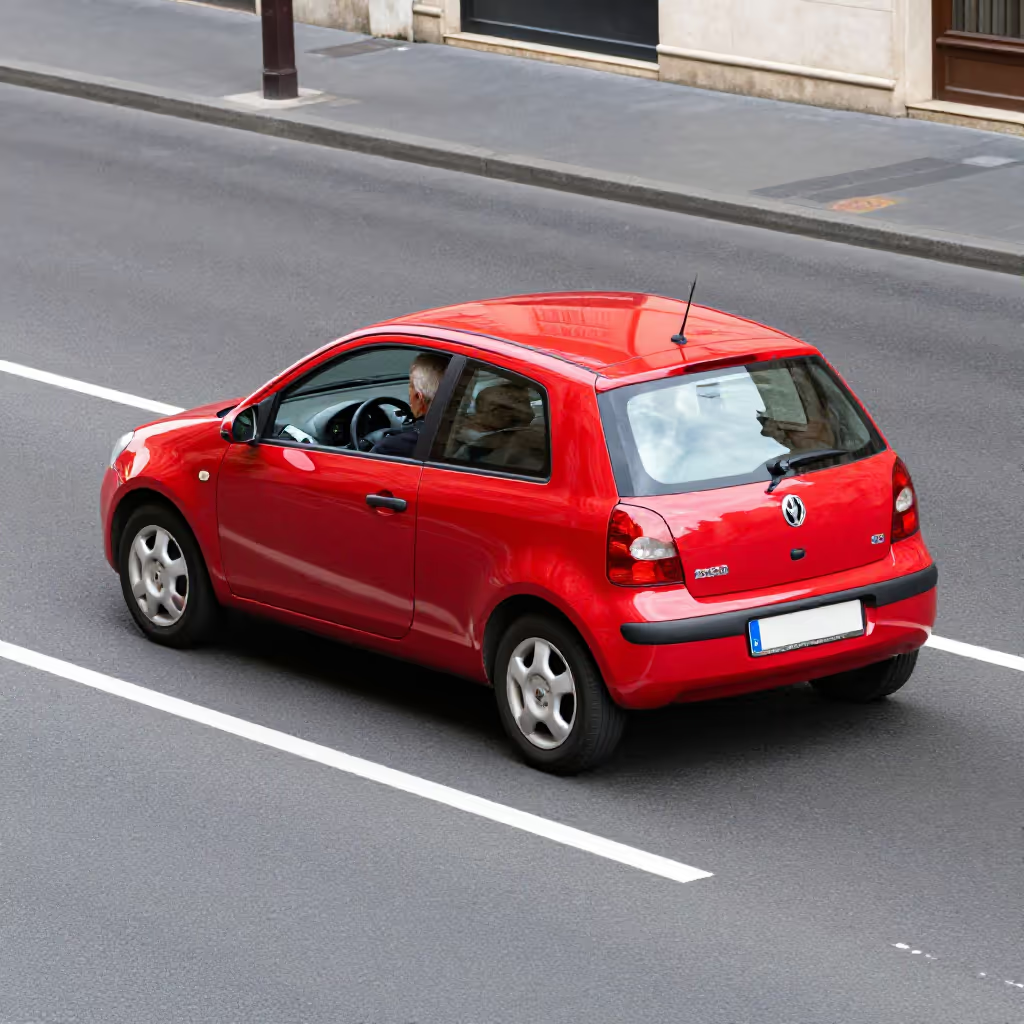
Der Fahrer wendet am Ende der Straße und fährt zurück.
The driver turns around at the end of the street and drives back.