

das Kg
kg
The abbreviation for 'Kilogramm' (kilogram), the base unit of mass in the International System of Units. One kilogram equals 1000 grams.
EXAMPLE
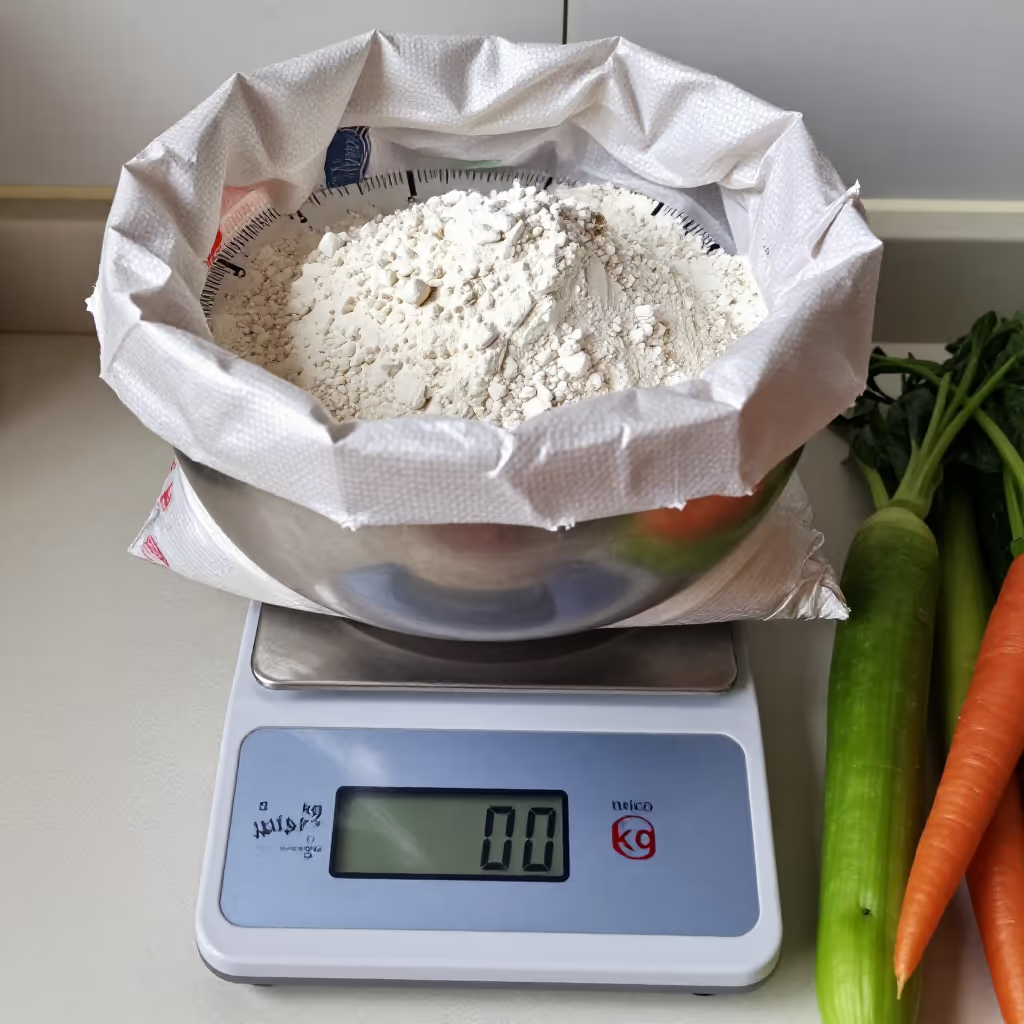
Ein Paket Mehl wiegt normalerweise ein Kg.
A package of flour normally weighs one kg.
kg
Loading your saved state.
kg
The abbreviation for 'Kilogramm' (kilogram), the base unit of mass in the International System of Units. One kilogram equals 1000 grams.
Ein Paket Mehl wiegt normalerweise ein Kg.
A package of flour normally weighs one kg.
'Kg' is an abbreviation that is found almost only in written texts. When speaking, people instead say the full word 'Kilogramm' (kilogram) or, even more commonly, the short form 'Kilo' (kilo).
Auf dem Rezept steht: „Bitte 2 Kg Kartoffeln mitbringen“.
The recipe says: 'Please bring 2 kg of potatoes.'
When 'Kg' is used with a number greater than one, the abbreviation remains unchanged. You do not add a plural 's'.
Der Koffer darf nicht mehr als 23 Kg wiegen.
The suitcase must not weigh more than 23 kg.
The full word is 'Kilogramm' (kilogram). The prefix 'Kilo-' comes from Greek and means 'thousand'. It is also found in other units of measurement such as 'Kilometer' (1000 meters) or 'Kilowatt' (1000 watts).
Ein Kilometer sind tausend Meter.
One kilometer is one thousand meters.
kilo
Kg and Kilo refer to the same unit of mass here. Kg is the written abbreviation for Kilogramm (kilogram), while Kilo is the common colloquial short form. Kg is therefore appropriate on forms, while Kilo is usually used in conversation.

Im Bestellformular steht bei der Einheit „Kg“.
The unit field on the order form says “Kg.”
Beim Einkauf bestelle ich fünf Kilo Äpfel.
I order five kilos of apples when I go shopping.