


das Kind
child
A young person in the stage between birth and puberty.
EXAMPLE
Die Kinder spielen draußen im Sandkasten.
The children are playing outside in the sandbox.
child
Loading your saved state.
child
A young person in the stage between birth and puberty.
Die Kinder spielen draußen im Sandkasten.
The children are playing outside in the sandbox.

child
One's own son or daughter, regardless of age.
Mein ältestes Kind ist bereits 30 Jahre alt und hat selbst eine Familie.
My oldest child is already 30 years old and has a family of their own.

child
Figuratively, a person who behaves naively, immaturely, or playfully.
Manchmal ist er bei technischen Dingen ein richtiges Kind und probiert alles aus.
Sometimes he is a real child when it comes to technical things and tries everything out.
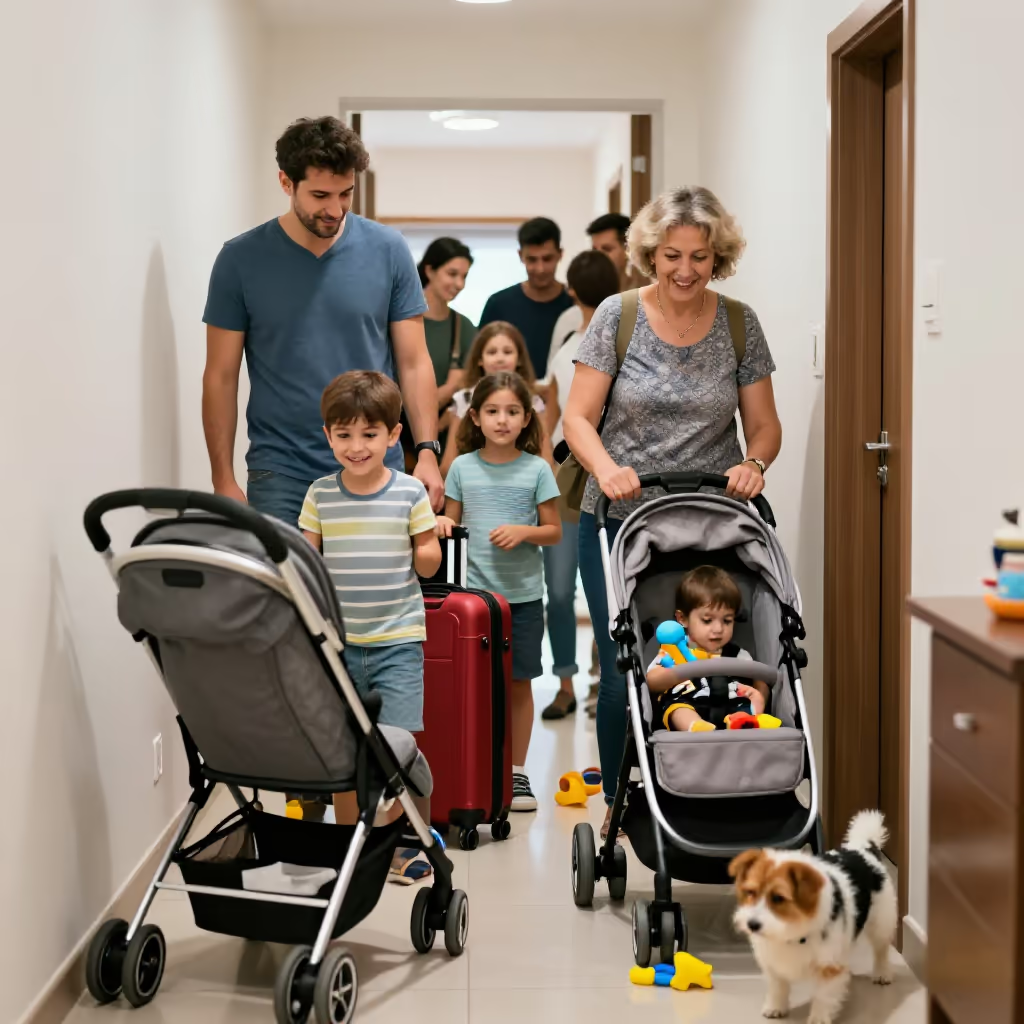
with the whole family
An idiom that means 'with the whole family' or 'with everything that goes along with it'.
Zum Picknick am See kamen sie mit Kind und Kegel.
They came to the picnic by the lake with the whole family.
The word 'Kind' (child) is the basis for very many compound nouns. Words that begin with 'Kinder-' almost always relate to children, e.g. 'Kindergarten' (kindergarten), 'Kinderarzt' (pediatrician), or 'Kinderbuch' (children's book).
Morgens bringt er seine Tochter in den Kindergarten.
In the morning, he takes his daughter to kindergarten.
The meaning of 'Kind' depends on the context. If you are talking about your own offspring ('meine Kinder'), age does not matter. If you are talking generally about 'Kindern' (children), young people are usually meant.
Ihre Kinder sind schon erwachsen und leben im Ausland.
Her children are already grown up and live abroad.
In the figurative sense, 'Kind' describes an adult who behaves naively, curiously, or enthusiastically in a particular area. The expression 'wie ein Kind' (like a child) is often used.
Wenn es um Technik geht, ist mein Vater wie ein Kind im Spielzeugladen.
When it comes to technology, my father is like a child in a toy store.
The idiom 'mit Kind und Kegel' (with the whole family) is a colloquial expression. It means that someone is traveling with the entire family and often with a lot of luggage as well.
Für den Urlaub an der Ostsee packen sie immer Kind und Kegel ein.
For their vacation on the Baltic Sea, they always pack up the whole family and everything else.
kid
Both words refer to a young person. Kind is the neutral standard term, while Kid sounds casual and anglicized and is especially often used in the plural. Kind fits a neutral situation; in deliberately casual language, you can say Kid or Kids.
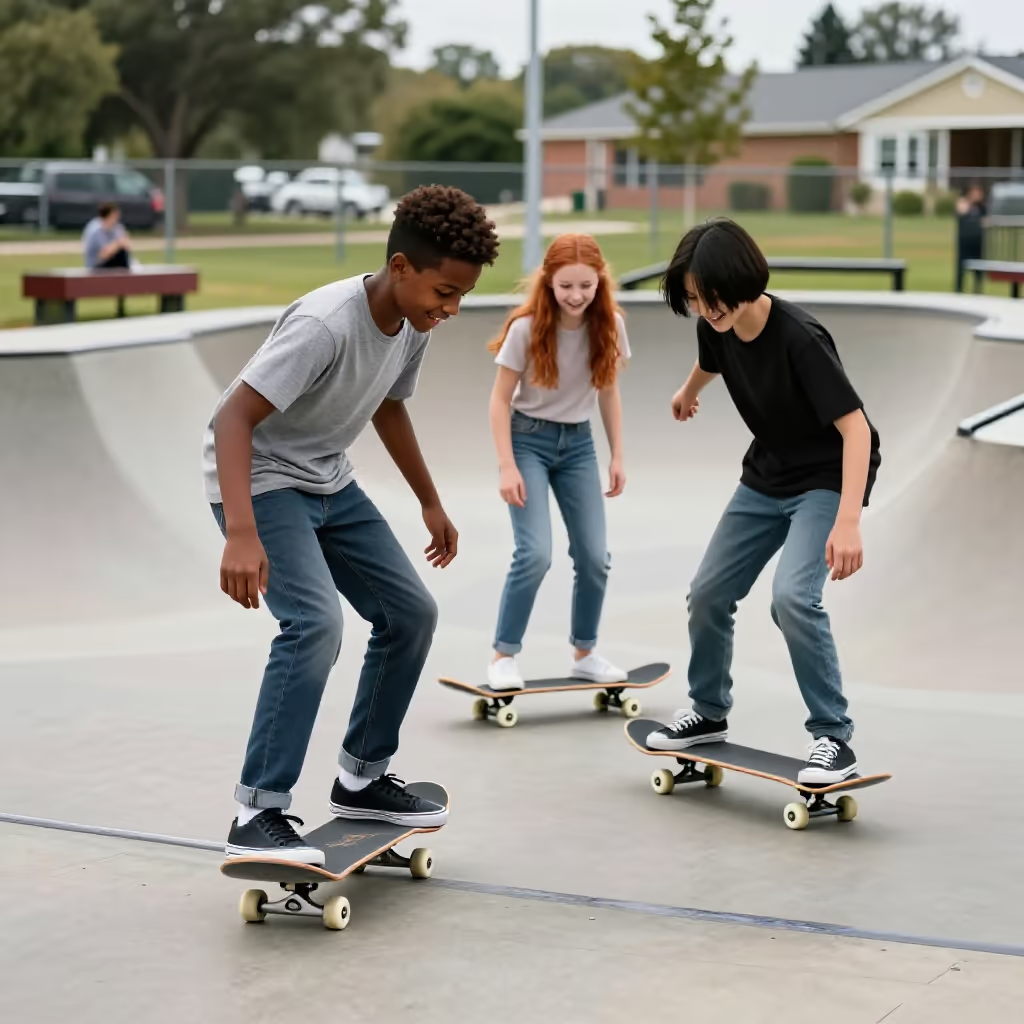
Auf dem Spielplatz spielt ein Kind mit dem roten Ball.
A child is playing with the red ball on the playground.
Auf dem Spielplatz spielt ein Kid mit dem roten Ball.
A kid is playing with the red ball on the playground.