


der Nachwuchs
offspring
The children of a family or the young of animals. The term is often used generally for the next generation.
EXAMPLE
Die junge Familie freut sich über ihren Nachwuchs.
The young family is delighted about their new baby.
offspring / young talent
Loading your saved state.
offspring
The children of a family or the young of animals. The term is often used generally for the next generation.
Die junge Familie freut sich über ihren Nachwuchs.
The young family is delighted about their new baby.
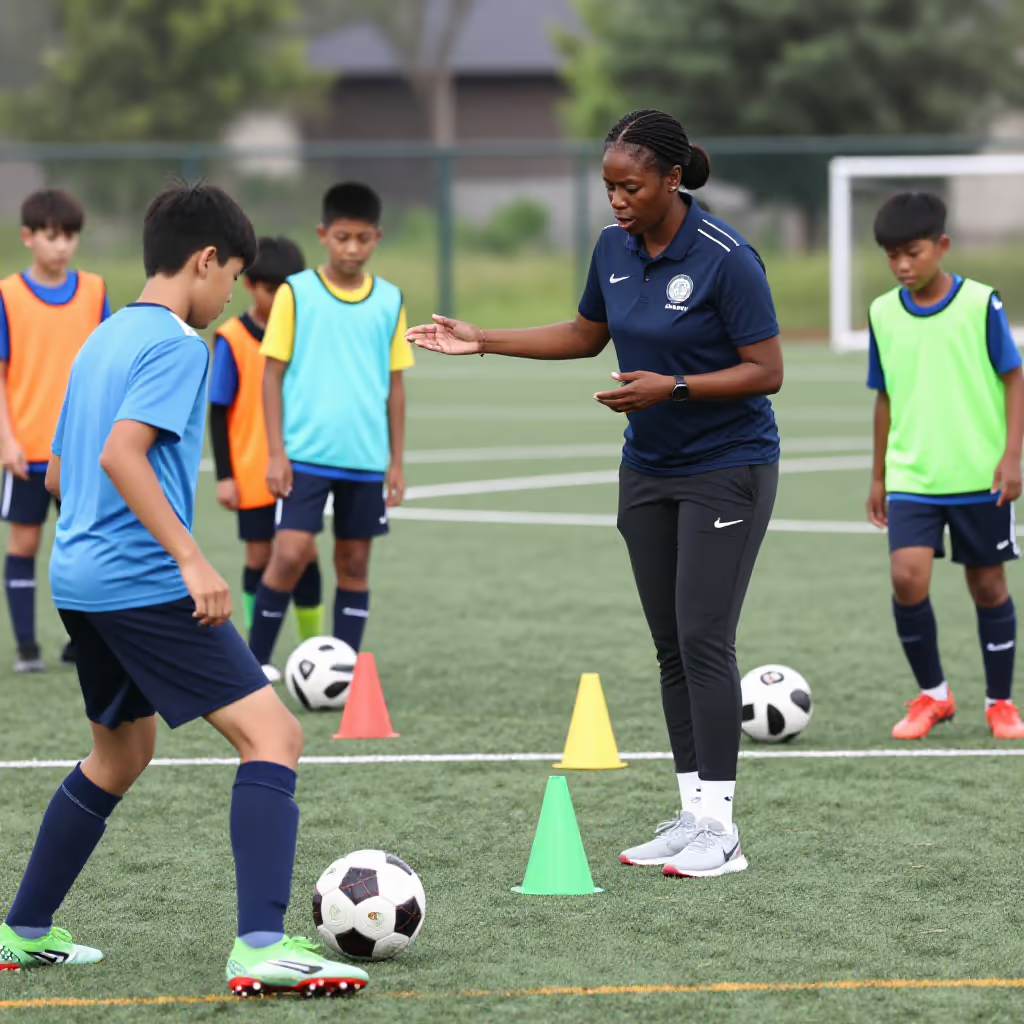
young talent
Young, talented people who are being trained in a particular field (e.g., sports, science, art) and are regarded as the future generation of specialists or talents.
Der Verein investiert viel in die Förderung des sportlichen Nachwuchses.
The club invests a lot in supporting young athletic talent.
The word is made up of 'nach' (after) and 'Wuchs' (growth, from 'wachsen' (to grow)). So it literally describes what 'nachwächst' (grows after) — the next generation.
Die alten Bäume sind krank, aber der Nachwuchs im Wald ist gesund.
The old trees are sick, but the young growth in the forest is healthy.
'Nachwuchs' (offspring / young talent) is a collective noun and is almost always used in the singular, even when talking about several children or people. There is no plural form.
Der gesamte Nachwuchs der Musikschule gab ein Konzert.
All the young talent from the music school gave a concert.
In a family context, 'Nachwuchs' (offspring) is often used in fixed expressions, for example 'Nachwuchs bekommen' (to have a baby), 'Nachwuchs erwarten' (to be expecting a baby), or 'sich auf Nachwuchs freuen' (to look forward to a baby).
Unsere Freunde haben vor kurzem Nachwuchs bekommen.
Our friends recently had a baby.
When talking about young talents, 'Nachwuchs' (young talent) is frequently combined with the verb 'fördern' (to support/promote). The field is also often named with an adjective, e.g., 'der sportliche Nachwuchs' (young athletic talent).
Es ist wichtig, den wissenschaftlichen Nachwuchs früh zu fördern.
It is important to support young scientific talent early on.
child
Both words can refer to the children of a family. „Kind“ refers to individual children neutrally and is countable. „Nachwuchs“ usually refers to children collectively and often suggests an addition to the family. For an exact number or a single child, „Kind“ is the better choice; for the family as a group, „Nachwuchs“ is more suitable.

Mara erzählt, dass sie Nachwuchs hat.
Mara says that she has offspring.
Mara erzählt, dass sie ein Kind hat.
Mara says that she has a child.