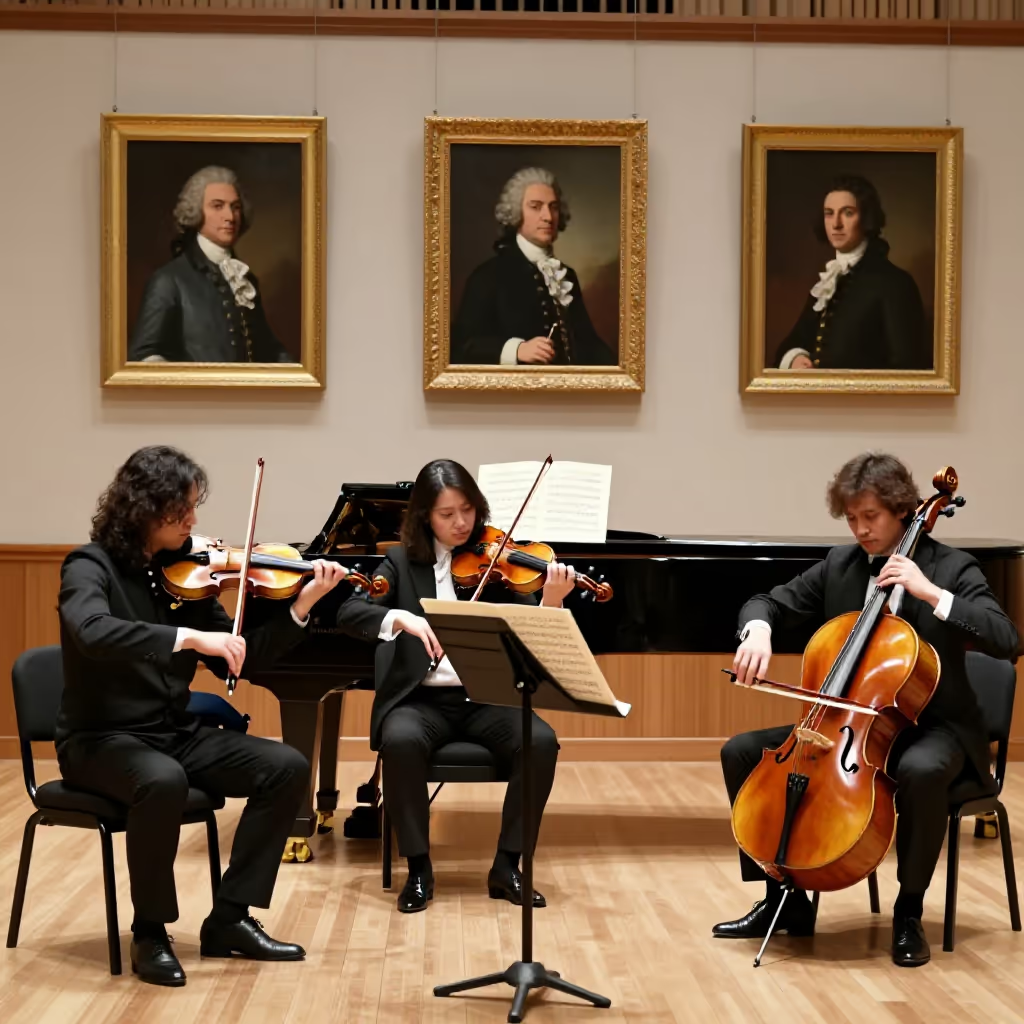
The musical period between about 1750 and 1830, whose main representatives are Haydn, Mozart, and Beethoven (Viennese Classicism).
example
Die Sinfonien von Mozart sind ein Höhepunkt der Wiener Klassik.
Mozart's symphonies are a high point of Viennese Classicism.
Usage tips
Word family
'Die Klassik' (the classical period / classical music) is the noun corresponding to the adjective 'klassisch' (classical). If something is 'klassisch' (classical), it belongs to 'Klassik' (the classical period / classical music) or has its typical features.
EXAMPLE
Diese klassische Sonate ist ein typisches Beispiel für die Musik der Klassik.
This classical sonata is a typical example of music from the Classical period.
Context clue
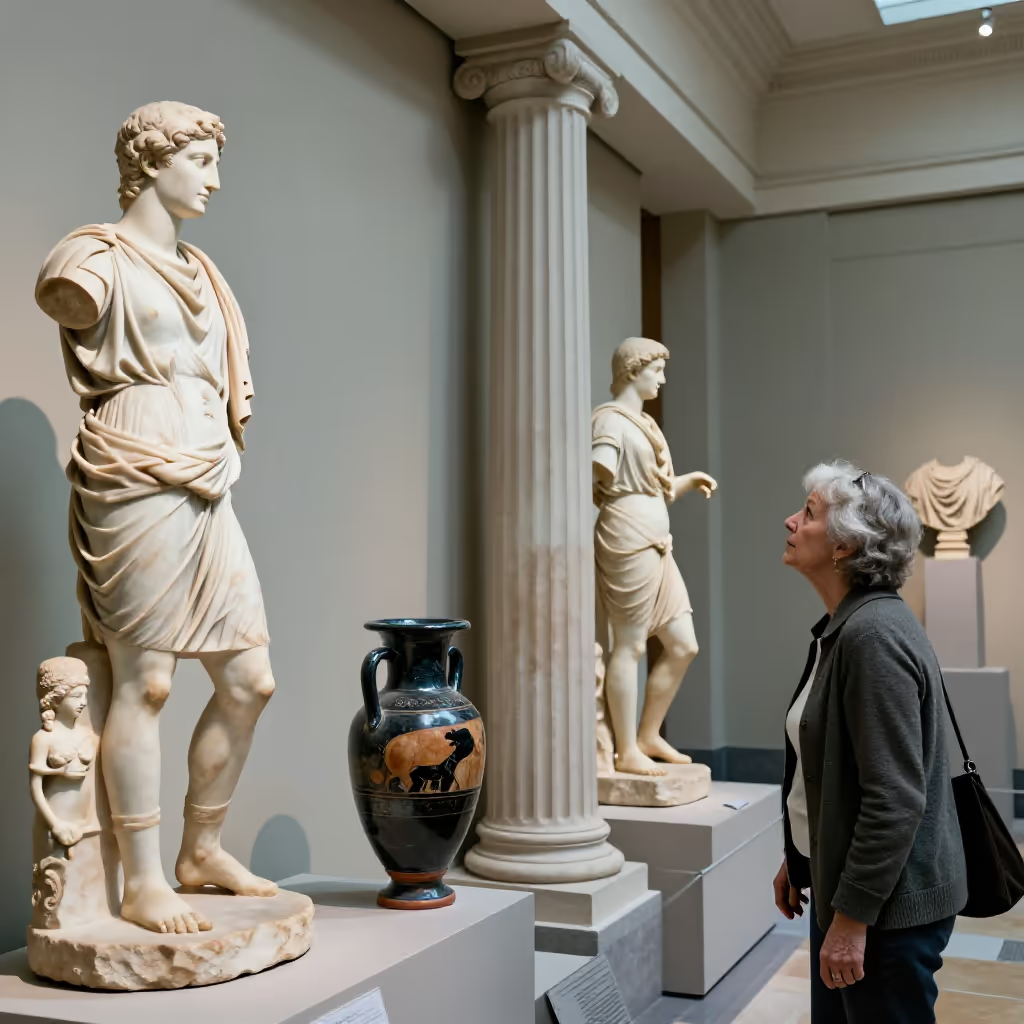
You can tell which period is meant from the additional words. 'Wiener Klassik' (Viennese Classicism) refers to music, 'Weimarer Klassik' (Weimar Classicism) to German literature, and 'griechische' or 'römische Klassik' (Greek or Roman classical antiquity) to antiquity.
EXAMPLE
Beethoven vollendete die Wiener Klassik.
Beethoven brought Viennese Classicism to completion.
Use with article
When speaking generally about the music style, no article is often used. If referring to a specific period, the word is used with the definite article 'die'.
EXAMPLE
Zum Entspannen höre ich gerne Klassik.
I like listening to classical music to relax.
General meaning
In everyday language, 'Klassik' (classical music) is often used as a general term for European art music (e.g. including Baroque or Romantic music), not only for the specific period of approx. 1750–1830.
EXAMPLE
Im Radio läuft heute den ganzen Tag Klassik.
Classical music is playing on the radio all day today.
Compare with
confusable
Klassik vs Klassiker
classic
'der Klassiker' and 'die Klassik' sound similar and both have to do with art, music, or literature. 'der Klassiker' means a single important work that remains well known and valuable over time, for example a novel or a piece of music. 'die Klassik', on the other hand, means an entire period or style, for example in music or German literature. So you can say: a work from 'die Klassik' can be a 'Klassiker'. The words can be confused because both have to do with important culture. Pay attention to the difference: 'Klassiker' is usually a single work; 'Klassik' is a time period or style.
Klassik
In der Klassik schrieb Mozart viele bekannte Musikstücke.
During the classical period, Mozart wrote many well-known pieces of music.
Klassiker
Dieser Roman ist ein Klassiker, den viele Schüler im Unterricht lesen.
This novel is a classic that many students read in class.