

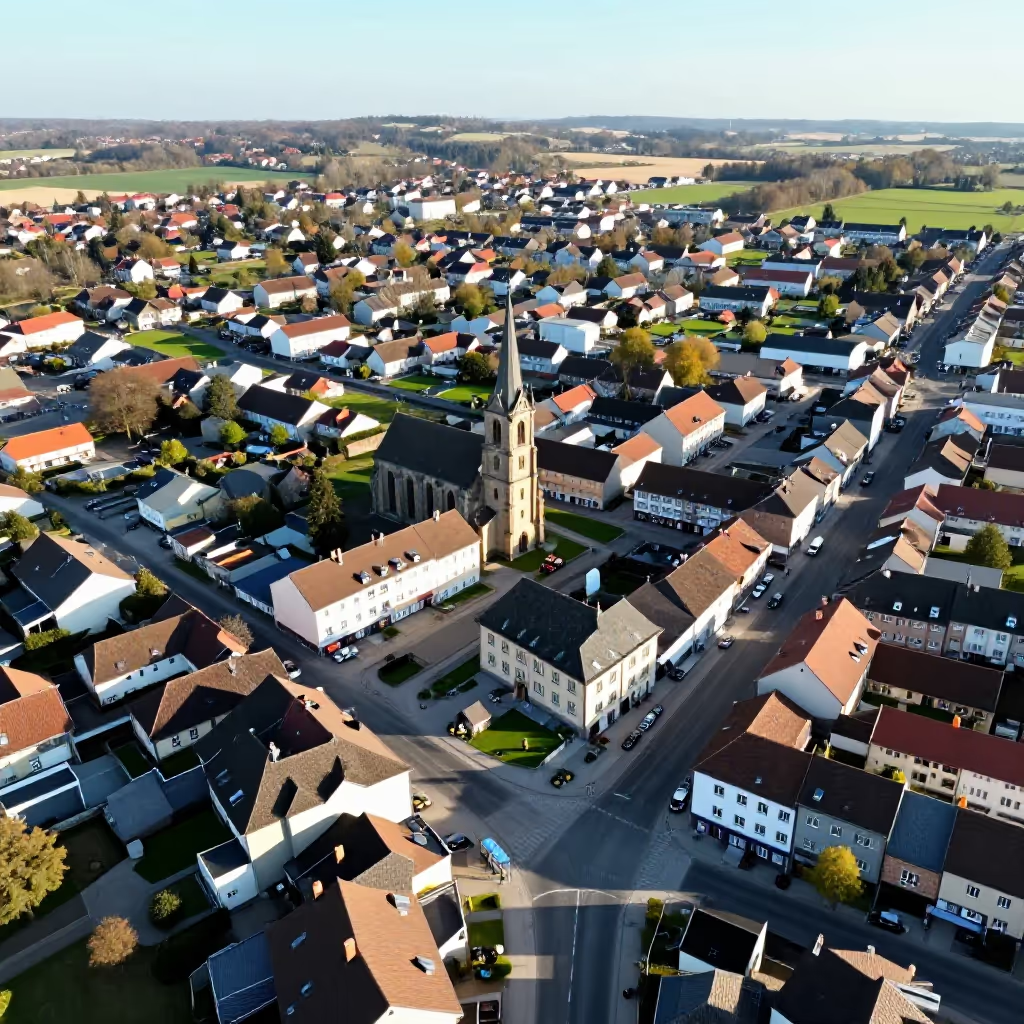
A town with a relatively small population, smaller than a large city but larger than a village, and usually with its own urban facilities.
example
Er ist in einer ruhigen Kleinstadt in Bayern aufgewachsen.
He grew up in a quiet small town in Bavaria.
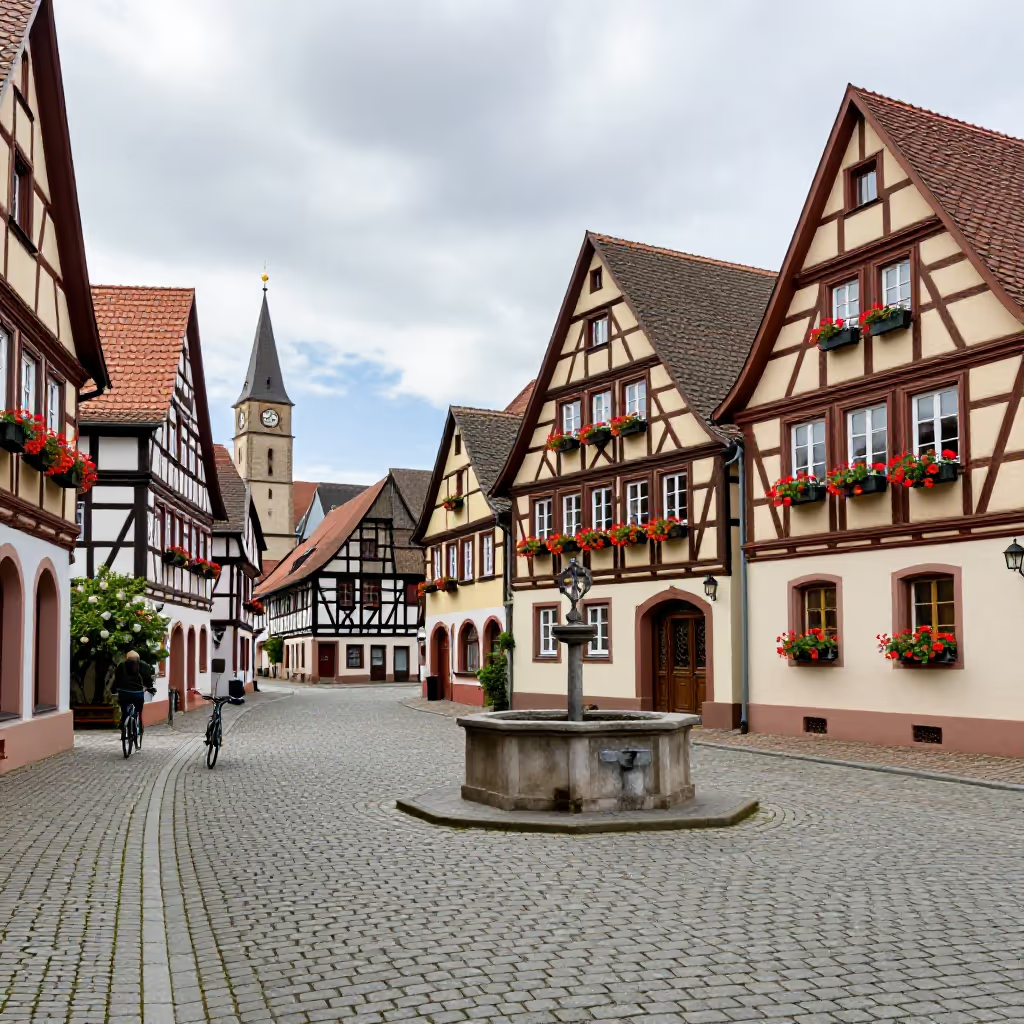
Usage tips
Word composition
This word is a simple compound of 'klein' (small) and 'Stadt' (town/city). So it literally means a 'kleine Stadt' (small town).
EXAMPLE
Sie zog von der Großstadt in eine Kleinstadt am Meer.
She moved from the big city to a small town by the sea.
Typical collocations
'Kleinstadt' is often combined with verbs like 'leben' (to live), 'wohnen' (to live/reside), or 'aufwachsen' (to grow up). Typical adjectives are 'ruhig' (quiet), 'beschaulich' (peaceful), or 'idyllisch' (idyllic).
EXAMPLE
Viele Menschen schätzen das ruhige Leben in einer Kleinstadt.
Many people appreciate the quiet life in a small town.
Connotation of the word
The word 'Kleinstadt' often has the connotation of quiet, safety, and a close-knit community. Sometimes, however, it can also mean that a place is somewhat provincial or boring.
EXAMPLE
In der Kleinstadt kennt jeder jeden.
In the small town, everyone knows everyone.
Compare with
near_synonym · confusable
Kleinstadt vs Stadt
city
'die Stadt' and 'die Kleinstadt' both refer to an inhabited place that is larger than a village. 'Stadt' is the more general term and can be used for small, medium-sized, or very large cities and towns. 'Kleinstadt' is more specific: it means a town with relatively few inhabitants and often a quieter, more manageable way of life. The words can be confused because a small town is also a city or town. If size is important, 'Kleinstadt' fits better; if size is not important, 'Stadt' is enough.
Kleinstadt
Sie wohnt mit ihrer Familie in einer Kleinstadt, in der fast jeder jeden kennt.
She lives with her family in a small town where almost everyone knows everyone else.
Stadt
Nach dem Gespräch geht er noch kurz durch die Stadt.
After the conversation, he takes a short walk through the city.